
Ecosystem Factor Classifier
Click on the items below to classify them as either Biotic (Living) or Abiotic (Non-Living). Learn how these two groups interact to form ecosystems.
You walk outside, breathe in the air, and look around. What do you actually see? Most people just say "nature" or "stuff." But if you want to really understand how our world works, you have to split everything into two distinct buckets. It sounds simple, but this distinction is the foundation of ecology, biology, and even your local council's planning decisions.
Every single thing on Earth falls into one of these two categories: Biotic factors (living things) and Abiotic factors (non-living things). That’s it. There is no third group. If it breathes, grows, reproduces, or reacts to stimuli, it’s biotic. If it doesn’t, it’s abiotic. The magic-and the complexity-happens in how these two groups interact. You can’t have a forest without trees (biotic) and sunlight (abiotic). You can’t have a fish tank without fish (biotic) and water temperature (abiotic).
The Living Component: Biotic Factors
Let’s start with the obvious stuff. Biotic factors are all the living organisms in an environment. This includes every plant, animal, fungus, bacterium, and virus. Yes, viruses are tricky because they’re not technically alive on their own, but ecologists generally classify them as biotic because they rely on living hosts to replicate. When you look at a park in Edinburgh, the grass, the squirrels, the pigeons, the moss on the wall, and the bacteria in the soil are all biotic factors.
But here is where it gets interesting. Biotic factors aren’t just static objects; they are active participants. They compete for resources, they eat each other, they help each other, and they change their surroundings. A beaver building a dam is a biotic factor altering the physical landscape. A tree dropping leaves changes the soil chemistry. These interactions create food webs. If you remove one biotic factor, like a specific pollinator bee, the entire system shifts. Plants don’t reproduce, animals that eat those plants starve, and the cycle breaks.
- Producers: Organisms that make their own food via photosynthesis (plants, algae).
- Consumers: Organisms that eat others for energy (herbivores, carnivores, omnivores).
- Decomposers: Organisms that break down dead matter (fungi, bacteria).
Understanding these roles helps you see why biodiversity matters. It’s not just about saving cute pandas. It’s about keeping the machinery of life running. Each biotic component has a job. If you lose the decomposers, waste piles up. If you lose the producers, everyone starves. It’s a delicate balance held together by millions of tiny biological relationships.
The Non-Living Framework: Abiotic Factors
Now, look at the background. The sky, the rocks, the wind, the rain, the temperature, the salinity of the ocean. These are Abiotic factors, the non-living chemical and physical parts of the environment that affect living organisms and the functioning of ecosystems. You might think these are just the stage set, but they are the scriptwriters. They decide who lives, who dies, and who thrives.
Think about why cacti grow in deserts and ferns grow in rainforests. It’s not because cacti prefer sand. It’s because the abiotic factors-low water availability, high sunlight intensity, extreme temperature fluctuations-filter out plants that can’t handle those conditions. Abiotic factors act as filters. They set the boundaries of life.
There are several key types of abiotic factors you need to know:
- Sunlight: The primary energy source for most ecosystems. Without it, photosynthesis stops, and the food chain collapses from the bottom up.
- Temperature: Determines metabolic rates. Too hot, and proteins denature. Too cold, and enzymes slow down. Many species have narrow thermal ranges.
- Water: Essential for life processes. Availability and quality (pH, salinity) dictate habitat suitability.
- Soil Composition: Includes nutrients like nitrogen and phosphorus, pH levels, and texture. This directly affects what plants can grow.
- Air Quality and Wind: Oxygen and carbon dioxide levels are critical for respiration and photosynthesis. Wind aids in seed dispersal but can also cause physical damage.
In urban environments, human-made abiotic factors play a huge role. Pollution, noise, light pollution, and heat islands created by concrete are all abiotic stressors. They alter how biotic factors behave. For example, birds in noisy cities sing at higher pitches to be heard over traffic. The abiotic factor (noise) changed the behavior of the biotic factor (bird).
How They Interact: The Ecosystem Dance
Separating biotic and abiotic factors is useful for analysis, but in reality, they are inseparable. An Ecosystem is defined by the interaction between these two groups. One cannot exist without the other in a functional system. Let’s look at a real-world example from Scotland’s Highlands.
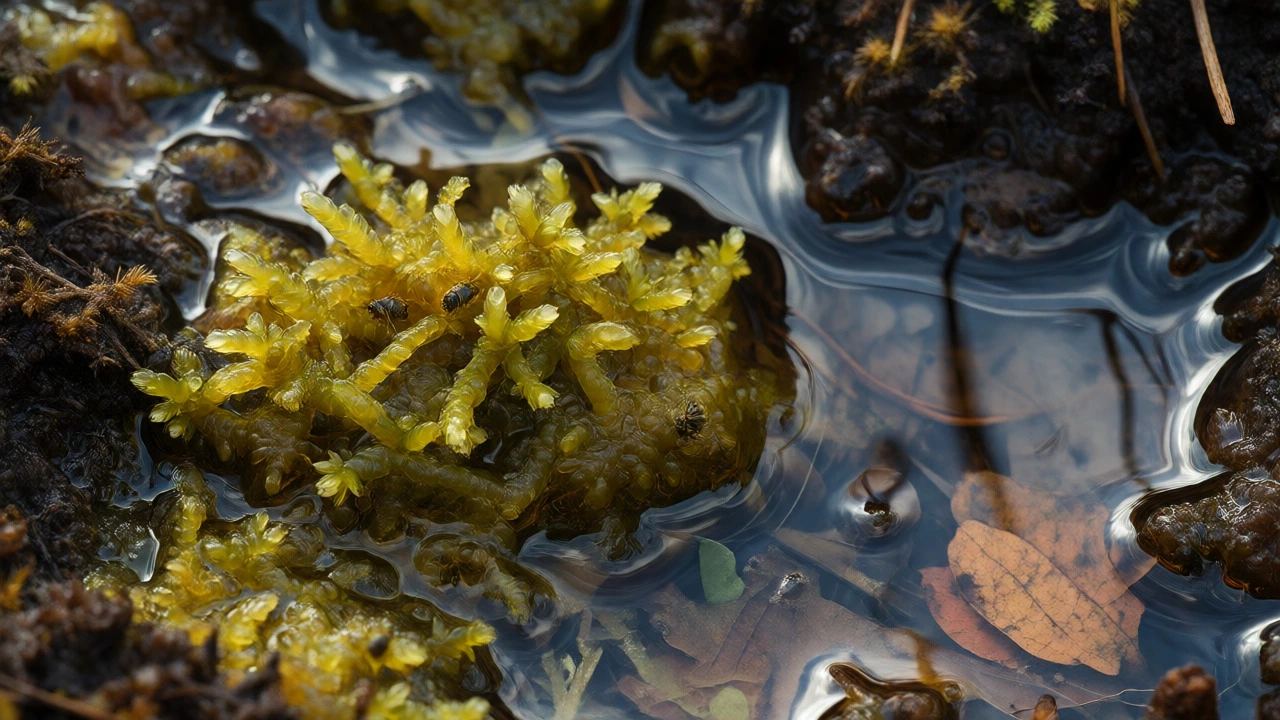
Consider a peat bog. The sphagnum moss (biotic) holds water and creates acidic conditions (abiotic). These acidic conditions prevent decomposition, leading to peat accumulation (abiotic/biotic mix). The peat then stores carbon, which impacts global climate (abiotic). Meanwhile, the acidity allows specific insects and birds to thrive while excluding others. Change the water level (abiotic), and the moss dries out (biotic), releasing stored carbon back into the atmosphere (abiotic). See the loop?
This feedback loop is crucial. Human activities often disrupt these loops. Deforestation removes biotic factors (trees), which leads to increased soil erosion (abiotic impact), which reduces water retention (abiotic), making it harder for new trees to grow (biotic recovery blocked). Understanding this interdependence is the first step toward effective environmental management.
Why This Distinction Matters for You
You might ask, "Why should I care about splitting nature into two lists?" Because it helps you solve problems. When a river runs dry, is it a lack of rain (abiotic) or excessive water usage by farms (biotic/human)? The answer dictates the solution. If it’s abiotic, you need conservation measures or infrastructure changes. If it’s biotic/human-driven, you need policy changes or behavioral shifts.
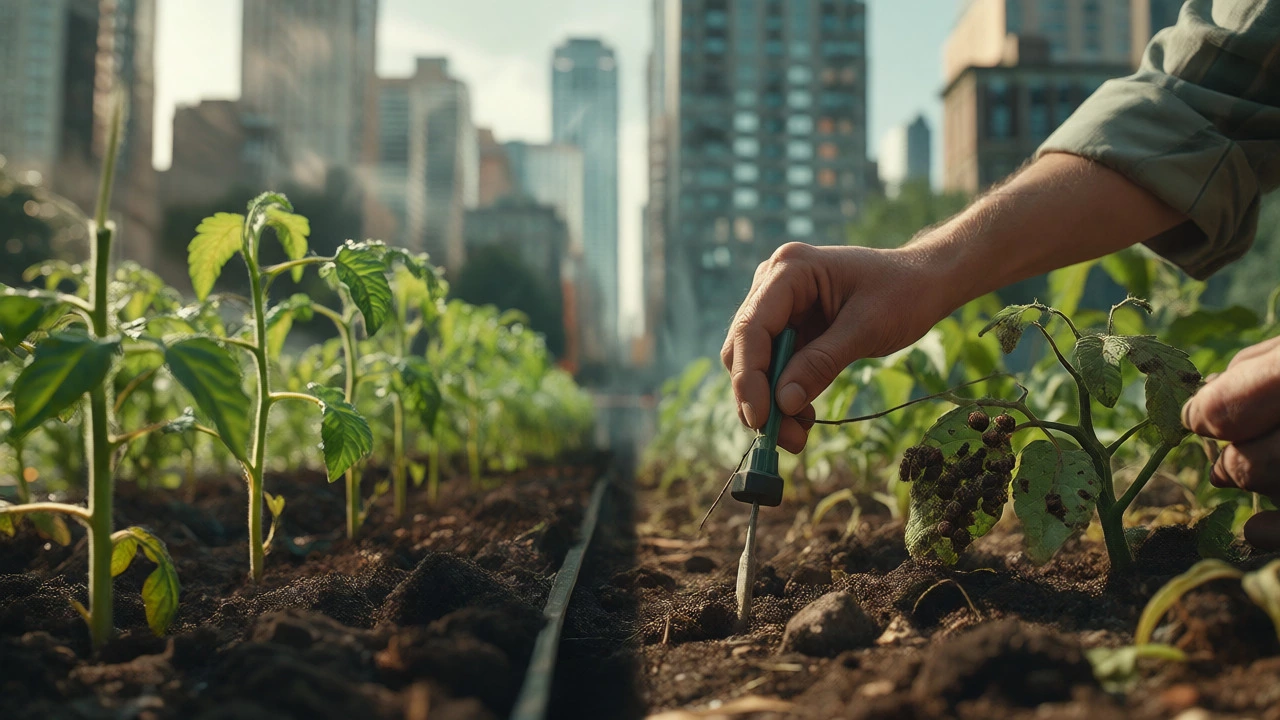
For gardeners, this knowledge is practical. If your tomatoes aren’t growing, check the abiotic factors first: Is there enough sun? Is the soil pH right? Is the temperature too low? If those are fine, look at biotic factors: Are pests eating them? Is there a fungal infection? Diagnosing issues becomes much easier when you categorize the potential causes.
Furthermore, this framework helps us understand climate change. Climate change is primarily a shift in abiotic factors-rising temperatures, changing precipitation patterns, increased CO2 levels. The consequences are entirely biotic: shifting migration patterns, coral bleaching, extinction risks. By monitoring abiotic changes, we can predict biotic outcomes.
| Feature | Biotic Factors | Abiotic Factors |
|---|---|---|
| Definition | Living or once-living organisms | Non-living chemical and physical elements |
| Examples | Plants, animals, fungi, bacteria | Sunlight, water, temperature, soil, air |
| Growth | Can grow and reproduce | Do not grow or reproduce |
| Response to Stimuli | React to environmental changes | Do not react actively |
| Role in Ecosystem | Energy flow and nutrient cycling | Provide habitat and energy sources |
Common Misconceptions
One common mistake is thinking that dead things are abiotic. A fallen log is biotic. Why? Because it was once alive and continues to influence the ecosystem through decomposition. It provides habitat for beetles (biotic) and releases nutrients into the soil (abiotic interaction). Another misconception is that humans are separate from nature. Humans are biotic factors. Our actions-building cities, burning fossil fuels-are biotic influences that drastically alter abiotic conditions.
Also, don’t confuse "natural" with "biotic." Plastic is abiotic, but it’s man-made. Natural abiotic factors include rocks and rivers. Man-made abiotic factors include roads, buildings, and pollution. Both affect the environment, but they originate differently. Recognizing this helps in assessing environmental impact assessments for construction projects.
Final Thoughts
Next time you take a walk, try this exercise. Identify five biotic factors and five abiotic factors. Notice how they interact. How does the shade of the tree (biotic) cool the ground (abiotic)? How does the wind (abiotic) disperse seeds (biotic)? This simple mental model transforms a passive walk into an active observation session. It connects you to the intricate web of life that sustains us. Whether you’re a student, a gardener, or just curious, understanding the two groups of things in our environment gives you a clearer lens through which to view the world.
Is fire considered a biotic or abiotic factor?
Fire is generally considered an abiotic factor. Although it is caused by biotic material (wood/plant matter), fire itself is a chemical reaction involving oxygen and heat. It acts as a disturbance that alters the environment, influencing both biotic communities (by clearing vegetation) and abiotic conditions (by adding ash/nutrients to the soil).
Are viruses biotic or abiotic?
Viruses occupy a gray area but are typically classified as biotic factors in ecological contexts. While they lack cellular structure and cannot reproduce independently, they interact with living hosts and evolve. Their presence significantly impacts population dynamics of other biotic factors.
Can an abiotic factor become biotic?
No, abiotic factors do not become biotic. However, biotic factors can create structures that persist after death, such as coral reefs or shells. These remain part of the biotic legacy of an ecosystem, influencing abiotic conditions like water flow and substrate composition long after the organism is gone.
How do humans fit into these two groups?
Humans are biotic factors. We are living organisms that consume resources and produce waste. However, our technological outputs, such as plastic, concrete, and smog, are abiotic factors we introduce into the environment. This dual role makes humans unique in their ability to modify both biotic and abiotic landscapes extensively.
Why is soil sometimes listed as both?
Soil is complex. Its mineral content, texture, and pH are abiotic properties. However, soil contains living organisms like bacteria, fungi, and roots, which are biotic. Ecologists often refer to the "soil ecosystem" to acknowledge this blend, but strictly speaking, the dirt itself is abiotic, while its inhabitants are biotic.