
Charitable Trust Tax Liability Checker
Tax Liability Analysis
Imagine you’ve set up a charitable trust to support a cause close to your heart. You expect it to be straightforward: the trust holds assets, generates income, and funds good work. But then comes the question that keeps trustees up at night: who pays the tax on that income? Can the trust entity itself pay the taxes instead of passing the burden onto the beneficiaries? The short answer is yes, but only under very specific conditions.
Tax law surrounding trusts is not one-size-fits-all. It depends entirely on how the trust is structured, what its purpose is, and whether it has achieved official status with tax authorities like HMRC in the UK or the IRS in the US. For most people, the default assumption is that beneficiaries pay tax on distributions they receive. However, for charitable trusts, the rules flip on their head. Understanding this distinction can save thousands in unnecessary filings and ensure your charity operates efficiently.
The Golden Rule: Charitable Trusts Are Tax-Exempt
If your trust is recognized as a charitable organization, it generally does not pay income tax on its earnings. This is the core benefit of setting up a charity. In the United Kingdom, for example, registered charities are exempt from income tax and capital gains tax on profits made from their primary charitable activities. Similarly, in the United States, organizations granted 501(c)(3) status by the Internal Revenue Service do not pay federal income tax on contributions or investment income related to their mission.
This means the trust itself absorbs no tax cost because there is no tax due. The money stays within the trust to fund programs, rather than being siphoned off to government revenue. This exemption applies to:
- Donations received from the public
- Investment returns (interest, dividends, rental income)
- Sales of assets held for charitable purposes
However, this exemption is not automatic. You must apply for recognition. In the UK, this involves registering with the Charity Commission for England and Wales, or the equivalent bodies in Scotland, Northern Ireland, or Wales. In the US, you file Form 1023 or 1023-EZ with the IRS. Without this formal status, the trust is treated like any other private entity, and tax liabilities shift dramatically.
When the Trust Pays: Non-Exempt Income
Even if your trust is fully recognized as a charity, it isn’t immune to all taxes. There are scenarios where the trust entity itself must pay tax directly, rather than passing the bill to beneficiaries. This usually happens when the trust engages in activities unrelated to its charitable mission.
Consider a charitable trust that owns a commercial property. If it rents out that property to a business for profit, and that activity is not integral to its charitable goals, the income may be taxable. In the UK, this is known as non-exempt trading income. If the trust runs a shop selling goods unrelated to its mission, or earns significant interest from investments that exceed certain thresholds, it may owe tax. Crucially, this tax is paid by the trust, not by individual beneficiaries, because no income was distributed to them.
In these cases, the trust files its own tax return. In the US, this is done via Form 990-T for unrelated business income tax (UBIT). In the UK, the charity submits a CT600 form for corporation tax on non-exempt trading profits. The key takeaway here is that the trust acts as the taxpayer because it retained the income. No beneficiary received the money, so no beneficiary owes tax.
Private Trusts vs. Charitable Trusts: A Critical Distinction
The confusion often arises because people mix up private trusts with charitable trusts. They operate under completely different tax regimes. A private trust is created to benefit specific individuals-family members, friends, or a defined group. It does not serve the public good.
For private trusts, the rule is different. Generally, the trust pays tax on income it retains, while beneficiaries pay tax on income distributed to them. This creates a dual-layer tax system. In the US, grantor trusts allow the creator to pay the tax, while non-grantor trusts pay their own flat rate (often 37% for undistributed income). Beneficiaries then report distributed income on their personal returns.
If you are asking whether a private trust can pay tax *instead* of beneficiaries, the answer is nuanced. The trust can pay tax on income it keeps. But if it distributes that income, the beneficiary becomes liable. You cannot simply have the trust pay the beneficiary’s personal tax bill unless structured as a reimbursement, which has its own complex implications. This is why precise drafting of the trust deed is essential.

Distributions Shift the Liability
The moment money leaves the trust and enters a beneficiary’s pocket, the tax responsibility often shifts with it. This concept is central to understanding who pays what. In a charitable context, true "beneficiaries" are the causes supported, not individuals receiving cash. Therefore, there are no individual beneficiaries to tax.
However, if a charitable trust makes payments to individuals-for instance, paying salaries to staff or grants to researchers-these are considered expenses of the trust, not taxable income to the recipient. The trust deducts these costs against its income. The employee or researcher reports their salary or grant as normal income and pays tax personally. The trust does not pay tax on that portion of income because it was spent on operations.
This distinction is vital. Many trustees worry about withholding taxes for grantees. In most jurisdictions, charitable grants are not subject to withholding tax for the recipient. The trust issues a receipt, and the recipient handles their own tax affairs. The trust’s role ends with the payment.
Capital Gains and Inheritance Tax Considerations
Income tax is only part of the picture. Capital gains tax (CGT) and inheritance tax (IHT) also play roles in trust taxation. For charitable trusts, CGT exemptions usually mirror income tax exemptions. If a charity sells an asset used for its mission, it typically pays no CGT. However, if it sells investment assets, rules vary. In the UK, charities are exempt from CGT on most disposals, provided the gain is applied solely for charitable purposes.
Inheritance tax presents another layer. In the US, charitable trusts often qualify for unlimited estate tax deductions. If you leave assets to a charitable trust, those assets are removed from your taxable estate. This means the IRS takes nothing, and the trust receives the full amount. Again, the trust pays no tax because the transfer is exempt. In the UK, gifts to charities are exempt from IHT, provided they are outright donations without reserved benefits.
These exemptions reinforce the principle that charitable trusts are vehicles for public benefit, not private wealth accumulation. As such, the tax system incentivizes them by removing fiscal burdens. But this privilege comes with strict compliance requirements.
Compliance and Record-Keeping Requirements
To maintain tax-exempt status, a charitable trust must adhere to rigorous reporting standards. Failure to comply can result in loss of status, back taxes, and penalties. In the US, charities must file annual Form 999 returns, detailing finances, governance, and activities. Large charities file Form 990, while smaller ones use 990-EZ or 990-N. These forms are public records, meaning transparency is mandatory.
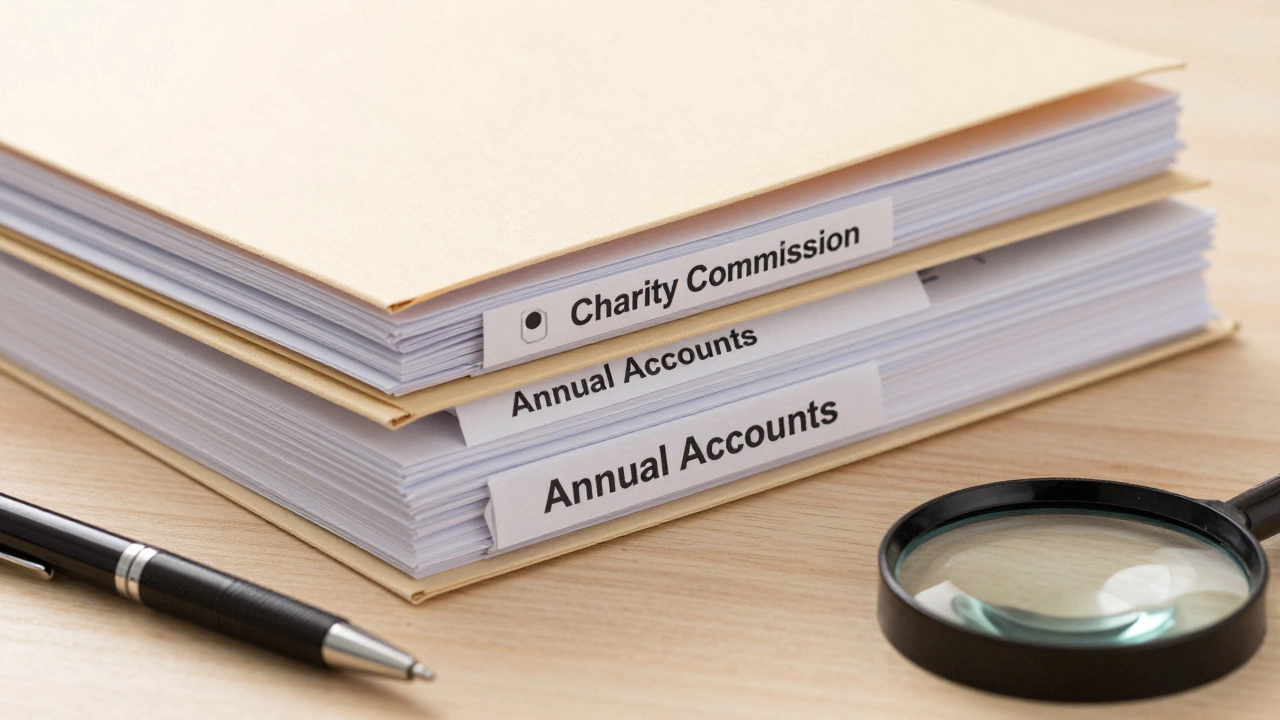
In the UK, charities submit annual accounts and a return to the Charity Commission. They must also register with HMRC for PAYE if they employ staff, and for VAT if their turnover exceeds the threshold. While VAT registration doesn’t mean the trust pays VAT on all transactions-it can reclaim input VAT on purchases-the administrative burden increases significantly.
Proper record-keeping is non-negotiable. Trustees must keep detailed logs of:
- All income sources and amounts
- Expenses incurred for charitable purposes
- Investment holdings and transactions
- Governance decisions and trustee meetings
Without these records, proving that income was used exclusively for charitable purposes becomes impossible. If audited, the trust could lose its exemption and face retroactive taxation.
Common Pitfalls to Avoid
Many well-intentioned trustees stumble into tax trouble due to simple misunderstandings. Here are the most common errors:
- Mixing Personal and Trust Finances: Using trust funds for personal expenses voids tax-exempt status immediately.
- Ignoring Unrelated Business Income: Assuming all income is exempt leads to surprise tax bills.
- Failing to File Annual Returns: Even if no tax is owed, filing is mandatory. Missing deadlines triggers penalties.
- Paying Excessive Compensation: Overpaying trustees or staff can be seen as self-dealing, jeopardizing status.
- Not Registering Properly: Operating as a charity without official recognition means paying full tax rates.
Avoiding these pitfalls requires proactive management. Engage a qualified accountant or tax advisor familiar with nonprofit law. Do not rely on general advice; trust tax law is highly specialized.
Does a charitable trust ever pay income tax?
Yes, but only on income derived from activities unrelated to its charitable mission. Core charitable income is exempt.
Who pays tax when a trust distributes money to beneficiaries?
In private trusts, beneficiaries pay tax on distributed income. In charitable trusts, there are no individual beneficiaries receiving taxable distributions; funds go to causes or cover operational costs.
Can a trust pay taxes on behalf of its beneficiaries?
A trust can pay tax on income it retains. It cannot directly pay a beneficiary's personal income tax unless structured as a reimbursement, which has complex legal implications.
What happens if a charitable trust loses its tax-exempt status?
It becomes liable for back taxes on all prior exempt income, plus penalties and interest. Donors may also lose their ability to claim tax deductions for past gifts.
Do charitable trusts need to file tax returns if they owe no tax?
Yes. Filing annual information returns (like Form 990 in the US or Charity Commission returns in the UK) is mandatory to maintain exempt status, regardless of tax liability.