Volunteer Sustainability Calculator
Volunteering feels good. You show up, you help, you make a difference. But what happens when showing up becomes exhausting? When your weekends are packed with shifts, your evenings are spent packing food boxes, and your phone buzzes with one more request for help? It’s easy to think more volunteering = more good. But that’s not always true. In fact, doing too much can hurt the very cause you care about - and you.
Volunteering Isn’t Infinite Energy
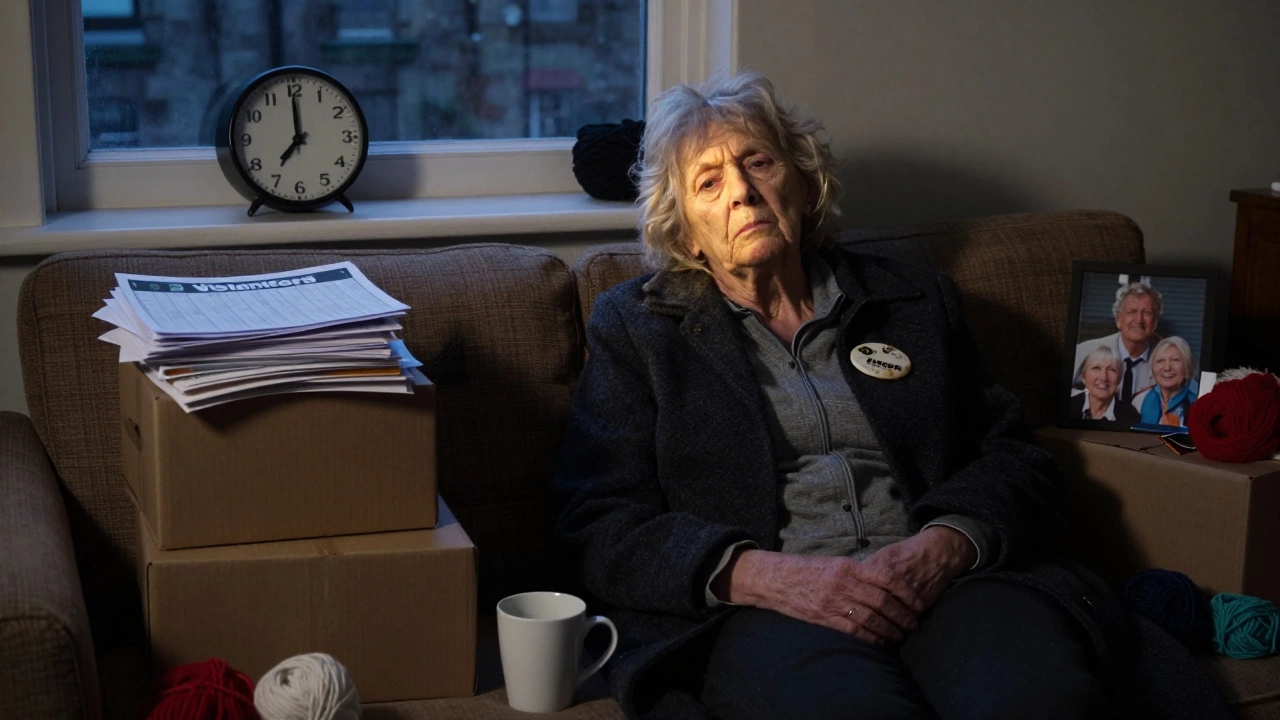
People in Edinburgh see it all the time. A retired teacher starts helping at the food bank every Tuesday and Thursday. Then she adds Saturday morning at the homeless shelter. By January, she’s also running the weekly knitting group for isolated seniors. She’s loved. She’s praised. But by March, she’s canceling plans, skipping meals, and sleeping on the couch after shifts. She didn’t quit because she stopped caring. She quit because she ran out of steam.Volunteering isn’t like a bank account where you can withdraw kindness without depositing rest. Your body, your mind, your emotional reserves - they all have limits. Research from the University of Edinburgh’s Centre for Social Impact found that people who volunteer more than 15 hours a week for over six months are twice as likely to report chronic fatigue, anxiety, and feelings of resentment. Not because they’re weak. Because they’re human.
When Helping Becomes a Habit You Can’t Break
Some volunteers don’t realize they’re overdoing it because they’ve turned helping into identity. "I’m the person who shows up." That sounds noble. But when your self-worth is tied to how many shifts you’ve done, you start saying yes to everything - even when you’re drained. You feel guilty saying no. You worry someone else won’t fill the gap. And so you keep going.But here’s the truth: if you burn out, you leave a hole. And holes are harder to fill than you think. Organizations don’t train replacements overnight. Volunteers who leave suddenly often leave behind unfinished projects, confused newbies, and a team that’s now short-staffed. The person who was supposed to be the steady hand becomes the person who vanished.
Real sustainability in volunteering isn’t about who shows up the most. It’s about who shows up consistently - without breaking.
The Signs You’re Doing Too Much
It’s not always obvious. Here are the quiet warning signs you might be overvolunteering:- You’re canceling personal plans because you’re too tired to socialize.
- You’re snapping at friends or family over small things - like them not helping with chores.
- You feel numb during shifts. You’re physically there, but your mind is somewhere else.
- You’ve stopped enjoying the work. It feels like a chore, not a calling.
- You’re using volunteering to avoid dealing with your own problems - stress at work, loneliness, grief.
If three or more of these sound familiar, it’s time to pause. Not because you’re failing. Because you’re human.
What Happens When You Overextend
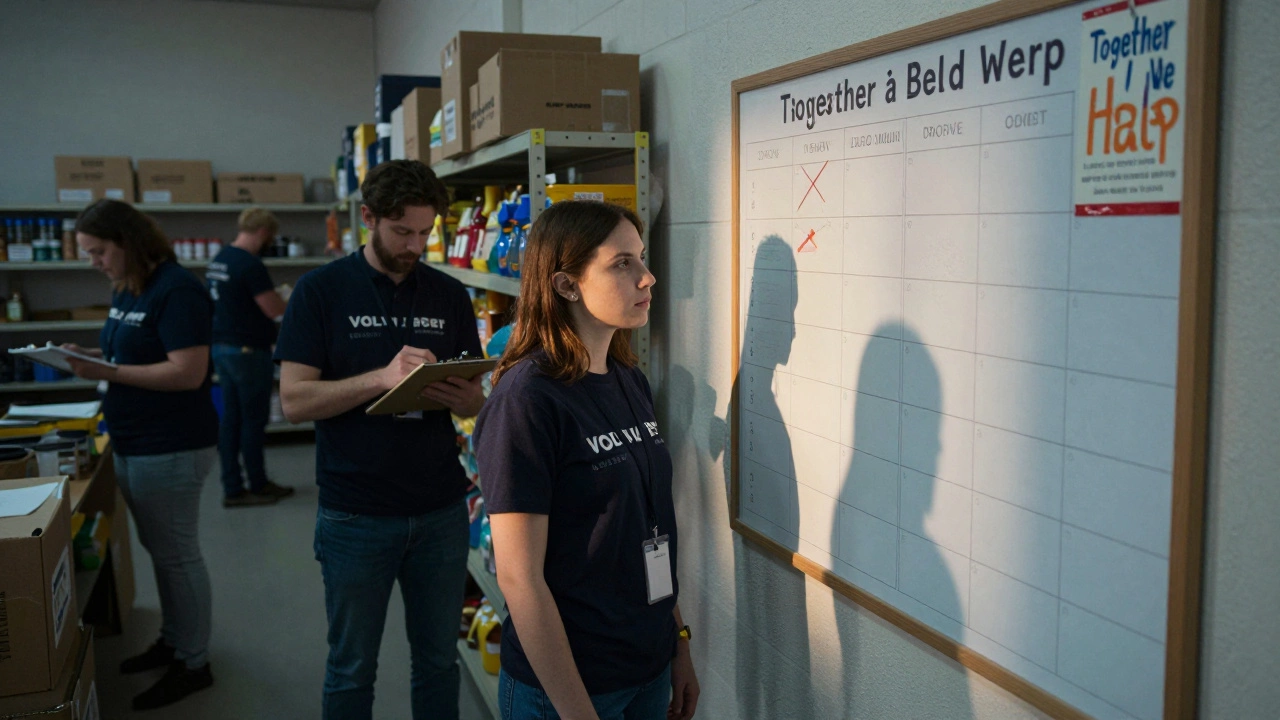
The damage isn’t just personal. It ripples outward.Organizations rely on volunteers to fill gaps. But when someone burns out, it creates a domino effect. New volunteers get thrown into deep roles without proper training. Paid staff pick up extra work. Morale drops. Fundraising events get canceled because the core team is too worn out to plan them.
And then there’s the emotional toll on others. Imagine being a new volunteer who looks up to someone who’s always there - only to find out they vanished without warning. That can make you question whether your own efforts matter. That’s not leadership. That’s unintentional harm.
One food bank manager in Leith told me last year: "We’ve lost five regular volunteers this winter. All of them quit because they thought they had to do everything. None of them asked for help. None of them said they needed a break. We didn’t see it coming until it was too late."
How Much Is Too Much?
There’s no magic number. But here’s a simple rule: if you’re volunteering more than 10 hours a week for more than three months straight, you’re in the danger zone. Not because it’s bad - but because it’s unsustainable without boundaries.Think of it like exercise. You wouldn’t run a marathon every day and expect to stay healthy. Volunteering is the same. It’s physical, emotional, and mental labor. You need recovery time. You need space to refill your own cup.
Studies from the UK Volunteering Survey 2025 show that the most effective volunteers - the ones who stay involved for years - typically give 5 to 8 hours a week. Not because they’re lazy. Because they’re smart. They pace themselves. They rotate roles. They take breaks.

How to Volunteer Sustainably
You don’t have to quit. You just need to adjust.- Set a cap. Decide on your max hours per month. Write it down. Stick to it.
- Choose one or two roles. Deep involvement in one or two causes beats scattered efforts across five.
- Schedule rest. Block out one weekend a month as "no volunteering" time. Treat it like a doctor’s appointment.
- Ask for help. If you’re overwhelmed, say it. Most organizations have backup volunteers. They won’t think less of you - they’ll thank you for being honest.
- Switch it up. Rotate between physical, social, and administrative tasks. Don’t do the same thing every week.
One woman in Musselburgh started by helping at the animal shelter every Saturday. After six months, she added a Tuesday shift at the youth center. Then she noticed she was dreading both. So she switched: one Saturday a month at the shelter, and one Tuesday a month at the center. She still helps - but now she’s happy. And she’s still there two years later.
It’s Not About Quantity. It’s About Quality.
The world doesn’t need more volunteers who burn out. It needs more volunteers who last.Volunteering isn’t a race. It’s not a leaderboard. It’s not a test of how much you can give. It’s about showing up, again and again - with energy, with care, with joy.
When you protect your own well-being, you protect the work you care about. You become someone others can count on. Not because you’re always there. But because you’re always steady.
There’s no such thing as "too much" volunteering - if you’re taking care of yourself. But there is such a thing as giving until you have nothing left. And that’s not generosity. That’s self-erasure.
Is it bad to volunteer every day?
Volunteering every day isn’t inherently bad - but it’s rarely sustainable. Most people who volunteer daily end up burning out within a few months. The risk isn’t just physical exhaustion - it’s emotional numbness. You start showing up out of obligation, not passion. Most organizations recommend no more than 3-4 days a week, with at least one full rest day. If you’re doing daily shifts, ask yourself: Are you helping because you want to, or because you feel like you have to?
Can volunteering cause depression?
Volunteering itself doesn’t cause depression - but overvolunteering can contribute to it. When you give constantly without rest, your brain stops releasing dopamine the way it should. You feel drained, resentful, and disconnected. If you’re volunteering because you feel guilty, or to escape your own problems, the emotional load can deepen low mood. If you’re feeling persistently sad, hopeless, or numb during or after shifts, talk to someone. It’s not weakness. It’s a signal.
How do I say no to volunteering without feeling guilty?
Start with honesty: "I really care about this work, but I need to step back for a bit to take care of myself." Most organizations understand. Volunteers who set healthy boundaries are the ones who come back. Guilt comes from believing you owe more than you can give. You don’t. Your well-being matters as much as the cause.
What if I’m the only one who can do my role?
That’s a common myth - and a dangerous one. If you’re the only one, it’s because no one else has been trained. Talk to your coordinator. Say: "I need help training someone else so I can take a break." Good organizations want sustainability, not heroics. If they refuse, that’s a red flag. No one should be essential. If you leave, the work should still go on - because it’s bigger than any one person.
Are there volunteer roles that are less draining?
Yes. Roles that involve planning, writing, organizing, or remote tasks often have lower emotional load than direct care or crisis response. For example, managing social media for a shelter is less exhausting than serving meals to people in distress. Consider shifting to a role that aligns with your energy level. You don’t have to be on the front lines to make a difference.