Charitable vs. Private Trust Simulator
Configure Your Scenario
Simulation Results
Adjust settings and click Simulate to see how the law applies to your trust over time.
Imagine you set up a fund to help local artists. You pour your savings into it, hoping it will support creativity for generations. Now, imagine that same money sitting in a bank account for three hundred years, untouched by any real-world need. Does the law allow that? For most families, the answer is a hard no. But for charities, the rules are completely different.
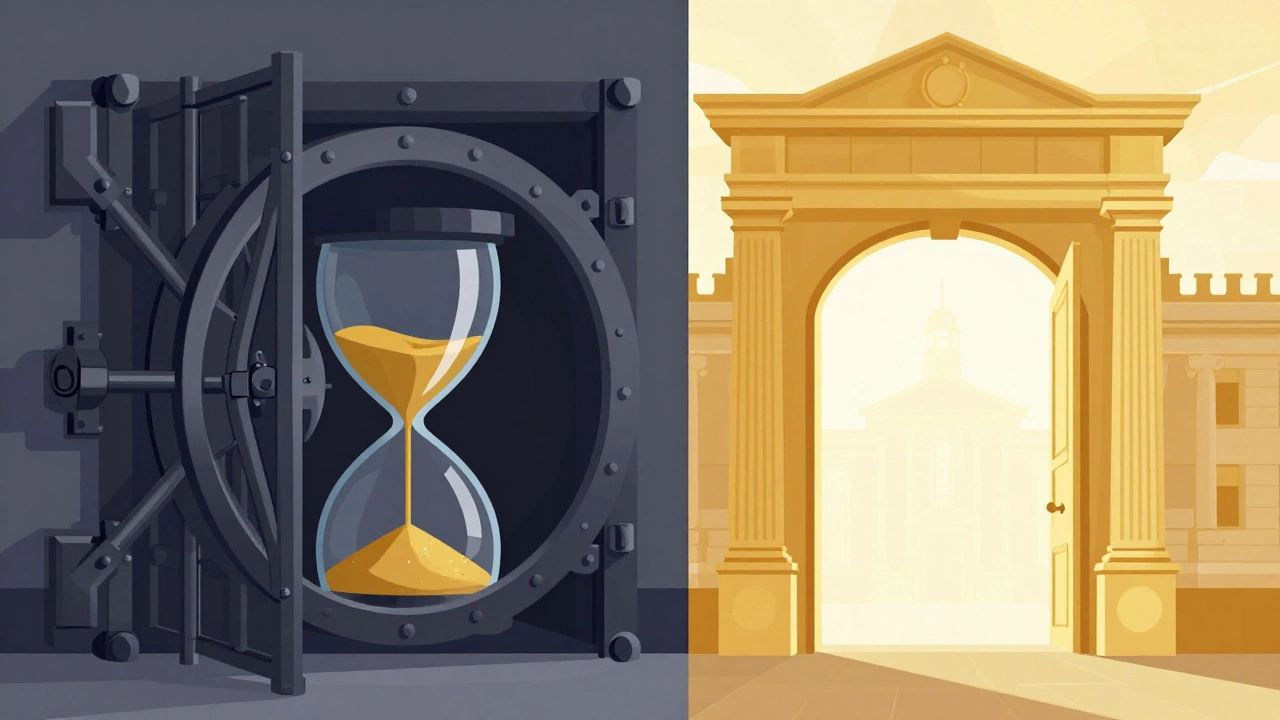
The short answer is yes, charitable trusts can last forever. In fact, they are designed to do exactly that. This concept, known as perpetual existence, sets them apart from almost every other type of legal arrangement involving money or property. While your family’s inheritance might be forced to split up after two generations due to strict laws, a charity can keep its assets intact and working toward its mission indefinitely.
The Rule Against Perpetuities: Why Most Trusts Have an Expiry Date
To understand why charities get this special treatment, we first have to look at the rule that stops everyone else. It’s called the Rule Against Perpetuities. This is an old common law principle, dating back centuries, which basically says you can’t tie up property for too long. The logic was simple: land and money should circulate in the economy, not sit frozen in a family vault for hundreds of years while descendants fight over who controls it.
In many jurisdictions, including parts of the United States and the UK, this rule used to mean a private trust could only last for about 90 to 100 years. After that time limit expired, the assets had to be distributed. If you tried to write a will that kept money in a trust for five hundred years, a court would likely strike down that part of the document. The goal was to prevent dead hands from controlling living economies.
| Feature | Private Trust | Charitable Trust |
|---|---|---|
| Duration Limit | Limited (e.g., 90-100 years) | Unlimited (Perpetual) |
| Beneficiaries | Specific individuals (family/friends) | The public or a section of the public |
| Enforcement | Beneficiaries sue trustees if needed | Attorney General or Charity Commission |
| Tax Status | Taxed like individual income | Often tax-exempt |
Why Charities Get a Pass on Time Limits
So why does the law make an exception for charities? The reason comes down to public benefit. When you create a private trust, you are helping specific people-your kids, your grandkids. That’s personal. But when you create a Charitable Trust, a legal entity established to manage assets for public good rather than private gain, you are helping society. The law views this as a gift to the community, not just a way to stash wealth away.
Because the beneficiary is "the public," there is no specific person to enforce the trust if the trustees mess up. In a private trust, if the trustee steals the money, the beneficiaries can sue. In a charitable trust, who sues? Historically, the Attorney General stepped in to represent the public interest. Today, bodies like the Charity Commission in England and Wales or state attorneys general in the US handle this oversight. Because the government already watches these organizations closely, the courts felt comfortable removing the time limit.
This exception allows organizations to build long-term capital. Think of universities founded in the 1600s or hospitals established in the 1800s. They survive because their endowments are protected by perpetual status. Without this rule, those institutions would have been forced to liquidate their assets every century, making long-term planning impossible.
The Doctrine of Cy-près: What Happens When a Mission Becomes Impossible?
Just because a trust lasts forever doesn’t mean its original purpose must stay frozen in time. Here is where things get interesting. Let’s say you donate money in 1750 to "build a bridge across the River Thames." By 2026, there are dozens of bridges. Your original goal is achieved, or perhaps even obsolete. Does the money vanish? No.
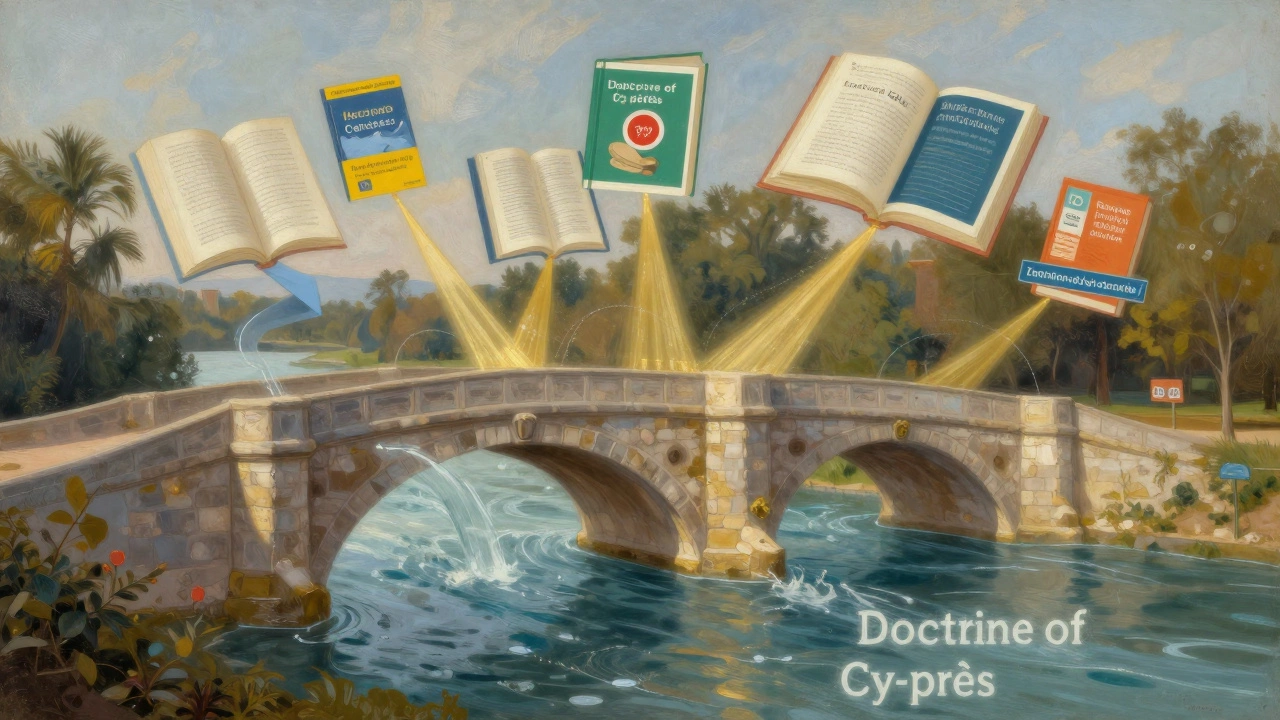
This is where the doctrine of Cy-près, a legal principle allowing courts to redirect charitable funds to similar purposes when the original intent becomes impossible or impractical comes in. Derived from the French phrase "cy près comme possible" (as near as possible), this doctrine allows courts or regulators to change the trust’s purpose to something that closely matches the donor’s original spirit.
If your 1750 bridge fund has extra money today, the court might redirect it to maintain existing bridges or fund river safety education. The trust still exists, but its job description has updated. This flexibility is crucial for perpetual trusts. It ensures that money isn’t wasted on outdated projects just because the founder died centuries ago. It keeps the assets productive and relevant.
How Long Can a Private Trust Actually Last?
While charities have indefinite lifespans, private trusts are still bound by limits, though these limits are changing. In some US states like South Dakota or Delaware, you can now create "dynasty trusts" that last for hundreds of years. These states have abolished or extended the Rule Against Perpetuities to attract wealthy families who want to avoid estate taxes across generations.
However, in many other places, the clock is still ticking. In the UK, the Perpetuities and Accumulations Act 2009 allows private trusts to specify a perpetuity period of up to 125 years. After that, the trust must terminate. This means a great-great-grandchild might inherit the cash outright instead of receiving annual payouts from a trust. For high-net-worth families, this distinction matters immensely for tax planning and control.
If you are setting up a trust for your family, you need to check the laws in your specific jurisdiction. A lawyer can help you structure it to maximize duration, but don’t expect it to last forever unless you convert it into a charitable vehicle.
Tax Implications of Perpetual Existence
Lasting forever comes with perks, but also responsibilities. One major perk is tax exemption. In the US, under Section 501(c)(3) of the Internal Revenue Code, qualified charitable trusts don’t pay federal income tax on donations or investment income used for their mission. Similarly, in the UK, registered charities enjoy exemptions from corporation tax, income tax, and capital gains tax.
But here’s the catch: you have to spend the money. Regulators watch out for "hoarding." If a charity makes millions in investments but spends nothing on its mission, it risks losing its status. The IRS and HMRC require charities to demonstrate they are actively furthering their public purpose. So, while the trust lasts forever, the money inside it must keep moving. It can’t just sit in a safe.
Additionally, perpetual trusts face scrutiny regarding unrelated business income. If your charity starts running a for-profit coffee shop chain that has nothing to do with its mission, that income might be taxed. The line between charitable activity and commercial activity must be clear.
Practical Steps to Ensure Your Trust Survives
If you want to create a legacy that outlives you, here is what you need to focus on:
- Define a Broad Purpose: Avoid overly specific goals that might become impossible. Instead of "fund research on polio," consider "support infectious disease research." This gives future trustees room to adapt via cy-près if needed.
- Choose Strong Trustees: Since the trust lasts forever, you need a mechanism for replacing trustees. Corporate trustees (like banks or professional firms) often last longer than individuals. They provide continuity and expertise.
- Plan for Inflation: A donation of $1 million in 1950 is worth far less today. Your trust deed should allow for investment strategies that grow the principal. Without growth, inflation eats away at the trust’s ability to help.
- Register Properly: In the UK, register with the Charity Commission. In the US, file Form 1023 with the IRS. Legal recognition is what unlocks the perpetual status and tax benefits.
Common Misconceptions About Trust Durability
Many people think that once a trust is set up, it runs on autopilot. That’s a dangerous assumption. Even perpetual trusts can fail. They can fail due to mismanagement, fraud, or simply becoming irrelevant. If a trust’s activities no longer serve the public benefit, regulators can dissolve it. The assets would then be redirected to another charity under cy-près.
Another myth is that all non-profits are charitable trusts. They aren’t. Some are unincorporated associations, some are companies limited by guarantee. Only those structured specifically as trusts with charitable objects get the automatic perpetual presumption. Knowing the difference affects how you govern the organization.
Can I change the purpose of my charitable trust later?
You cannot unilaterally change the core charitable purpose without approval. However, if the original purpose becomes impossible, illegal, or inefficient, you can apply to a court or regulator to use the doctrine of cy-près. This allows the funds to be redirected to a similar charitable cause that aligns with your original intent.
What happens to a charitable trust if it runs out of money?
If a charitable trust exhausts its assets, it effectively ceases operations. The trustees must wind up the affairs formally. Any remaining liabilities must be settled. Unlike a perpetual trust with assets, a broke trust has no ongoing legal presence. It is dissolved, and the registration is removed from the official charity register.
Is there a difference between a charitable trust and a foundation?
Yes, though the terms are often used interchangeably. A foundation is usually a type of charitable trust or non-profit corporation that holds an endowment and grants money to others. A charitable trust is a broader legal structure. All foundations are charitable in nature, but not all charitable trusts are structured as foundations. Foundations typically have a board of directors, while trusts have trustees.
Do charitable trusts have to publish their finances?
In most jurisdictions, yes. Transparency is a key requirement for maintaining tax-exempt status and public trust. In the UK, charities must submit annual reports and accounts to the Charity Commission. In the US, 501(c)(3) organizations must file Form 990, which is publicly accessible. This ensures accountability since there are no private beneficiaries to oversee the trustees.
Can a private trust become a charitable trust?
Yes, this is sometimes done through a process called conversion or amendment, subject to legal approval. If a private trust fails or its beneficiaries agree, the assets can be transferred to a new charitable structure. This allows the funds to escape the rule against perpetuities and gain tax advantages, provided the new purpose serves the public benefit.