Environmental Group Effectiveness Checker
Check Environmental Group Legitimacy
Verify if an environmental group is transparent, accountable, and effective based on criteria from the article.
Why This Matters
The article explains how to identify legitimate environmental groups. Many groups are real, but some are not. This tool helps you verify:
- Transparency in funding
- Registration with authorities
- Tangible achievements
- Avoiding scam tactics
There’s no single number for how many environmental groups exist-because new ones form every week, and others fade away. But if you’re trying to understand the landscape, you’re not asking for a count. You’re asking: Which groups actually make a difference? And how do they fit together?
They’re not all the same
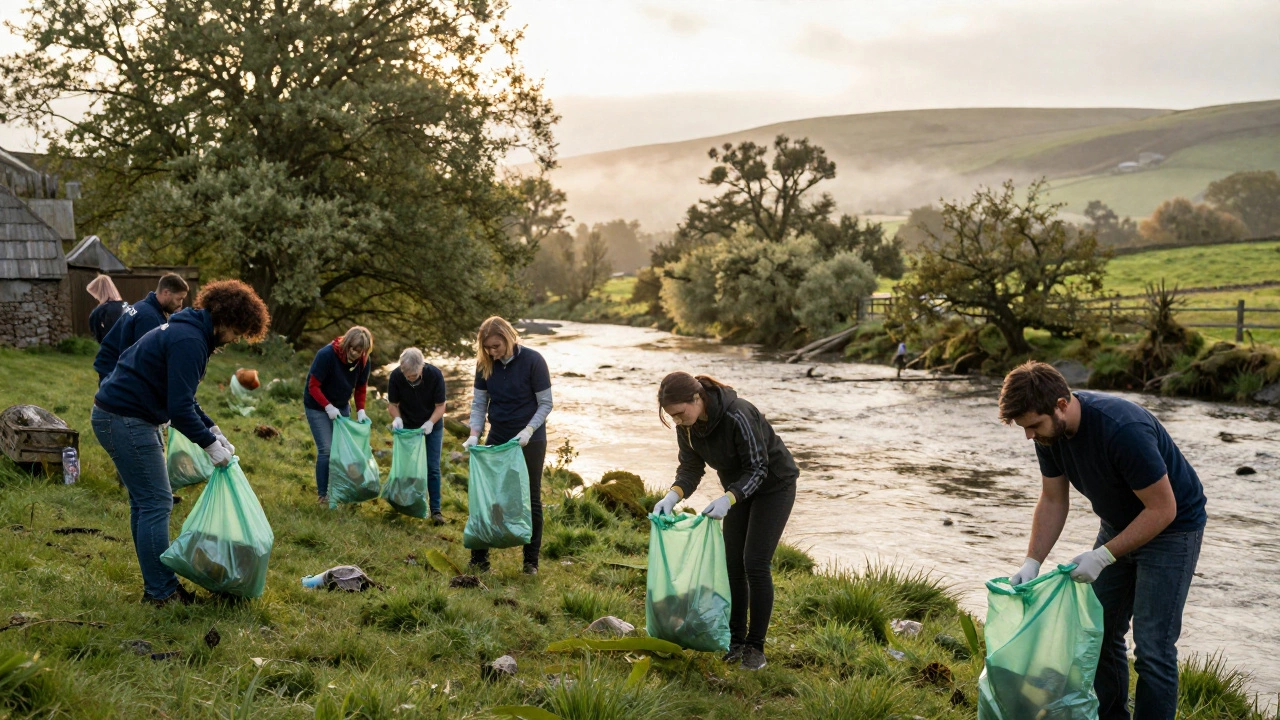
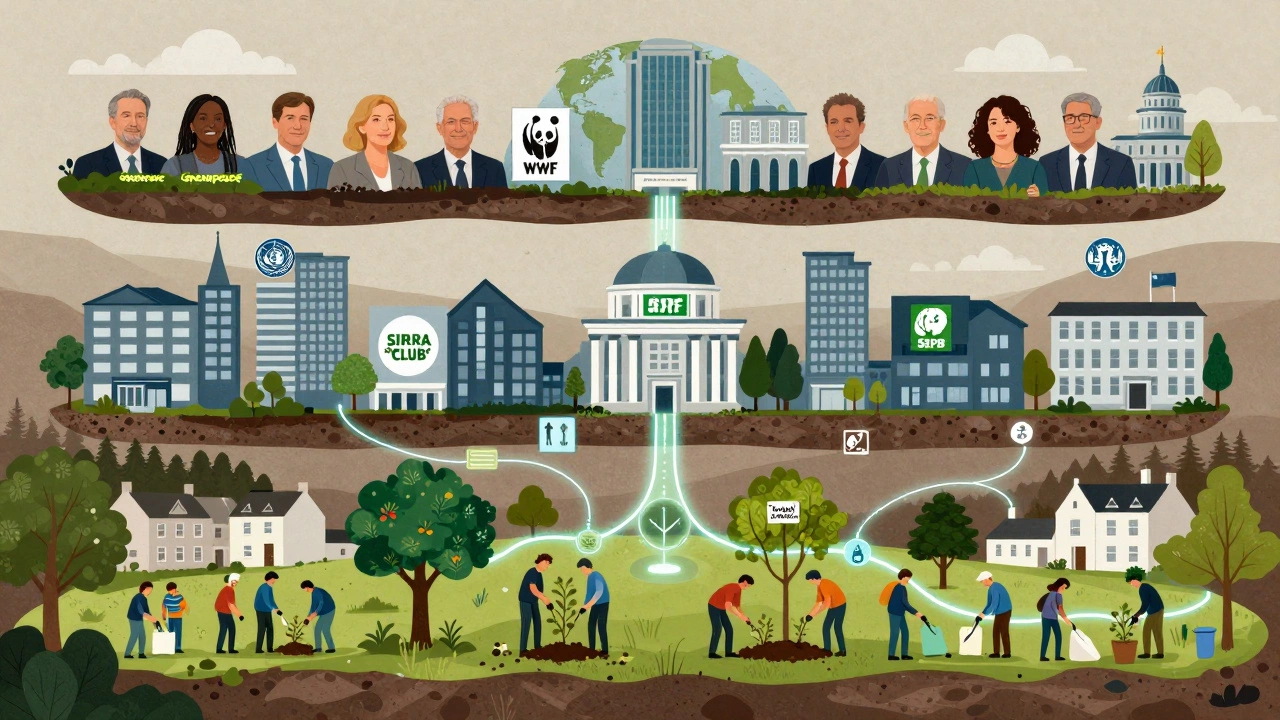
Environmental groups don’t all look like big nonprofits with offices in Washington or London. Some are tiny local teams cleaning up rivers in rural Wales. Others are global coalitions with millions of members. Some focus on protecting forests. Others push for clean energy laws. A few even sue governments.Think of them as layers. At the top, you’ve got the big international players like Greenpeace, WWF, and Friends of the Earth. They run global campaigns, fund research, and lobby the UN. Below them, national organizations like the Sierra Club in the U.S. or the Royal Society for the Protection of Birds in the UK handle regional policy and public education. Then come the local groups-community land trusts, beach cleanup crews, urban tree planting collectives. These are often run by volunteers who show up every Saturday with gloves and trash bags.
What do they actually do?
It’s easy to think environmental groups just protest. But their work is way more varied.- Research and data collection: Groups like the Environmental Defense Fund track methane leaks from oil wells. The Marine Conservation Society counts plastic waste on UK beaches every year.
- Legal action: ClientEarth has sued the UK government over air pollution. In Scotland, the Scottish Environment Link has taken legal steps to protect peatlands.
- Community organizing: In Glasgow, the Clyde Climate Justice Group helps low-income neighborhoods access energy efficiency grants.
- Education: The Woodland Trust runs school programs teaching kids how to identify native trees.
- Direct action: Some groups, like Extinction Rebellion, use civil disobedience to force public attention.
None of these would work without the other. Research gives lawyers evidence. Local groups bring real stories to national campaigns. And public pressure pushes politicians to act.
How many are there? A rough estimate
There’s no official global registry. But based on data from the UN Environment Programme and the International Union for Conservation of Nature, here’s a realistic breakdown:- Global organizations: About 20-30 major international NGOs with active offices in over 50 countries.
- National-level groups: Roughly 500-800 in high-income countries alone. In the U.S., there are over 600 registered environmental nonprofits. In the UK, there are about 250.
- Local and grassroots groups: This is where the numbers explode. In Scotland alone, there are more than 1,200 registered environmental community groups. In the U.S., estimates range from 10,000 to 20,000. In developing countries, the number is likely higher-but harder to track because many operate without formal registration.
So if you add them all up? You’re looking at anywhere between 15,000 and 30,000 active environmental groups worldwide. And that’s just the ones we know about.
Who funds them?
Money shapes what these groups can do. Big NGOs often rely on donations from individuals and foundations. Greenpeace, for example, refuses corporate funding to stay independent. WWF takes money from corporations but has strict guidelines. Smaller groups survive on grants from local councils, community funds, or crowdfunding.In Scotland, many local groups get support from the Scottish Government’s Climate Challenge Fund. This program has given over £100 million since 2008 to more than 1,000 community projects-from bike repair workshops to community gardens.
But funding is unstable. A grant might last two years. Then the group has to scramble again. That’s why so many environmental groups are run by people working unpaid, often holding full-time jobs just to keep their cause alive.
How to tell if a group is legitimate
Not every group calling itself “environmental” is doing real work. Some are front organizations. Others are just trying to collect donations without delivering results.Here’s how to check:
- Look for transparency. Do they publish annual reports? Can you see where their money goes?
- Check if they’re registered. In the UK, all charities must be listed on the Office of the Scottish Charity Regulator or the Charity Commission for England and Wales.
- See what they’ve actually achieved. Have they won a policy change? Restored a wetland? Helped a community switch to renewable energy?
- Watch for red flags. If they pressure you to donate immediately, or say “95% of your money goes to the cause” (that’s a scammy phrase), walk away.
Why it matters
The environment isn’t saved by one big group. It’s saved by thousands of small actions-someone planting a tree, a teenager starting a recycling club, a retiree writing to their MP, a local group stopping a new road through ancient woodland.When you join one of these groups, you’re not just adding your name to a list. You’re becoming part of a network. That network shares data. That network pressures corporations. That network changes laws.
And it’s working. In the last decade, Scotland’s peatland restoration program has protected over 100,000 hectares of carbon-storing land. The UK banned single-use plastics in 2023 after years of pressure from environmental groups. In 2024, over 400 local councils in the UK declared climate emergencies-most of them pushed by community campaigns.

Where to start
If you want to get involved, don’t look for the biggest name. Look for the closest one.- Search “environmental group near me” on Google. Add your town or city.
- Check your local council’s website. They often list community environmental projects.
- Visit a community center or library. They usually have flyers or bulletin boards with local group info.
- Try platforms like Do-It.org or Volunteer Scotland-they list hundreds of environmental volunteer opportunities.
You don’t need to quit your job. You don’t need to be an expert. You just need to show up. One hour a month. One weekend a year. That’s how change starts.
What’s changing now
The biggest shift in the last five years? More groups are focusing on justice. It’s not just about saving polar bears anymore. It’s about who gets clean air, who gets flood protection, who gets green space.Groups like Climate Justice Alliance and the Environmental Justice Foundation are pushing for policies that protect low-income communities and Indigenous lands. In Scotland, the Climate Emergency Fund now prioritizes projects led by marginalized groups.
This isn’t a side issue. It’s the core. You can’t fix the environment without fixing inequality.
What’s next
The next five years will be about scaling up. More groups are forming alliances. Smaller ones are joining forces to win bigger fights. In 2025, over 200 Scottish environmental groups came together to demand stronger protections for marine habitats. They didn’t just sign a petition-they held a public inquiry in Edinburgh and got the government to commit to new laws.That’s the power of numbers. Not just how many groups exist-but how many people are connected to them.
Are all environmental groups non-profits?
Most are registered as charities or non-profits, especially in the UK and EU. But some are for-profit businesses that focus on sustainability, like eco-friendly product companies or green consulting firms. Others are informal collectives with no legal structure at all-like neighborhood tree-planting crews. What matters isn’t their legal status, but whether they’re actually protecting nature and holding polluters accountable.
Can one person really make a difference in an environmental group?
Absolutely. Many groups start with one person. The UK’s Plastic Free Communities initiative began with a single schoolteacher in Devon who banned plastic packaging in her classroom. Within five years, over 2,000 towns joined. Volunteers handle social media, organize cleanups, write to MPs, and even run local elections. You don’t need to be a leader to be vital. Showing up consistently is what counts.
Do environmental groups work with governments?
Yes, but it’s complicated. Many groups partner with local councils on projects like tree planting or recycling programs. Some, like the RSPB, work with the UK government on wildlife conservation. But others, like Extinction Rebellion or Greenpeace, deliberately challenge government policy. The best groups know when to collaborate and when to push back. It’s not about being friends with power-it’s about making sure power serves the environment.
Are environmental groups only active in cities?
No. In fact, many of the most impactful groups are in rural areas. In Scotland, groups like the Cairngorms National Park Authority and the Tweed Forum protect wild rivers and moorlands. In the Highlands, community trusts manage rewilding projects. Even in remote islands like Mull or Lewis, locals run seabird monitoring and coastal cleanups. Environmental work isn’t tied to population density-it’s tied to places that need protection.
How do I know if a group is effective?
Look for outcomes, not just activity. An effective group can show: policy changes they influenced, habitats restored, pollution reduced, or community members trained. If they only post photos of cleanups without mentioning results, they might be doing good work-but not necessarily impactful work. Ask: Did they change a law? Win funding? Stop a development? If yes, they’re effective.
If you’re wondering whether your time matters, it does. The environment doesn’t need more slogans. It needs more people showing up-quietly, consistently, and together.