After-School Club Success Simulator
Define Your Club Concept
Answer these questions to simulate how likely your club is to retain students beyond the first month.
Starting an after-school club is easy. Keeping it full of excited students? That’s the hard part. You’ve got the room, maybe a teacher sponsor, and a vague idea about "fun." But by week three, you’re staring at empty chairs while the drama kids are packing up early. Why do some clubs explode in popularity while others fizzle out before Halloween?
The secret isn’t just having a cool name or free snacks (though those help). It’s about understanding what teenagers actually want from their limited free time. They want autonomy, connection, and a break from the academic grind. If your club feels like another class with extra steps, they’ll skip it. Let’s break down how to build a club that students actively fight to join.
Start With What Students Actually Want
Don’t guess. Ask. Before you even book a room, send out a simple survey via your school’s social media channels or homeroom announcements. Ask two things: "What skills do you want to learn outside of class?" and "What existing clubs did you quit, and why?"
You might find that everyone wants to start a coding club, but they hate the idea of sitting behind screens for an hour. Maybe they love baking but have no oven access. This data shapes your concept. For example, if students mention stress relief, a "Chill & Craft" session might outperform a competitive debate team. The goal is to solve a problem for them-boredom, loneliness, or skill gaps-not just fill a slot on the timetable.
| Club Type | Primary Student Motivation | Key Success Factor | Common Pitfall |
|---|---|---|---|
| Creative Arts (Ceramics, Painting) | Self-expression without grading | Low barrier to entry; messy is okay | Too much instruction, not enough freedom |
| Sports/Fitness (Yoga, Climbing) | Physical release and social bonding | Inclusive levels; no tryouts | Competitive pressure alienates beginners |
| Tech/Gaming (Esports, Coding) | Mastery and peer recognition | Clear progression paths | Equipment bottlenecks causing wait times |
| Service/Led (Eco-Club, Tutoring) | Purpose and college resume building | Visible impact on the local community | Feeling like unpaid labor |
Nail the First Five Minutes
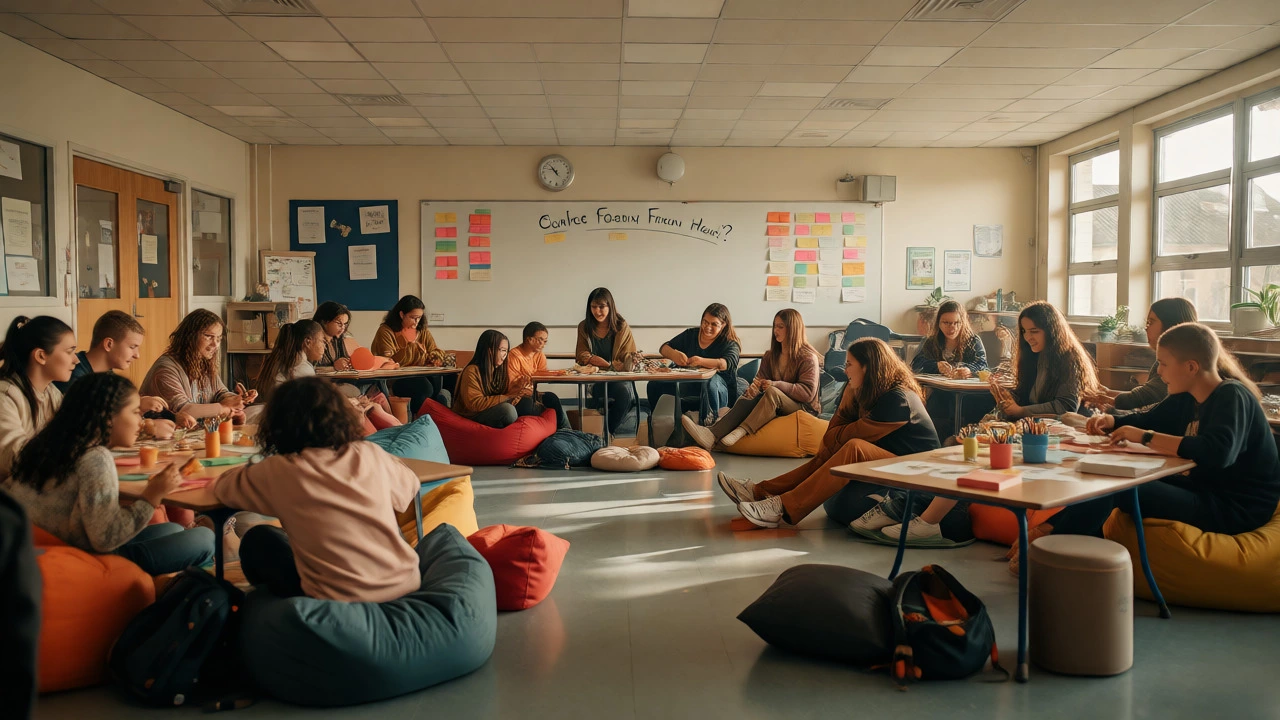
First impressions stick. If students walk into a room where everyone is already seated in silence waiting for instructions, they feel awkward. Instead, design the first five minutes as low-stakes interaction. Have music playing. Put out a whiteboard with a controversial question related to your topic (e.g., "Is pineapple pizza a crime?" for a cooking club) and let them vote with sticky notes.
This immediate engagement signals that this space is different from regular lessons. It’s casual. It’s theirs. Also, ensure the physical layout encourages mixing. Circle seating works better than rows. If you’re doing an activity, have materials ready so nobody has to wait around while someone finds scissors.
Create a Sense of Ownership
Students disengage when they feel like passive participants. Give them roles. Not just "president," which often becomes a title with no real power, but functional jobs. Rotate responsibilities weekly:
- The Hype Team: Responsible for posting photos to Instagram/TikTok after sessions.
- The Logistics Crew: Handles setup and cleanup, ensuring equipment is safe.
- The Feedback Loop: Collects anonymous suggestions for next week’s activities.
When a student knows they’re responsible for the playlist, they show up because they don’t want to let their friends down. Peer accountability is far stronger than teacher enforcement.

Make It Visible and Viral
A popular club is a visible club. Use digital tools wisely. Create a dedicated account on platforms where your students live (likely Instagram or TikTok). Post short clips of the action-not posed group shots, but candid moments of laughter or focus. Tag the school account to boost visibility.
Offline visibility matters too. Put up posters that change monthly. Don’t just list meeting times; show faces. Include a QR code that links directly to a sign-up form or a preview video of last week’s project. When other students see their peers enjoying themselves, curiosity kicks in. FOMO (Fear Of Missing Out) is a powerful recruitment tool.
Keep Sessions Dynamic, Not Repetitive
Monotony kills momentum. Even if your club is focused on one thing, like chess, vary the format. One week could be standard matches, the next a blitz tournament, and the third a "teach a beginner" session. Structure each meeting with a clear beginning, middle, and end, but leave room for improvisation.
Try the "10-Minute Rule": Spend the first 10 minutes on socializing or warm-ups, 30-40 minutes on the core activity, and the last 10 minutes on reflection or planning next steps. This rhythm keeps energy high. Avoid long lectures. If you need to explain rules, demonstrate them visually or let students figure them out through play.

Address the Boring Stuff: Food and Timing
Let’s be real: hungry teenagers are grumpy teenagers. If budget allows, provide light snacks. Even something simple like fruit slices or crackers makes a difference. If there’s no budget, encourage a potluck style once a month. It builds community and shares costs.
Timing is critical. Check the school calendar. Do not schedule your big event during exam weeks or right after a major sports game. Conversely, launch new initiatives during quieter periods. Also, consider the bus schedule. If your club ends at 4:30 PM but the last bus leaves at 4:15 PM, you’ve lost half your potential members. Work with administration to align timings with transport options.
Foster a Safe and Inclusive Environment
Popularity attracts diverse personalities. Your job is to manage dynamics. Establish ground rules early, co-created with the students. Examples: "Phones away during core activity," "Everyone speaks once before anyone speaks twice," or "No mocking mistakes." Enforce these gently but consistently.
Watch for cliques. If groups stay segregated, mix them up intentionally. Assign mixed-group projects. Ensure that quieter students aren’t overshadowed by louder ones. Sometimes, simply asking a shy student to hold a specific tool or read a card gives them a foothold in the conversation.
Evaluate and Adapt
At the end of each term, review what worked. Look at attendance numbers, but also talk to students. Did they enjoy it? Would they recommend it? Be willing to pivot. If a particular activity flops, drop it. If a new trend emerges (like a sudden interest in AI art), test it out. Flexibility shows students that you’re listening, which builds trust and loyalty.
How many students do I need to start a club?
There is no magic number, but aiming for 8-12 active participants is ideal for most interactive clubs. Fewer than 5 can make activities difficult to run, while more than 20 may require multiple facilitators. Start small and let word-of-mouth grow the group naturally.
What if we have no budget for supplies?
Get creative. Host a bake sale, ask local businesses for donations (a hardware store might donate paint), or use recycled materials. Many schools have small discretionary funds for student-led initiatives. Alternatively, design activities that require minimal resources, such as discussion groups, walking tours, or bodyweight fitness.
How do I handle students who only come for the snacks?
It’s fine! Snacks are a hook. Once they are there, engage them with the activity. Often, they will stay longer than expected. Just ensure the food doesn’t become the sole focus. Serve snacks at the end of the session as a reward for participation, rather than at the beginning.
Should teachers lead the club or should it be student-led?
A hybrid model works best. A teacher provides supervision and logistical support, especially for safety and insurance reasons, but students drive the agenda. This balance ensures safety while maximizing student ownership and engagement.
How do I deal with attendance dropping mid-term?
This is common due to exam stress or seasonal fatigue. Acknowledge it openly. Consider scaling back intensity during peak academic periods or switching to lighter, social-focused sessions. Re-invite lapsed members personally-a direct message often works better than a general announcement.