
School Club Vibe Check
How is your club running?
Answer the questions to see how engaging your club is and get specific tips to improve it!
Picture this: It’s Tuesday afternoon. The bell rings, but instead of heading home or scrolling through phones in the hallway, half the school rushes toward Room 304. They aren’t forced to be there. They’re excited. This isn’t magic-it’s the result of a school club that actually matters to its members.
Many school clubs struggle with empty chairs. You might have started a Robotics Club or a Debate Team with high hopes, only to watch attendance drop after the first month. Why? Because students don’t join clubs just because they are on the schedule. They join because they want to belong, create, or solve a problem. If your club feels like another class without grades, it will fail. To make a school club interesting, you need to shift from "organizing meetings" to "creating experiences."
Stop Planning Meetings, Start Designing Experiences
The biggest mistake advisors and student leaders make is treating a club meeting like a lecture. If you sit at the front of the room and talk while everyone else listens, you’ve built a bad class, not a community. Active learning is an educational approach where students do things and think about what they are doing. In a club context, this means hands-on work from minute one.
Think about why people love escape rooms or hackathons. There is a clear goal, a time limit, and immediate feedback. Apply this to your club. If you run a Book Club, don’t just discuss the last chapter. Host a "Character Trial" where students argue legal cases based on the book’s events. If you lead a Coding Club, don’t teach syntax. Challenge them to build a simple game in 45 minutes. When students leave feeling like they *did* something, they’ll come back.
- Avoid passive formats: No long presentations or reading aloud unless absolutely necessary.
- Create mini-projects: Every meeting should produce a tangible output (a poster, a code snippet, a baked good).
- Rotate roles: Let different students lead warm-ups or manage materials so ownership spreads.
Give Students Real Autonomy (The Ownership Factor)
Students can smell adult control from a mile away. If every idea comes from the teacher advisor, the club becomes a performance for the staff member. To keep interest high, you must hand over the keys. This doesn’t mean chaos; it means structured freedom.
Implement a "Idea Bank" system. At the start of the term, ask every member to submit three project ideas they’d love to try. Vote on them democratically. Then, assign small teams to execute these ideas. For example, if the Environmental Club wants to clean up the local park, let the students plan the logistics, design the flyers, and coordinate with the city council. Your role as an advisor shifts from director to consultant. You help remove roadblocks, but you don’t drive the car.
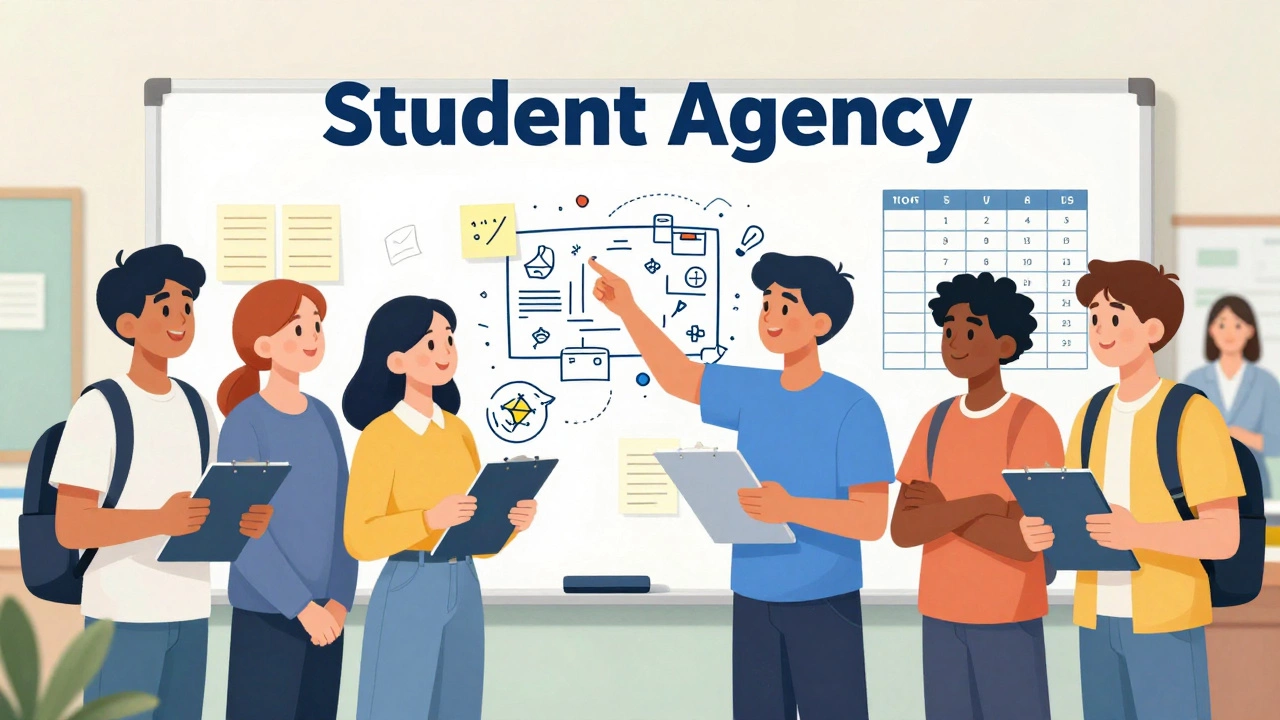
This approach builds Student agency, which is the capacity of students to act independently and make their own free choices. Research in youth development consistently shows that when young people feel ownership over their activities, retention rates skyrocket. They aren’t just attending; they are building their legacy.
Solve Real Problems, Not Hypothetical Ones
Abstract topics often bore teenagers. Concrete problems excite them. Connect your club’s mission to the real world outside the school walls. This gives members a sense of purpose beyond just passing time.
| Generic Activity | Real-World Project | Why It Works |
|---|---|---|
| Discussing climate change | Auditing the school’s energy usage and proposing cuts to the principal | Tangible impact on their immediate environment |
| Practicing public speaking | Hosting a TEDx-style event for younger students | Authentic audience and higher stakes |
| Learning coding basics | Building a website for a local non-profit organization | Professional portfolio piece and community service |
| Reading poetry | Creating a spoken-word zine distributed in the library | Creative expression with physical artifact |
When the Math Club helps a local small business calculate inventory costs, math stops being abstract numbers and starts being a tool for survival. When the Art Club paints murals for a shelter, art becomes social commentary. These connections make the club relevant to their lives and futures.
Leverage Social Dynamics and Gamification
Humans are social creatures. Part of what makes a club sticky is the relationship between members. If students only interact with the teacher, they will drift away. You need to engineer peer-to-peer connection.
Use gamification techniques to boost engagement. This doesn’t mean childish points systems. Think about leveling up, badges, or collaborative challenges. For instance, a Chess Club could host a monthly tournament with brackets and prizes (even small ones like pizza coupons). A Drama Club could implement a "skill tree" where members earn badges for mastering specific acting techniques or stagecraft skills.
Also, consider the "buddy system" for new members. Loneliness kills clubs. If a new student walks in and sees groups of friends already talking, they may feel intimidated. Assign veteran members to mentor newcomers for the first few weeks. This creates a welcoming culture and ensures no one sits alone.

Keep the Vibe Low-Stress and High-Fun
School is stressful enough. Grades, exams, and social pressures weigh heavily on students. Your club should be a sanctuary, not another source of anxiety. Avoid strict deadlines or punitive measures for missed homework within the club. Instead, focus on low-stakes creativity.
Incorporate "icebreakers" that aren’t cringe-worthy. Skip the two-truths-and-a-lie if it feels forced. Try quick collaborative games like drawing together on a whiteboard or solving a riddle. Keep the first ten minutes of every meeting flexible for socializing. Allow snacks. Food is a universal connector. If budget allows, provide cheap, healthy snacks. If not, encourage a potluck style once a month.
Remember, consistency beats intensity. It is better to meet weekly for 45 minutes of focused fun than to meet monthly for three hours of exhausting work. Regular contact builds habit and friendship.
Iterate Based on Feedback
You cannot guess what students want forever. You must listen. Create a feedback loop. At the end of each month, send out a quick anonymous survey via Google Forms or even a physical suggestion box. Ask simple questions:
- What was the best part of this month?
- What felt boring or unnecessary?
- What should we try next?
Act on this feedback visibly. If students say they want more guest speakers, invite someone. If they say the meetings run too long, cut the agenda down. When members see their opinions shape the club, they feel valued. This transparency builds trust and keeps the content fresh.
Making a school club interesting requires shifting your mindset from administration to curation. You are curating an experience where students can explore interests, build skills, and connect with peers in a safe, engaging environment. By focusing on active participation, real-world impact, and student autonomy, you transform a mandatory activity into a cherished part of their school life.
How do I get more students to join my school club?
Focus on visibility and word-of-mouth. Create eye-catching posters that highlight what students will *do*, not just what the club is. Use QR codes linking to a short video of past events. Encourage current members to bring a friend for a "guest pass" week. Also, ensure your first meeting is a high-energy workshop rather than an orientation speech.
What if my club has no budget for activities?
Low cost does not mean low value. Focus on discussions, debates, skill-sharing among members, and outdoor activities. Partner with local businesses for sponsorships or in-kind donations. Many libraries offer free meeting spaces and resources. Creativity thrives under constraints; use free online tools for projects.
How often should a school club meet?
Weekly meetings are ideal for building momentum and relationships. Bi-weekly meetings can work if the sessions are longer and more intensive. Monthly meetings often lead to disengagement because the momentum dies between sessions. Consistency is key to habit formation.
Who should lead the club, the teacher or the students?
Ideally, students should lead the content and direction, while the teacher acts as a facilitator and safety net. Student-led clubs foster greater ownership and engagement. However, the teacher must ensure compliance with school policies and provide guidance when students face roadblocks.
How do I handle conflicts between club members?
Address issues early and privately. Establish clear community guidelines at the start of the year regarding respect and inclusion. Mediate conflicts by focusing on behavior and solutions rather than blame. If bullying occurs, follow school disciplinary protocols immediately.