Charity Fundraising Strategy Planner
Enter your goal and click Calculate to see your personalized plan.
Why This Works
The "Easy Yes" Factor
Asking for $20 is less psychologically taxing than asking for $100. Smaller asks have higher conversion rates among friends and family.
Social Proof Momentum
Getting the first 10 donations creates visibility. People are more likely to donate when they see others already contributing.
Frictionless Giving
Ensure your donation link takes no more than 2 clicks. Speed is critical for impulse giving in fast campaigns.
You need $1000 raised quickly for a specific cause or personal emergency. Maybe it is for a local food bank, a friend's medical bill, or a youth program that just lost its grant. The clock is ticking, and the usual six-month gala planning cycle feels like a lifetime away. You do not have time for complex logistics, venue bookings, or long-term sponsorship negotiations. You need cash in hand, ideally within days or a couple of weeks.
Here is the good news: raising $1000 is surprisingly manageable if you stop trying to find one person with $1000 and start finding fifty people with $20. It is about shifting your mindset from "big ask" to "easy yes." As someone who has organized everything from street collections in Edinburgh to digital campaigns for small trusts, I can tell you that speed comes from simplicity, not complexity. Let’s break down exactly how to get there without burning out your supporters or your own sanity.
The Math Behind the Magic
Before you send a single email, look at the numbers. $1000 sounds big until you break it down. If you aim for 50 donors giving $20 each, you hit your target. That is a very realistic ask for friends, family, and colleagues. If you try to get 10 donors to give $100, you are asking for more commitment, which takes longer to secure. If you go for 100 donors giving $10, you need volume, which requires broader reach.
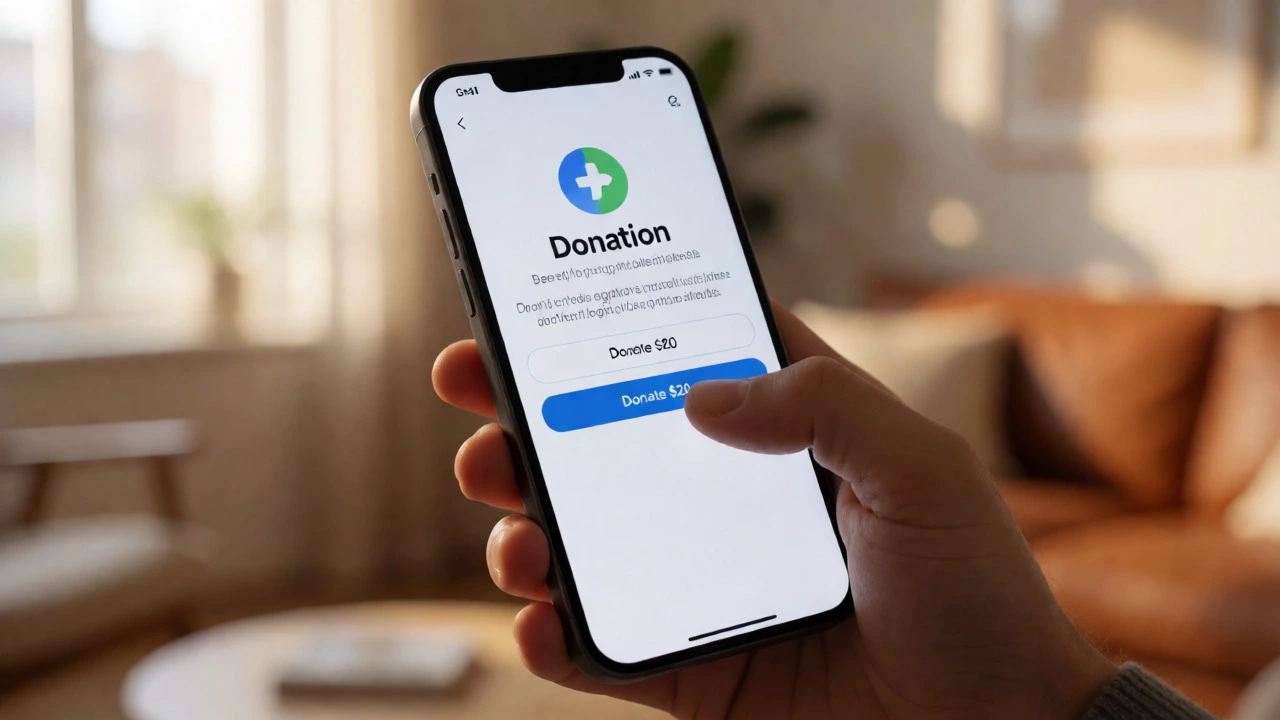
For a fast turnaround, the sweet spot is usually between $15 and $30 per donor. This amount is low enough that people do not overthink it, but high enough that you do not need hundreds of strangers to reach your goal. Your job is to make this transaction frictionless. If it takes more than two clicks to donate, you will lose half your potential donors. Use a platform like GoFundMe, JustGiving, or even a simple PayPal link if you are collecting personally. The key is immediacy.
| Donor Count | Amount Per Donor | Effort Level | Best For |
|---|---|---|---|
| 50 | $20 | Moderate | Friends & Family, Local Community |
| 20 | $50 | High (Personal Asks) | Close Network, Colleagues |
| 100 | $10 | Low (Per Person) / High (Volume) | Social Media Reach, Strangers |
Leverage Your Immediate Circle
Your fastest path to $1000 is through people who already trust you. This is your warm market. Do not be shy here. Many people hesitate because they feel like they are bothering others. Flip that script. People generally want to help; they just need an easy way to do it. Start with a direct message or a phone call. Not a mass email. Mass emails get ignored. Personal texts get replies.
Try this script: "Hi [Name], I’m helping raise $1000 for [Cause] by next week. It’s urgent because [Reason]. Would you be open to chipping in $20? It would really help me hit the target." Notice the specificity. You gave them a number ($20), a reason (urgency), and a clear action. If they say yes, send the link immediately. If they say no, thank them and move on. Do not guilt-trip. Speed relies on momentum, and rejection slows you down.
Aim to secure 20-30 donations from this circle first. That gets you halfway there in 48 hours. Once you have social proof-showing that others are donating-it becomes easier to ask acquaintances. Nobody wants to be the first one to buy dinner, but everyone joins a crowded restaurant.
Host a Micro-Event
You do not need a banquet hall. You need a gathering. Think small, think fast. A "Pizza and Pledge" night, a sponsored walk around the block, or a bake sale in your office lobby. These are micro-events. They take minimal prep but generate immediate cash flow.
Consider a "Sponsored Silence" challenge. Ask participants to stay silent for 24 hours. For every hour they remain silent, they pledge $1 or $2. Or better yet, ask their friends to sponsor them for staying quiet. It is funny, shareable, and highly engaging on social media. Another option: a garage sale where you sell items you no longer need, but ask buyers to round up their payment to the nearest $10 as a donation. If you sell a jacket for $15, ask for $20. Most people will happily add the extra $5 for a good cause.
If you are tech-savvy, host a live stream on Instagram or TikTok. Spend an hour answering questions about the cause, doing something entertaining (like playing music or cooking), and drop your donation link in the bio. Even 50 viewers donating $10 each gets you to $500 instantly. The energy of a live event drives impulse giving.

Tap Into Local Business Partnerships
Local businesses are often looking for community goodwill. You do not need a corporate sponsorship deal that takes months to approve. Walk into independent coffee shops, bookstores, or bakeries near you. Ask if they would display a QR code for your campaign in exchange for mentioning them on your social media posts.
Offer a simple trade: You promote their business to your network; they provide visibility to their foot traffic. For example, a café might agree to donate $1 from every latte sold on Saturday if you post about it on Friday. If they sell 100 lattes, that is $100. Multiply that across three local spots, and you have $300 with almost zero cost to you. This works best with owners who know you or frequent the same neighborhood. Bring printed flyers with the QR code so they can easily put them on counters.
Create Urgency With Matching Gifts
People love a deal. Find one generous individual-a family member, a boss, or a local business owner-and ask them to match donations up to $200 or $500. Announce this loudly: "Every dollar donated today will be doubled by [Name]!" This doubles the impact of every small contribution. A $10 donation suddenly feels like $20.
This tactic works psychologically because it removes the feeling that a small gift is insignificant. If you can secure a $500 match, you only need to raise $500 directly to hit $1000 total. That cuts your workload in half. Make sure the matching offer has a strict deadline, like 48 hours. Urgency drives action. Without a deadline, people procrastinate, and procrastination kills fast fundraisers.
Digital Blitz: Social Media Strategy
Your social media channels are free advertising space, but only if you use them correctly. Do not just post the link once. Create a content calendar for the next seven days. Day 1: Introduce the problem with a photo or short video. Day 2: Share a story of someone helped by the cause. Day 3: Post a thank-you to early donors. Day 4: Explain the matching gift opportunity. Day 5: Show behind-the-scenes work. Day 6: Last chance reminder. Day 7: Final push.
Use stories and reels rather than static posts. Video connects emotionally. Talk to the camera. Tell them why this matters to you. Authenticity beats polish every time. Also, tag local influencers or community leaders if appropriate. Sometimes a reshare from a person with 5,000 followers can bring in ten new donors overnight.
What to Avoid When Raising Money Fast
First, avoid complex rewards tiers. T-shirts, mugs, and custom prizes require inventory, shipping, and tracking. This eats into your profit and slows down delivery. Stick to recognition: "Thank you" posts, shout-outs, or listing names on a website. Keep it digital and instant.
Second, do not hide the goal. Be transparent. State clearly: "We need $1000 by September 14th." Vague timelines lead to vague results. Third, do not ignore small donations. In a fast campaign, $5 is valuable. Celebrate every contribution publicly. Gratitude fuels further giving.
Finally, do not burn bridges. If someone cannot donate, ask them to share the campaign instead. Sharing costs nothing but spreads the word. Treat every interaction as a relationship-building exercise, not just a transaction. Today’s non-donor could be tomorrow’s major supporter.
Checklist for Launching Your Campaign
- Define the Cause: Clearly state who benefits and why it is urgent.
- Set the Platform: Choose a user-friendly donation tool (GoFundMe, JustGiving, PayPal).
- Create Visuals: Take a clear, emotional photo or record a 60-second video.
- Identify Matches: Secure one person to double donations for the first 48 hours.
- List Contacts: Write down 50 names from your immediate circle.
- Draft Messages: Prepare a short, personal text/email template.
- Plan Content: Schedule daily social media updates for the week.
- Track Progress: Update your status daily to maintain momentum.
Frequently Asked Questions
Is it better to ask for many small donations or few large ones?
For speed, many small donations are usually better. Asking 50 people for $20 is easier than convincing 5 people to give $200. Small asks have lower barriers to entry and result in quicker responses. However, if you have access to high-net-worth individuals, a mix of both strategies works well.
How much should I charge for fees when using online platforms?
Most crowdfunding platforms charge between 2% and 5% plus a fixed fee per transaction. Some allow donors to cover these fees. Always calculate the net amount you will receive before setting your final goal. If you need exactly $1000 in hand, set your target slightly higher to account for fees.
What if I don't reach my goal in time?
Be honest with your donors. If you fall short, explain what you achieved with the funds raised. Often, partial funding still makes a significant difference. You can also extend the campaign slightly if the cause allows, but ensure you communicate any changes clearly to maintain trust.
Do I need to register my fundraiser?
If you are raising money for a registered charity, you typically do not need separate registration, but check local laws. If you are raising money personally, rules vary by region. In the UK, for example, public collections may require permits. Always verify local regulations to avoid legal issues.
How do I keep donors engaged after they give?
Send a personalized thank-you note within 24 hours. Later, share an update on how the money was used. Photos and specific outcomes (e.g., "We bought 50 meals") create emotional connection and encourage future support. Transparency builds long-term loyalty.