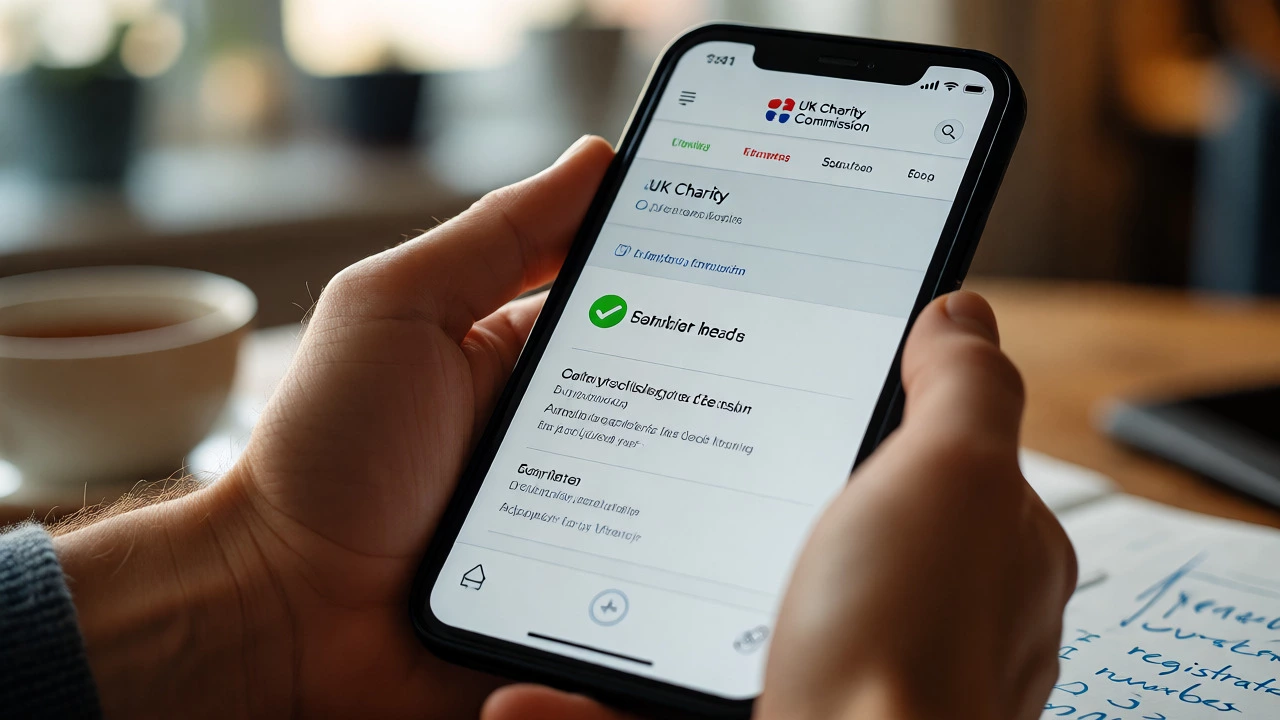
Volunteer Organization Legitimacy Checker
Check these 6 key indicators before signing up. Click each item that applies to the organization you are considering.
You’ve found the perfect opportunity. The mission resonates, the schedule fits, and you’re ready to sign up. But before you hand over your contact details or show up for an interview, pause. Is this group actually real? Or is it a shell operation designed to harvest labor, sell data, or worse?
Volunteer scams are more common than most people think. In the UK alone, thousands of well-meaning individuals waste hours on "volunteering" roles that turn out to be unpaid internships with no learning outcomes, or worse, fraudulent schemes run by unregistered entities. Knowing how to verify a legitimate volunteer organization is a registered non-profit entity that operates transparently and fulfills its stated charitable objectives protects your time, your reputation, and sometimes your wallet.
| Checklist Item | Legitimate Sign | Red Flag |
|---|---|---|
| Registration | Listed on official government databases (e.g., OSCR in Scotland, Charity Commission in England/Wales) | No registration number provided or unable to find them online |
| Costs | Free to join; any fees are clearly explained and optional | Requires upfront payment for training, uniforms, or "placement fees" |
| Communication | Professional email domain matching their website | Gmail/Yahoo addresses; poor grammar; urgent pressure tactics |
| Transparency | Publishes annual reports and financial breakdowns | Vague about where donations go; no physical address listed |
Check the Official Registry First
The fastest way to kill doubt is to check if the organization exists legally. If you are in Scotland, look them up on the Office of the Scottish Charity Regulator (OSCR) the independent body responsible for regulating charities in Scotland. If you are in England or Wales, use the Charity Commission for England and Wales the non-ministerial department that registers and regulates charities. These databases are public and free.
Search for their name or registration number. If they claim to be a registered charity but don’t appear in these databases, ask why. Are they a Community Interest Company (CIC)? That’s fine, but CICs have different reporting requirements. Don’t accept "we’re too small to register" as an excuse if they are asking for money or long-term commitments. Small charities still need legal structures to operate safely.
If they are an international NGO operating locally, check if they have a local branch registration. Sometimes global brands like Red Cross an international humanitarian movement known for providing emergency assistance or Oxfam a confederation of charitable organizations focused on alleviating global poverty have specific local chapters. Ensure you are dealing with the actual chapter, not a third-party recruiter claiming affiliation.
Analyze Their Financial Transparency
Legitimate charities love transparency. They want you to trust them. Scammers hate it. Go to their website and look for an "Annual Report" or "Financial Statements." You don’t need to be an accountant to spot issues.
Look at the ratio of program spending versus administrative costs. While there is no magic number, a legitimate organization typically spends the majority of its funds on its mission, not on marketing or excessive executive salaries. If their report is five years old, that’s a warning sign. It suggests they might be inactive or hiding recent financial troubles.
Also, check who sits on the board. Are these names recognizable professionals in the field? Or are they vague titles with no LinkedIn profiles? A quick search of the board members’ names can reveal if they have a history in the sector or if they are just names on paper. Real leaders are usually proud to be associated with their cause.
Beware of the "Pay-to-Volunteer" Model
This is the biggest trap for young volunteers and gap-year students. Many organizations, especially those offering overseas placements, charge high fees. This isn’t always a scam-sometimes it covers food, accommodation, and project costs. However, you must distinguish between ethical pay-to-volunteer models and exploitative ones.
In a legitimate model, the fee goes directly to community development projects. Ask for a breakdown. Does £500 cover your bed and breakfast, or does it fund a new school building? If they can’t tell you exactly where the money goes, walk away.
Be skeptical of any domestic volunteer role that asks for money. Why would a food bank in Edinburgh ask you to pay £50 to sort cans? Usually, if you are paying, you are buying a service, not volunteering. Check if the organization is accredited by bodies like BOND a network of UK-based NGOs working internationally for international work, which sets standards for ethical volunteering.

Evaluate Communication and Professionalism
Read their emails carefully. Do they use a custom domain like @charityname.org.uk, or is it @gmail.com? While small startups might use Gmail initially, established charities should have professional email addresses. Poor spelling and grammar in official documents often indicate a lack of care or a hastily thrown-together operation.
Notice the tone. Legitimate organizations respect your time. They won’t pressure you to sign up immediately because "spots are filling fast." That’s sales tactic language, not charity language. If they push you to make a decision within 24 hours without giving you time to research, that’s a red flag.
Try calling their phone number. Is it answered by a person who knows what they are talking about? Or do you get a generic voicemail that hasn’t been updated in months? A functioning phone line staffed by knowledgeable people is a strong indicator of active management.
Ask About Safeguarding Policies
If you will be working with vulnerable groups-children, the elderly, or people with disabilities-the organization must have robust safeguarding policies. This isn’t just bureaucracy; it’s legal protection for everyone involved.
Ask specifically: "What is your child protection policy?" or "Do you require PVG checks (Protection of Vulnerable Groups) in Scotland?" If they say "Oh, we don’t really need that," be worried. Legitimate organizations take background checks seriously. They should have a written policy available for you to read. If they hesitate to share it, they might not have one.
Also, ask about insurance. Who covers you if you get injured while volunteering? Most reputable charities carry public liability insurance. If they expect you to rely on your own personal insurance, clarify the limits. This shows whether they value your safety or see you as disposable labor.

Leverage Third-Party Reviews and Social Proof
Don’t rely solely on their website. Look for external validation. Search for the organization’s name plus words like "review," "scam," or "complaint." Sites like Glassdoor sometimes have reviews from former volunteers. Facebook pages can also be revealing-look at the comments section. Are people thanking them for help, or complaining about broken promises?
Check their social media activity. When was the last post? If their Instagram feed stopped two years ago, the organization might be defunct or poorly managed. Active engagement suggests a living, breathing community.
You can also reach out to other volunteers. Use LinkedIn to find people who list the organization as a volunteer experience. Send a polite message: "Hi, I’m considering volunteering with [Org Name]. How was your experience? Did you feel supported?" People are usually happy to give honest feedback.
Trust Your Gut During the Interview
Even if all the paperwork looks good, meet them in person or via video call. Pay attention to how they treat you. Do they listen to your skills and interests, or do they just try to fill a slot? A good volunteer coordinator wants a mutual fit, not just warm bodies.
Ask concrete questions about the day-to-day reality. "What does a typical Tuesday look like?" "Who will I report to?" "What happens if I need to cancel a shift?" Vague answers here suggest disorganization. If they can’t describe the role clearly, they probably haven’t thought it through.
Remember, you are doing them a favor. You have the right to vet them as much as they vet you. If something feels off, it probably is. There are thousands of genuine opportunities out there. Don’t settle for a questionable one.
Can I volunteer for free if the organization isn't registered as a charity?
Yes, you can. Not all volunteer groups are registered charities. Some are informal community groups, social enterprises, or Community Interest Companies (CICs). The key is ensuring they are legally constituted enough to handle insurance and liability. Always check if they have a constitution or terms of reference, even if they aren't a registered charity.
Is it normal to pay for a background check when volunteering?
It depends on the location and the role. In many cases, the organization pays for the Disclosure and Barring Service (DBS) check in England/Wales or the PVG scheme in Scotland. However, some larger organizations may ask you to cover the cost if it's a low-cost check. Be wary if they ask for significant sums for "processing fees" unrelated to the actual government check cost.
What if I already volunteered for a scam?
First, stop any further payments. Document all communications and receipts. Report the organization to the relevant charity regulator (OSCR or Charity Commission) and Action Fraud in the UK. Even if you lose money, reporting helps protect others. You likely gained some experience, so frame it positively on your CV as "independent study" or "community initiative" if needed, but avoid listing them if they have a bad reputation.
Do I need a contract to volunteer?
While volunteers don't have employment contracts, legitimate organizations often provide a "Volunteer Agreement" or "Terms of Reference." This document outlines expectations, hours, confidentiality, and grievance procedures. Having one protects both you and the organization. If they refuse to put anything in writing, proceed with caution.
How do I verify an international volunteer program?
Check if the sending organization is a member of BOND (UK) or similar national umbrella bodies. For the host organization abroad, look for local registration numbers and reviews from previous volunteers on platforms like GoOverseas or Idealist. Be extra cautious with programs that promise "life-changing" experiences but lack clear impact metrics for the local community.