
Charity Event Budget Calculator
Set Your Fundraising Goals
Calculate Costs
Tips from the Article
According to the guide: "You need to know exactly how much money you're aiming to raise. That number should be based on real costs... If you're raising money for a local food bank, and they need $25,000 to cover three months of operations, your goal is $25,000."
Throwing a charity event that actually raises money and builds community support isn’t about fancy decorations or celebrity guests. It’s about clarity, connection, and execution. Too many organizations spend months planning a gala, only to break even-or lose money-because they focused on the spectacle instead of the mission. If you want your event to make a real difference, start with one question: What do you need to accomplish? Not ‘how many people can we invite?’ but ‘how much money do we need to raise, and who exactly will benefit?’
Start with a clear goal-and stick to it
Every successful charity event begins with a number. Not a dream. A number. You need to know exactly how much money you’re aiming to raise. That number should be based on real costs: the rent for the venue, catering, permits, marketing, insurance, and staff. Then add your actual fundraising target. If you’re raising money for a local food bank, and they need $25,000 to cover three months of operations, your goal is $25,000. Not $20,000. Not $30,000. $25,000.Once you have that number, break it down. If you expect 200 people to attend and each ticket costs $100, you’ll bring in $20,000. That leaves $5,000 to cover donations, silent auction items, or sponsorships. Now you know what you need to sell, not just what you hope for.
Know your audience-before you send out invitations
Who are the people most likely to show up and give? Not just anyone who likes charity. The right audience has a personal connection to your cause. If you’re raising money for a youth after-school program, your best donors are parents, teachers, local business owners whose employees’ kids are in the program, and alumni who benefited from it years ago.Don’t waste money on broad social media ads targeting ‘people interested in charity.’ That’s expensive and ineffective. Instead, build a list of 500 names-people who’ve donated before, volunteered, or attended past events. Send them a personal email. Call a few. Ask them what kind of event they’d want to attend. Did they like silent auctions? Live music? Food tastings? Use their feedback to shape the event, not your assumptions.
Choose the right format-simple beats flashy
There’s no one-size-fits-all charity event. A dinner gala might work for a hospital foundation. But for a community garden project? A potluck with live music and kids’ games in the park draws more people, costs less, and feels more authentic.Here are three proven formats that actually work:
- Community picnic or block party - Low cost, high turnout. Charge $10-$20 per person for food and activities. Add a donation station and a raffle. Perfect for neighborhood causes.
- Walk/run fundraiser - People pay to register, then collect pledges from friends. You get upfront cash and ongoing donations. Costs are mostly permits and t-shirts. The 2024 ‘Steps for Shelter’ walk in Portland raised $87,000 with just 300 participants.
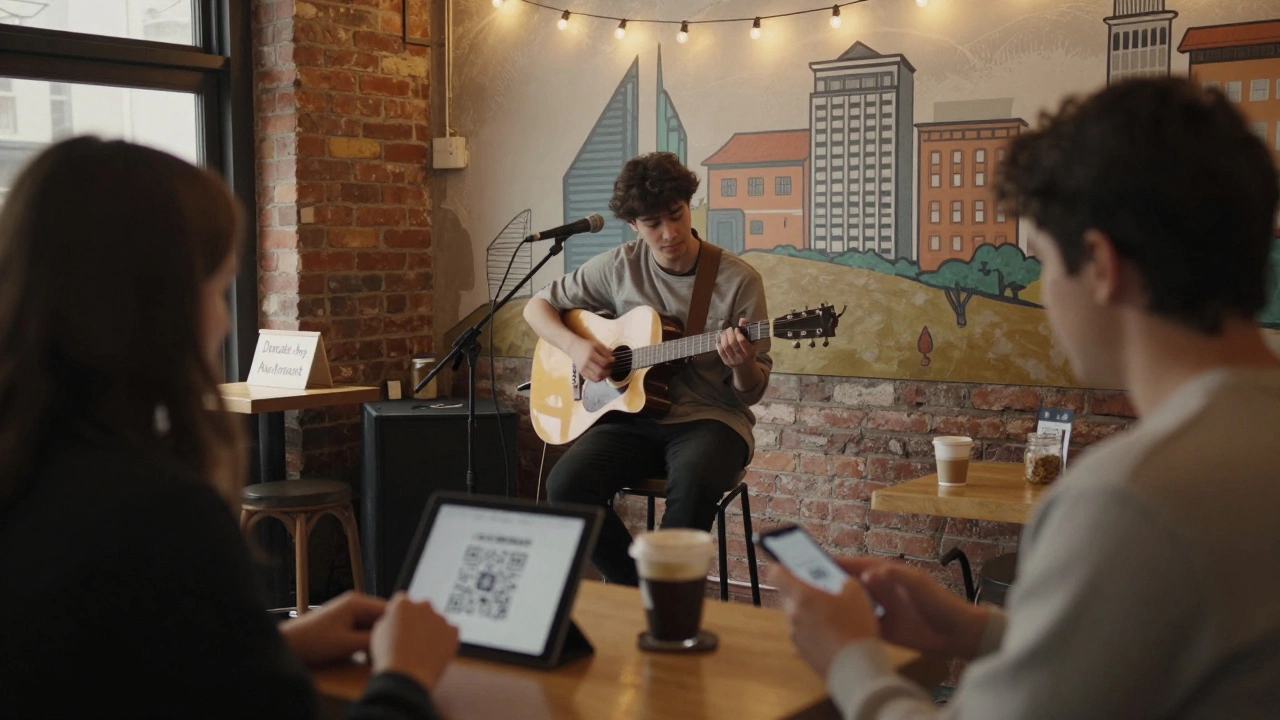
- Local talent showcase - Feature musicians, poets, or comedians from your community. Sell tickets, take donations, and partner with a local café for refreshments. Keeps overhead low and builds local pride.
Avoid anything that requires expensive rentals, professional performers, or rented equipment unless you have a sponsor lined up. The goal isn’t to impress-it’s to connect and collect.
Sponsors aren’t optional-they’re your lifeline
You can’t do this alone. A local hardware store can donate paint for a mural auction. A restaurant can provide appetizers. A printing shop can make flyers for free. These aren’t just perks-they’re critical cost-savers.Reach out to businesses that already support your cause. Don’t send a generic email asking for money. Instead, say: ‘We’re hosting a community picnic on June 14 to raise funds for the after-school tutoring program. We need 30 sandwiches from your deli. In return, we’ll feature your logo on all our signs, mention you in our newsletter to 2,000 families, and give you a table to hand out samples.’
Offer something real in return: exposure, goodwill, a chance to connect with families who shop locally. Businesses give when they see a clear return-not because you asked nicely.
Make donating easy-no excuses
People want to give. But if it’s hard, they won’t. That means:- Multiple payment options: cash, card, Apple Pay, Google Pay, and QR codes for mobile donations.
- Text-to-donate: Set up a short code like ‘GIVE25’ to text for a $25 donation. Services like GiveLively or Donorbox make this free for nonprofits.
- Visible donation stations: Don’t hide them in a corner. Place them near the exit, near the food, near the music. Add a sign: ‘Your $10 feeds a child for a week.’
- Don’t forget online giving: Even at an in-person event, have a large screen looping a donation page. People often give after they leave if they’re reminded.
In 2025, 68% of donors at charity events gave more than they planned because the process was simple. Make it frictionless-or you’ll lose money.

Tell a story, not a statistic
People don’t give to causes. They give to people.At the end of your event, have someone who’s been helped by your organization speak for five minutes. Not a board member. Not a volunteer. Someone whose life changed because of your work. A teen who went from failing grades to college thanks to your tutoring program. A single mom who got food and childcare so she could go back to work.
Let them talk about fear, hope, struggle, and progress. Don’t script it. Don’t rehearse it. Just let them speak. That’s what moves people to give. Not a slide with ‘500 children served.’
And always end with: ‘This is what your gift does.’ Show the direct link between donation and impact.
Follow up fast-and personally
The moment the event ends, the work begins. Within 24 hours, send a thank-you email to every attendee, donor, and volunteer. Not a generic ‘Thank you for your support.’ Name them. Say: ‘Maria, your $75 donation bought 150 meals for families at the Oak Street shelter.’Within a week, send a photo. A video. A short update: ‘Thanks to you, we raised $31,200-enough to keep the after-school program open through the summer.’
People who feel seen are more likely to give again. And they’re more likely to tell their friends. One attendee told us last year: ‘I didn’t plan to donate, but when I saw the picture of little Jamal holding his new books, I gave $100 on the spot.’
Track everything-so next year is better
After the event, sit down with your team and answer these questions:- What worked? What flopped?
- Which donation method brought in the most money?
- Who were our top 10 donors? What did they say?
- How many people came because they were invited by someone else?
- What was our net profit after all expenses?
Write it down. Share it. Use it next year. A charity event that raises $20,000 this year and $25,000 next year isn’t luck-it’s learning.
There’s no magic formula. No secret trick. Just focus on your mission, know your people, make giving easy, and follow up like you mean it. That’s how you throw a successful charity event-not by spending more, but by caring more.