Ecosystem Classifier Tool
Select an environment below to discover its ecosystem group and primary limiting factors.
Land Environments
Water Environments
Ecosystem Group
-
Primary Medium
-
Limiting Factor
-
Select an environment to see details.
Quick Takeaways
- The world is split into Terrestrial (land-based) and Aquatic (water-based) ecosystems.
- Terrestrial systems rely heavily on soil quality and rainfall.
- Aquatic systems are defined by salinity (salt levels) and water depth.
- Both groups are interconnected; what happens in a forest often affects the nearby river.
The World on Land: Terrestrial Ecosystems
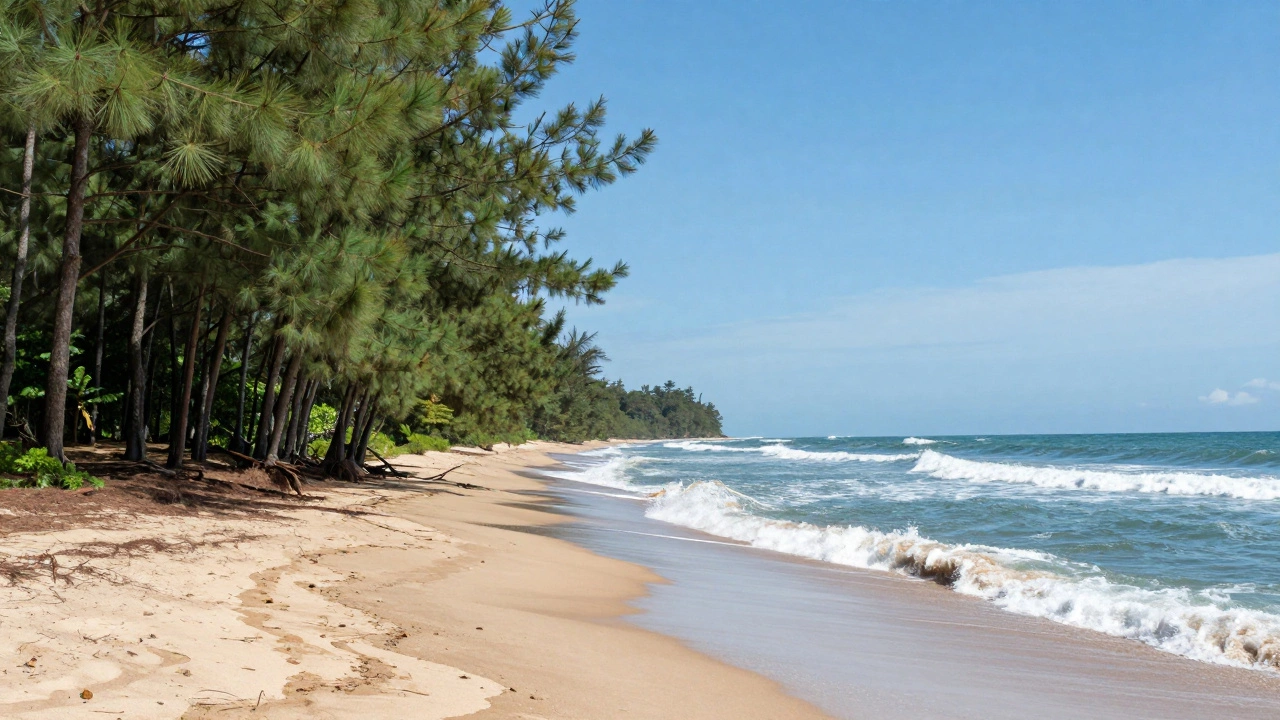
When we talk about Terrestrial Ecosystems, we're talking about any community that lives on the land's surface. These are the environments where gravity is a constant struggle and water is often a luxury. Unlike fish, land animals have to fight to keep moisture inside their bodies, and plants have to develop complex root systems to suck water from the earth.
The biggest driver of terrestrial life is climate. Why do we have deserts in some places and jungles in others? It usually comes down to temperature and precipitation. For example, in a Tropical Rainforest, the combination of high heat and constant rain creates a biological powerhouse. These areas cover less than 6% of Earth's land but hold more than half of the world's plant and animal species. If you walk through one, you'll notice the "layering"-from the dark forest floor to the sunlight-soaked canopy.
Then you have the extremes. In the Tundra, the ground is often permanently frozen (permafrost), forcing plants to stay small and hug the earth to avoid freezing winds. In contrast, Deserts deal with an extreme lack of water. Here, life doesn't stop; it just adapts. Cacti store water in thick stems, and nocturnal animals sleep through the heat of the day to avoid drying out.
Grasslands act as a middle ground, dominated by grasses rather than large trees. Whether it's the prairies of North America or the savannas of Africa, these systems support massive herds of grazing animals, which in turn support top predators like lions or wolves. The balance here is fragile; too much rain and it becomes a forest, too little and it turns into a desert.
The World in Water: Aquatic Ecosystems
Water covers about 71% of our planet, making Aquatic Ecosystems the largest group by far. While land animals worry about drying out, aquatic creatures worry about oxygen levels, water pressure, and salt. The dividing line in the water world isn't altitude or temperature, but salinity-how much salt is dissolved in the water.
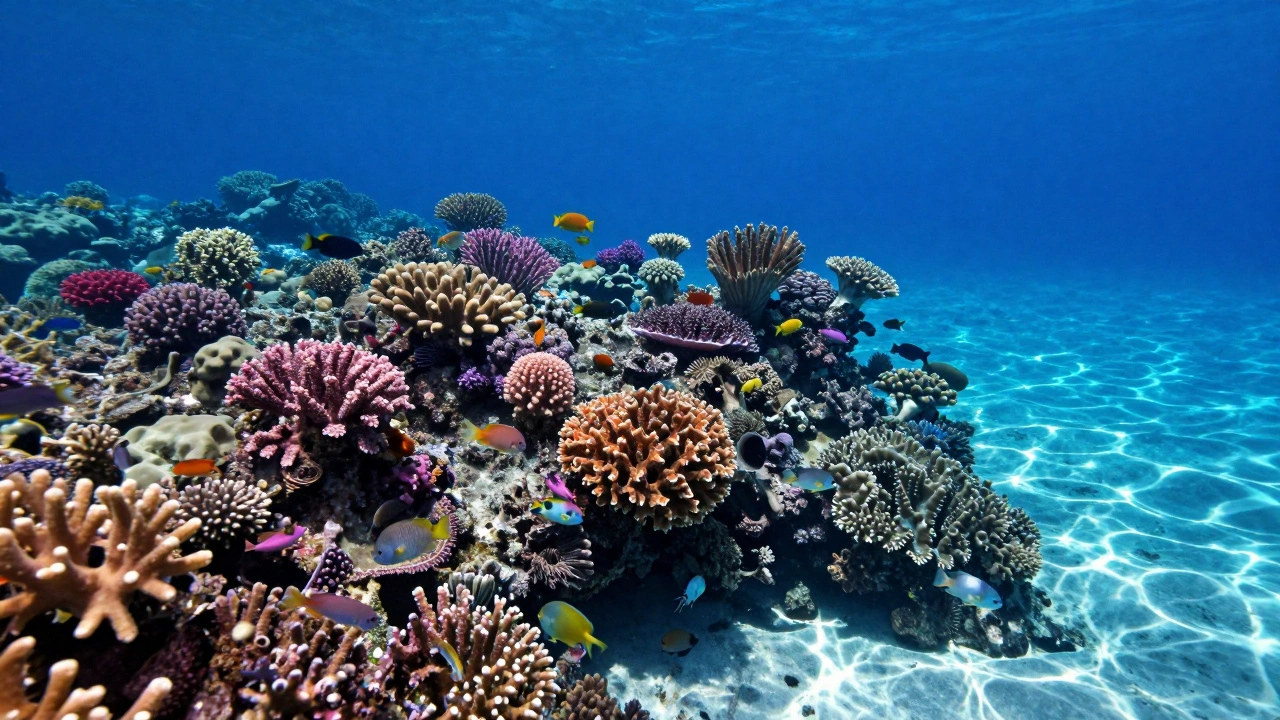
First, we have Marine Ecosystems. These are the saltwater giants. The most famous is the open ocean, but the real magic happens in the Coral Reefs. Often called the "rainforests of the sea," reefs are built by tiny polyps that create massive calcium carbonate structures. They provide shelter for a quarter of all marine life, despite occupying a tiny fraction of the ocean floor. Then there are the deep-sea hydrothermal vents, where life survives not on sunlight, but on chemicals leaking from the Earth's crust-a process called chemosynthesis.
Then there are Freshwater Ecosystems. These have very low salt concentrations. They are split into two main styles: lentic (still water, like ponds and lakes) and lotic (moving water, like rivers and streams). Rivers are the circulatory system of the planet, carrying nutrients from the mountains down to the coast. A river's speed determines what can live there; a fast-moving mountain stream requires organisms to have gripping mechanisms, whereas a slow-moving swamp allows thick vegetation to take over.
One of the most overlooked but critical areas is the Estuary. This is where a freshwater river meets the salty ocean. It's a brackish mix that creates a nutrient-rich nursery. Many ocean fish spend their "childhood" in estuaries because the dense mangroves and seagrasses provide a perfect hiding spot from predators.
| Feature | Terrestrial Ecosystems | Aquatic Ecosystems |
|---|---|---|
| Primary Medium | Air and Soil | Water |
| Main Limiting Factor | Water availability & Temperature | Oxygen levels & Salinity |
| Support | Rigid skeletons/stems needed to fight gravity | Buoyancy supports large body sizes |
| Key Examples | Forests, Deserts, Tundra, Grasslands | Oceans, Rivers, Lakes, Coral Reefs |
How These Two Worlds Talk to Each Other
It's easy to think of these as two separate folders in a filing cabinet, but in reality, they are constantly leaking into each other. Think about a forest next to a river. When it rains, the soil from the forest washes into the water, carrying nitrogen and phosphorus. This "fertilizes" the aquatic system, allowing algae to grow, which feeds small fish, which then feed birds that fly back into the forest to nest. This is a perfect loop.
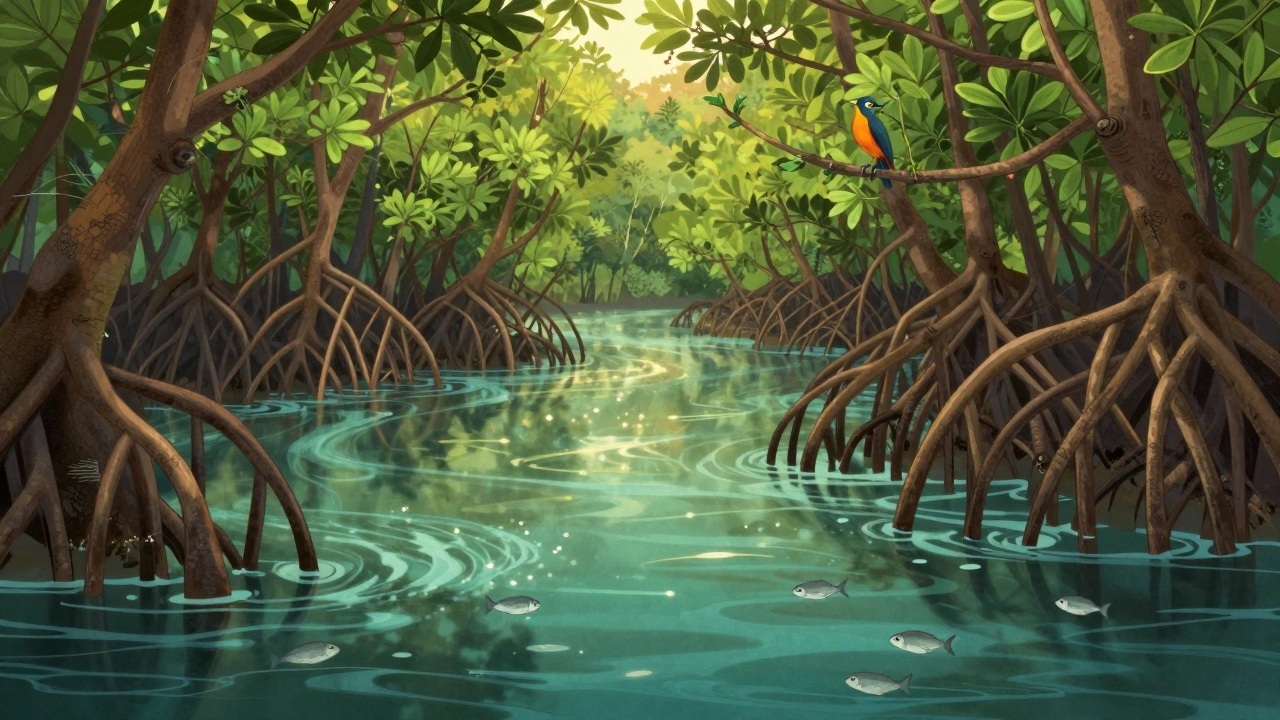
Mangrove forests are the ultimate example of this overlap. They are technically terrestrial plants, but they live in saltwater. Their roots act as a filter, trapping sediment and pollutants before they reach the open ocean. If you destroy a mangrove forest, you don't just lose a few trees; you lose the protection for the coral reef further out at sea because the reef gets smothered by the mud that the mangroves used to catch.
Climate change is currently blurring these lines in dangerous ways. Rising sea levels are pushing saltwater into freshwater aquifers, a process called saltwater intrusion. This kills the terrestrial plants that can't handle the salt, effectively turning a forest into a saltwater marsh. It's a stark reminder that the boundary between land and water is a thin, vibrating line, not a concrete wall.
Common Pitfalls in Understanding Ecosystems
A common mistake is thinking that an ecosystem is just a "place." A place is a geographic location; an ecosystem is a set of relationships. For example, a single fallen log in a forest is a mini-ecosystem. It has its own fungi, insects, and bacteria that break down the wood, which then feeds the soil, which feeds the tree above it. The size doesn't matter as much as the interaction.
Another misconception is that aquatic systems are all the same. People often group "the ocean" together, but the sunlight zone (epipelagic) is a completely different world from the midnight zone (bathypelagic). In the sunlight zone, photosynthesis drives everything. In the midnight zone, there is zero light, and creatures rely on "marine snow"-bits of dead organic matter drifting down from the surface. They are as different from each other as a desert is from a rainforest.
Are there any ecosystems that don't fit into land or water?
While almost everything fits into these two, there are "transition zones" like wetlands, marshes, and tidal flats. These are called ecotones. They are hybrid areas that share characteristics of both terrestrial and aquatic systems, often boasting the highest biodiversity because they attract species from both worlds.
Which group of ecosystems is more important for the planet?
Neither is "more" important; they perform different essential jobs. Terrestrial ecosystems, especially forests, are massive carbon sinks that regulate the air we breathe. Aquatic ecosystems, particularly phytoplankton in the ocean, produce about 50% to 80% of the world's oxygen. We need both to survive.
How does salinity affect aquatic life?
Salinity changes the osmotic pressure in an organism's cells. Freshwater fish are saltier than their environment, so water constantly leaks into their bodies; they handle this by peeing constantly. Saltwater fish are less salty than the ocean, so they lose water to the environment and must drink huge amounts of seawater and pump out the excess salt through their gills.
What is the biggest threat to terrestrial ecosystems today?
Habitat fragmentation is a major issue. When we build a highway through a forest, we don't just remove some trees; we split one large ecosystem into two smaller, isolated ones. This prevents animals from migrating and finding mates, which reduces genetic diversity and makes the population more likely to collapse.
Can a terrestrial ecosystem become an aquatic one?
Yes, this happens through processes like flooding, glacial melting, or sea-level rise. When an area is permanently submerged, the land-based plants die off due to lack of oxygen in the roots, and aquatic species move in to colonize the new space.
What's Next for Your Environmental Journey?
If you're interested in how these systems work, the best next step is to look at "trophic levels." This is the study of who eats whom and how energy moves from the sun to a plant, then to a herbivore, and finally to a predator. Once you understand the two main groups of ecosystems, looking at the food webs within them will show you why the loss of a single species can cause a whole system to crash.
You might also want to explore "Biomes." While ecosystems are about the interactions, biomes are the larger regional patterns-like the Boreal forest or the Tropical Savannah. It's the difference between looking at a specific neighborhood (ecosystem) and looking at the entire city (biome).