Ecological Community Explorer
Click on a community type below to explore the environmental drivers and the unique survival strategies found in that habitat.
Select a community above to begin exploration
Discover how different environments shape the way species interact.
Key Takeaways
- Communities are defined by the interaction of different species in a shared habitat.
- Biomes dictate the broad type of community, such as tundra or tropical rainforests.
- Interactions range from mutualism (win-win) to competition and predation.
- Human-made and hybrid communities are becoming increasingly common in urban areas.
The Basics of a Biological Community
Before we categorize them, we need to be clear about what we're talking about. In the world of biology, a Biological Community is an assemblage of populations of different species interacting with each other within a specific area. Unlike a population, which only looks at one species (like all the grey squirrels in a park), a community looks at the whole neighborhood. It's the sum of all the living things-animals, plants, fungi, and microbes-that share a geographic space.
These groups aren't static. They are constantly shifting. If a new predator moves in or a disease wipes out a primary food source, the entire structure of the community changes. This is why environmental groups focus so heavily on "keystone species." If you remove a keystone species, the whole community can collapse, similar to how pulling the bottom block out of a Jenga tower makes the rest of the structure fall.
Terrestrial Communities: Life on Land
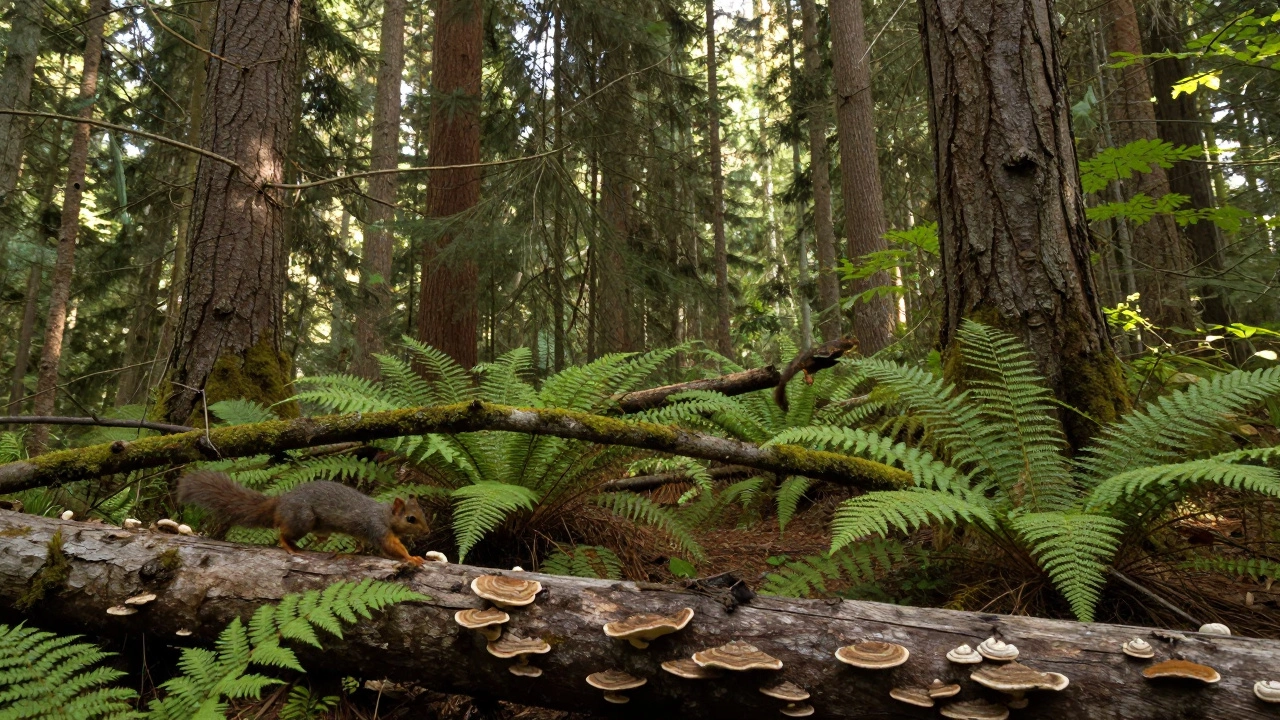
Most of us are most familiar with land-based communities. These are usually categorized by the Biome, which is a large-scale ecosystem characterized by specific climate patterns and dominant plant life. The type of biome determines which species can survive there and how they interact.
Take the Tropical Rainforest, for example. This community is defined by intense competition for light. Because the canopy is so thick, plants on the forest floor have evolved wide leaves to catch every scrap of sunlight. In contrast, the Tundra community is shaped by extreme cold and permafrost. Here, the "community" consists of hardy mosses, lichens, and animals with thick insulating layers, like the Arctic fox. The rules of survival are completely different; while the rainforest is a battle for space and light, the tundra is a battle against freezing temperatures.
Then you have Grassland communities. These are dominated by grasses rather than large trees. In the American prairies, you find a tight relationship between grazing animals, like bison, and the soil-enriching grasses they feed upon. These communities are often more susceptible to fire, but many species here have actually evolved to depend on periodic burns to clear out old growth and trigger new seed germination.
Aquatic Communities: The Underwater Networks
Water changes everything. Gravity matters less, but oxygen and salt levels become the primary drivers of who lives where. We generally split these into two main categories: marine and freshwater.
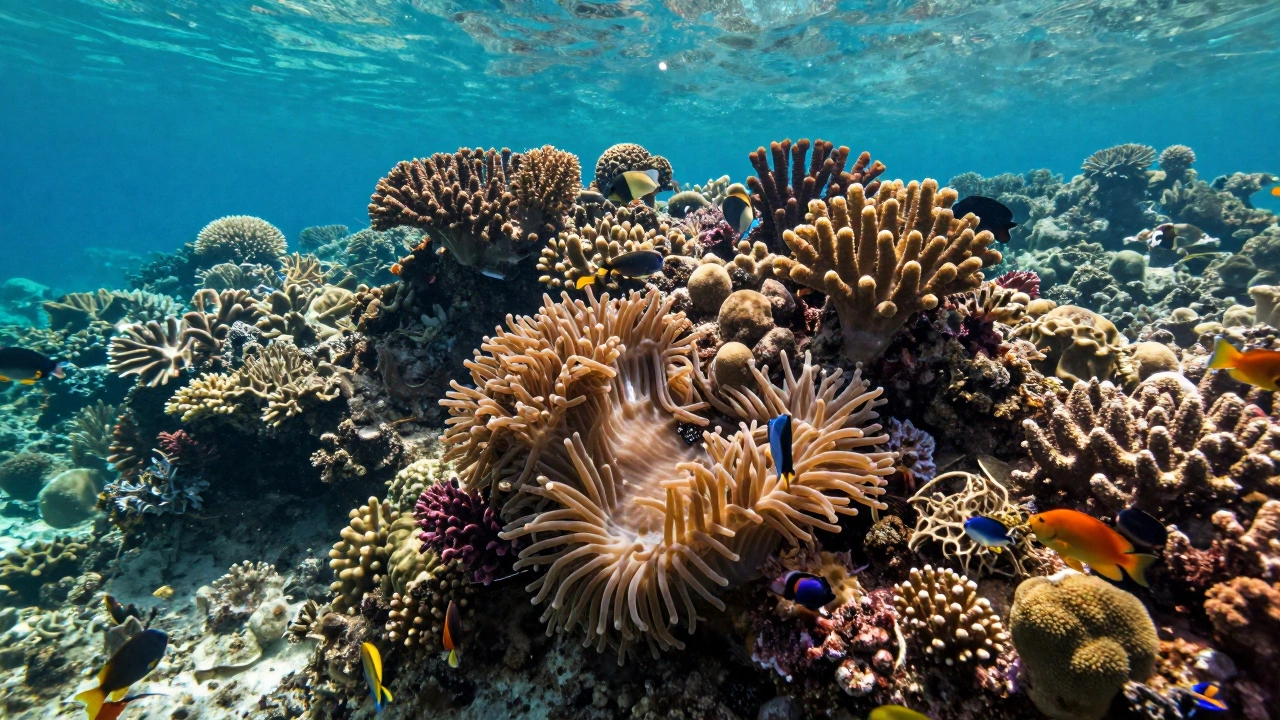
Coral Reefs are perhaps the most complex aquatic communities on Earth. They are often called the "rainforests of the sea" because of their staggering biodiversity. In a reef, the Coral Polyps act as the architects, building the calcium carbonate structures that provide housing for thousands of other species. The relationship between the coral and the zooxanthellae (tiny algae living inside the coral) is a perfect example of mutualism: the coral provides protection, and the algae provide food via photosynthesis.
Freshwater communities, like those found in ponds, lakes, and rivers, are different. In a slow-moving pond, you might find a community dominated by algae, dragonflies, and amphibians. In a fast-moving mountain stream, the community shifts toward species that can anchor themselves to rocks, like certain types of moss and specialized fish that can swim against strong currents. The "flow" of the water is the defining characteristic that decides who gets to stay and who gets swept away.
The Invisible Communities: Microbes and Fungi
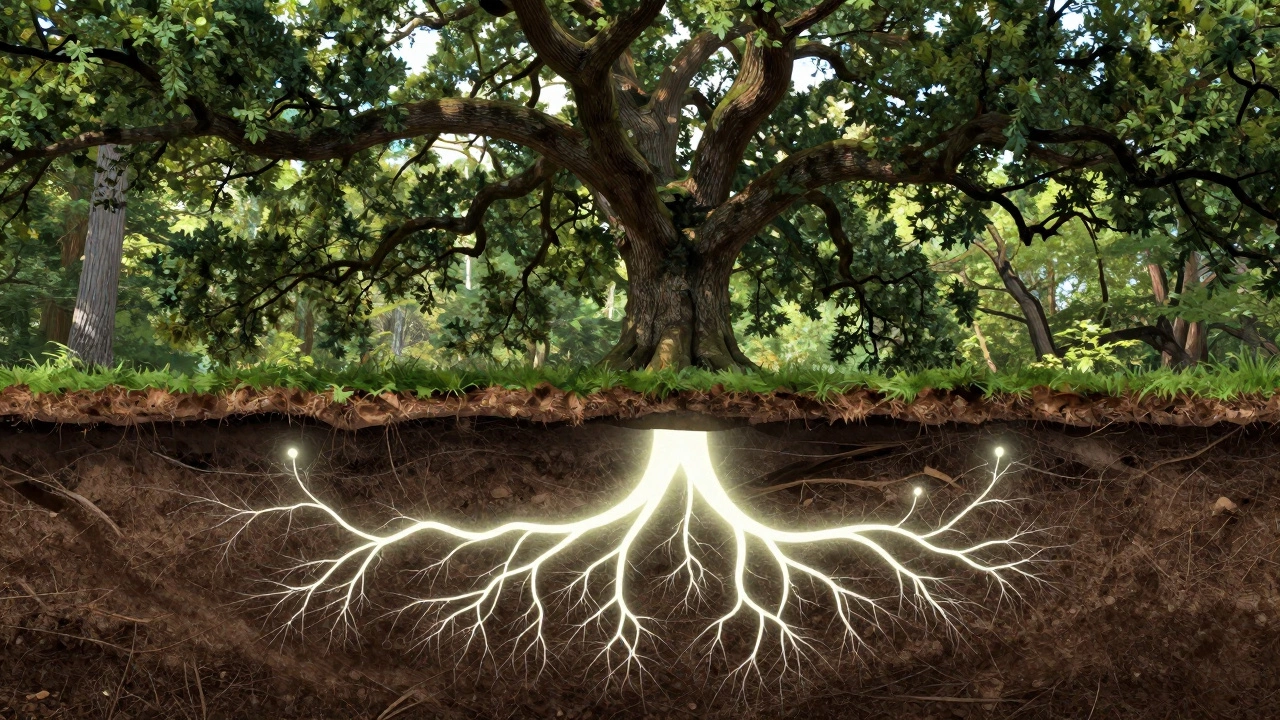
We often forget the communities we can't see, but they are the most important for the planet's survival. The Mycorrhizal Network is a symbiotic relationship between fungi and plant roots that allows for the exchange of nutrients and communication between trees. Essentially, it's an underground "internet" where fungi trade phosphorus and nitrogen for the sugar produced by trees.
Without these microbial communities, the forests we see above ground would starve. These decomposer communities-consisting of bacteria and fungi-turn dead matter back into raw nutrients. If you've ever seen a fallen log slowly disappear into the soil over a few years, you've witnessed a succession of microbial communities at work. First, the pioneer fungi arrive to break down the tough lignin, followed by bacteria that finish the job, eventually leaving behind nutrient-rich soil for new plants to grow.
| Community Type | Primary Driver | Key Example | Typical Interaction |
|---|---|---|---|
| Rainforest | Sunlight Access | Amazon Basin | High Competition |
| Coral Reef | Water Temp/Calcium | Great Barrier Reef | Symbiosis |
| Tundra | Temperature | Arctic Circle | Hardy Adaptation |
| Mycorrhizal | Nutrient Exchange | Forest Understory | Mutualism |
Urban and Anthropogenic Communities
Not all communities are "wild." Humans have created their own ecosystems, often called Anthropogenic Communities. These are groups of species that have adapted specifically to live alongside humans in cities. Think about the pigeons, rats, and cockroaches in New York City. These aren't just pests; they are a functioning community with their own food webs, where human waste acts as the primary energy source.
We also see "hybrid" communities in suburban gardens. When someone plants non-native flowers to attract bees, they are intentionally manipulating the local community. This can be a double-edged sword. While it supports pollinators, it can sometimes introduce invasive species that outcompete the local plants. This tension is a major focus for many urban environmental groups who advocate for "native planting" to restore the original community balance.
How Communities Change: Succession
Communities aren't permanent. They go through a process called Ecological Succession, which is the gradual process by which ecosystems change and develop over time. It usually starts with "pioneer species." Imagine a volcanic eruption leaves behind nothing but bare rock. The first community to arrive isn't a forest; it's lichens and mosses. These organisms break down the rock into a thin layer of soil.
Once there is soil, grasses move in. Then shrubs, and eventually, fast-growing softwood trees like pines. Finally, the community reaches a "climax community"-a stable state, such as an old-growth oak forest, where the species composition remains relatively constant unless a major disturbance (like a fire or human logging) resets the clock. Understanding this cycle helps conservationists know how to replant areas after a disaster; you can't just plant a giant oak in bare rock; you have to follow the natural steps of succession.
What is the difference between an ecosystem and a community?
A community only includes the living organisms (the biotic factors). An ecosystem includes the community PLUS the non-living environment (the abiotic factors) like sunlight, temperature, soil chemistry, and water flow. In short: Community = Living things; Ecosystem = Living things + their physical home.
Can a single species belong to multiple communities?
Yes. Some animals are migratory or move between different habitats. A salmon, for example, belongs to a freshwater stream community during its youth and a marine ocean community as an adult. These "bridge species" are critical for transporting nutrients between different ecosystems.
What happens when an invasive species enters a community?
Invasive species often disrupt the existing balance because they have no natural predators in the new environment. They may outcompete native species for food or space, leading to a decrease in biodiversity and potentially causing the collapse of the original community structure.
Why are keystone species so important for community stability?
Keystone species have a disproportionately large effect on their environment relative to their abundance. For example, sea otters keep sea urchin populations in check. Without otters, urchins would overgraze the kelp forests, destroying the habitat for hundreds of other species. The keystone species acts as the "glue" holding the community together.
How does climate change affect these communities?
Climate change shifts the boundaries of biomes. As temperatures rise, some species move toward the poles or higher altitudes to find their preferred climate. However, since different species move at different speeds, the "synchronized" relationships-like a bee arriving exactly when a flower blooms-can be broken, leading to community instability.
Next Steps for Nature Lovers
If you want to see these communities in action, start by observing your own backyard or local park. Look for "edge effects"-the areas where two different communities meet (like where a forest meets a field). These edges are often the most biodiverse areas because they attract species from both groups.
For those looking to help, supporting native plant nurseries is one of the most effective ways to strengthen local communities. By replacing a generic lawn with native wildflowers, you aren't just planting a flower; you're rebuilding a fragmented community for insects and birds. If you're interested in larger-scale efforts, look into "rewilding" projects, which aim to restore the climax community of a region by reintroducing missing keystone species.