Ecosystem Role Classifier
Challenge: Drag the organisms from the list below into their correct ecological group to complete the energy cycle!
Producers
Turn sunlight into food (Autotrophs)
Consumers
Eat other organisms (Heterotrophs)
Decomposers
Recycle dead matter (Cleanup Crew)
Available Organisms
Quick Summary of Ecosystem Roles
- Producers: The energy starters that turn sunlight into food.
- Consumers: The hungry residents that eat producers or other animals.
- Decomposers: The cleanup crew that recycles waste back into the soil.
The Powerhouses: Producers
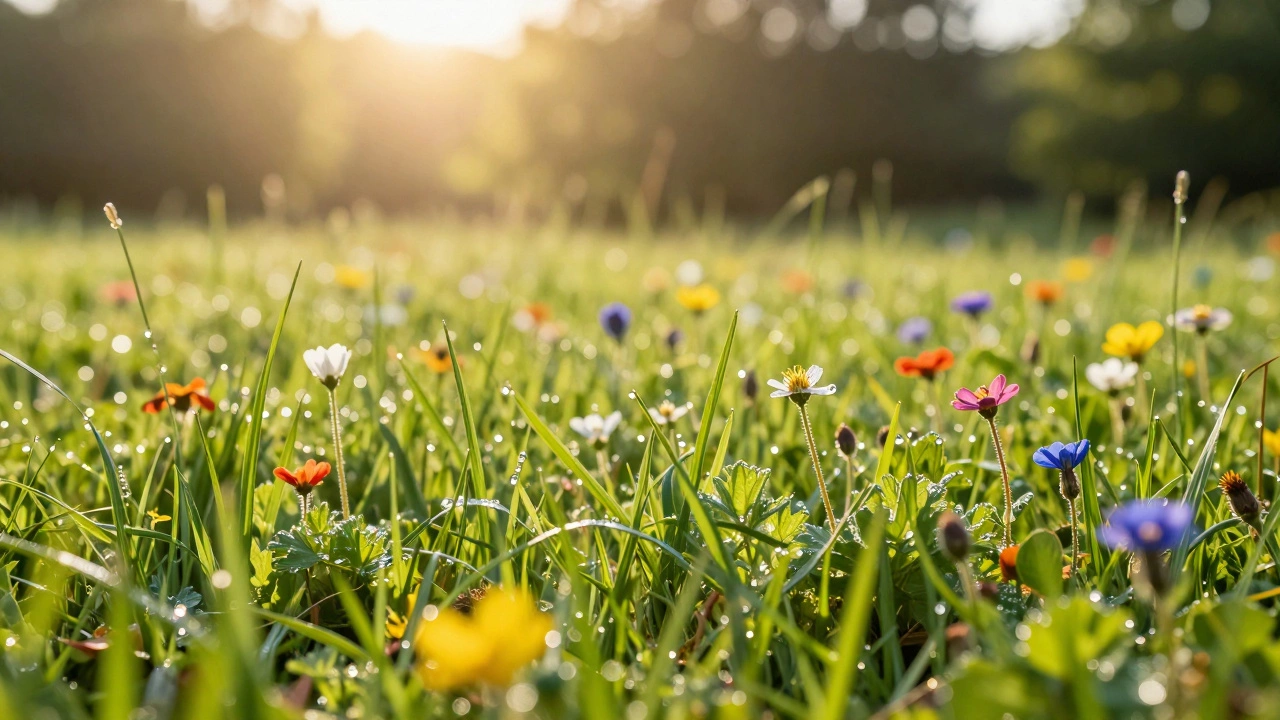
Every single bit of energy in a living system starts with the Producers is organisms that create their own food using sunlight, water, and carbon dioxide through a process called photosynthesis. Also known as Autotrophs, these are the foundation of the food chain. Without them, the rest of the world would simply starve because they are the only ones capable of bringing "new" energy into the biological loop.
Think of a massive field of Grass. The grass doesn't hunt or forage; it just stands there, absorbing photons from the sun. In the ocean, this role is filled by Phytoplankton, tiny microscopic organisms that produce a huge chunk of the Earth's oxygen. If these producers disappear-say, due to a massive oil spill or a prolonged drought-the entire system collapses because the energy tap is turned off.
Producers aren't just plants, though. Some bacteria in the deep ocean use chemicals instead of sunlight to make food, a process called chemosynthesis. This allows life to thrive around hydrothermal vents where it's pitch black. Regardless of the method, the goal is the same: convert raw elements into organic energy.
The Energy Seekers: Consumers
Since most living things can't magically turn sunlight into a sandwich, they have to eat. This is where Consumers come in. Consumers are organisms that cannot produce their own food and must eat other organisms to survive. In the scientific world, these are called Heterotrophs.
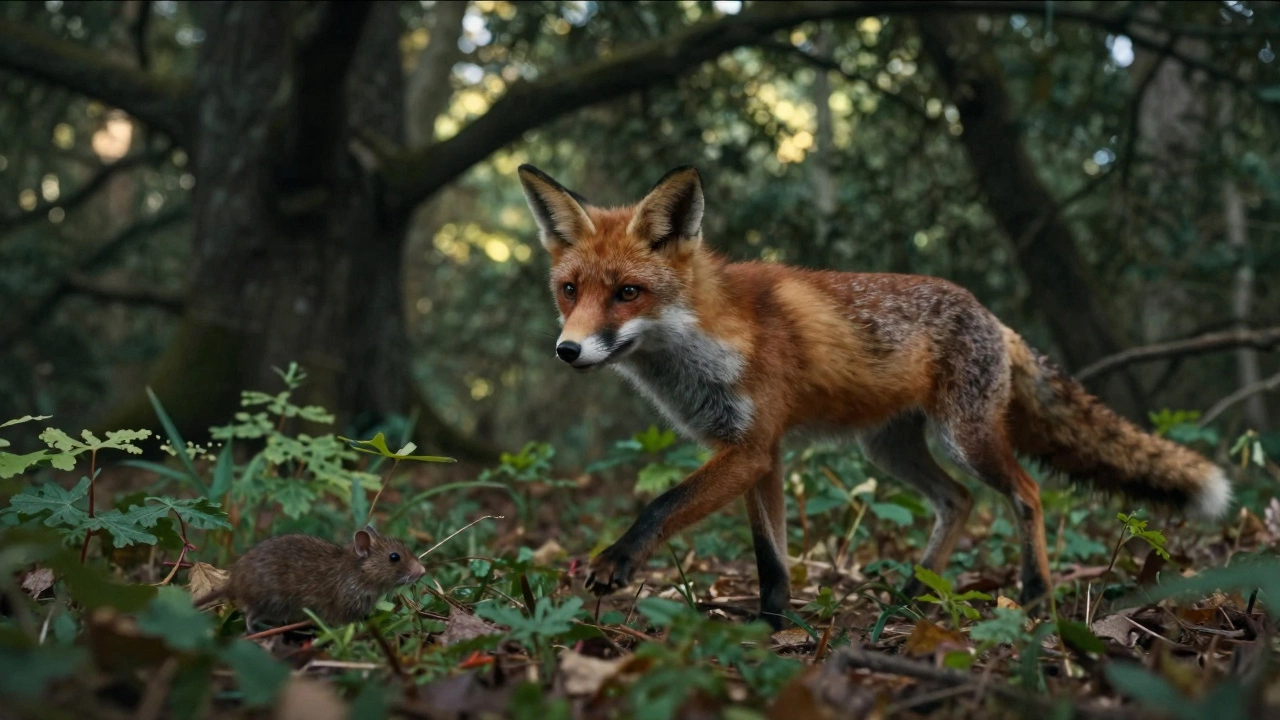
Consumers aren't all the same. They are split into sub-groups based on their diet. You have primary consumers, like a rabbit eating clover. Then you have secondary consumers, like a snake eating the rabbit. At the very top, you find tertiary consumers-the apex predators like hawks or lions-who have no natural enemies. This creates a pyramid of energy where the number of animals shrinks as you move up the chain.
| Group | Diet Source | Example | Role in Ecosystem |
|---|---|---|---|
| Herbivores | Plants only | Elephant | Controls plant growth |
| Carnivores | Meat only | Tiger | Prevents overpopulation of herbivores |
| Omnivores | Plants and Meat | Human / Bear | Flexible energy sourcing |
Why does this matter? Because consumers act as a check-and-balance system. If you remove the carnivores from a forest, the herbivores will overpopulate, eat all the producers, and eventually, the whole forest turns into a wasteland. This is exactly what happened in Yellowstone National Park before the wolves were reintroduced; the elk overgrazed the willow and aspen trees, which destroyed the habitat for birds and beavers.
The Invisible Recyclers: Decomposers
What happens when a tree falls or an animal dies? If everything just stayed there, the world would be a giant pile of dead matter, and the soil would run out of nutrients. This is where Decomposers step in. Decomposers are organisms that break down dead organic material and return essential nutrients to the soil. They are the ultimate recycling center of nature.
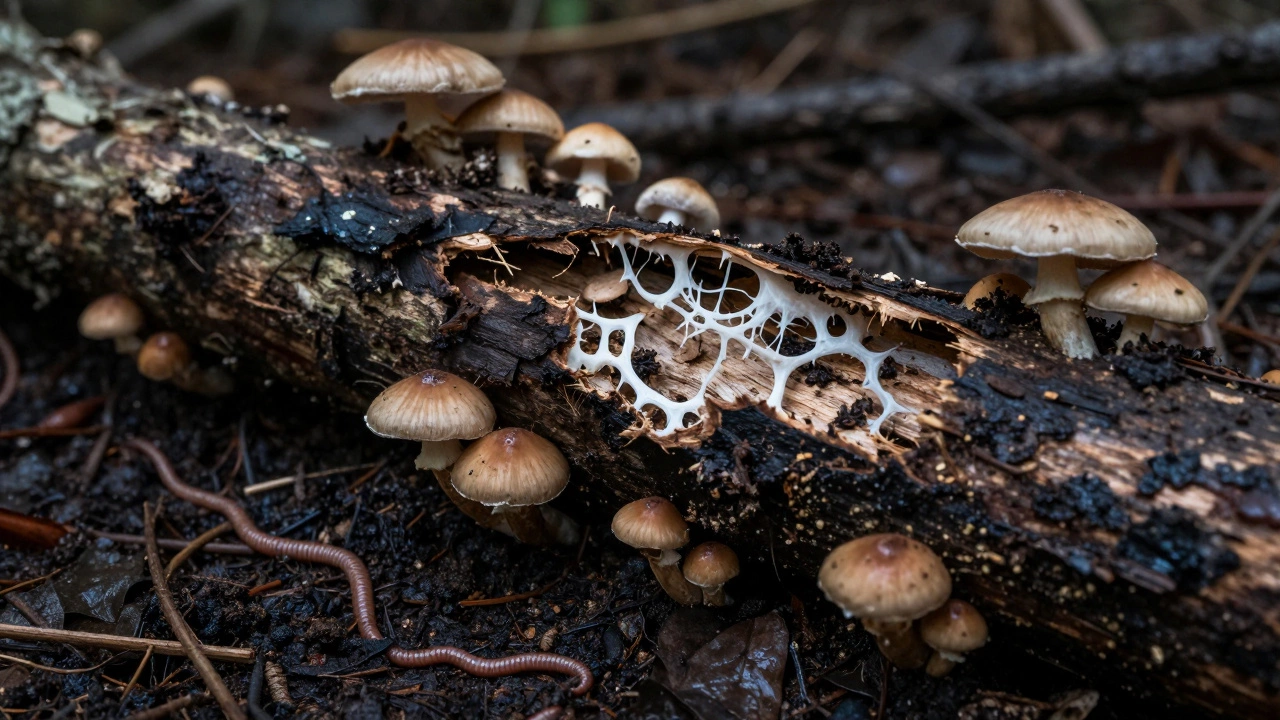
The most common examples are Fungi and Bacteria. When a mushroom grows on a rotting log, it's not just sitting there; it's secreting enzymes that break down complex lignin and cellulose into simpler minerals like nitrogen and phosphorus. These minerals are then sucked back up by the producers, starting the whole cycle over again.
Detritivores, like earthworms and vultures, often work alongside decomposers. While a vulture eats the carcass (consuming it), the bacteria in the soil do the actual chemical breakdown (decomposing it). Without this group, the "circle of life" would be a straight line ending in a dead end. They ensure that the limited amount of carbon and nitrogen on Earth is reused indefinitely.
How the Three Groups Interact
To see these groups in action, look at a simple garden. The sun hits the tomato plant (Producer). A caterpillar eats the leaf (Consumer). A bird eats the caterpillar (Consumer). The bird eventually dies, and fungi in the soil break down its body (Decomposer), releasing nitrogen back into the earth. The tomato plant then uses that nitrogen to grow even bigger. It's a closed loop of energy and matter.
This relationship is called a Trophic Level. Energy is lost at each step-usually about 90% of the energy vanishes as heat, which is why you see thousands of blades of grass, hundreds of rabbits, but only a few hawks in a given area. The energy simply runs out as it moves up the chain.
Common Misconceptions About Ecological Roles
Many people think an organism can only belong to one group. While most are specialized, some can bridge the gap. For instance, certain types of Mixotrophs can act as both producers (using sunlight) and consumers (eating other microbes) depending on the environment. However, for the sake of understanding ecosystem health, we categorize them by their primary function.
Another mistake is thinking decomposers are "gross" or unimportant. In reality, they are the most critical part of Soil Fertility. If you've ever used compost in your garden, you're essentially paying for the work of decomposers. You're accelerating the process of turning waste into fuel for your plants.
Can an animal be both a producer and a consumer?
Generally, no. Animals are biologically designed as consumers. However, some rare organisms like certain algae or "mixotrophic" plankton can perform photosynthesis while also engulfing other small organisms to get nutrients.
What happens if decomposers are removed from an environment?
The ecosystem would eventually crash. Dead organic matter would accumulate, locking away vital nutrients like nitrogen and phosphorus. Producers would run out of these nutrients, causing them to die off, which would then lead to the starvation of all consumers.
Are humans considered primary, secondary, or tertiary consumers?
Humans are omnivores, so we fit into multiple levels. When we eat a salad, we are primary consumers. When we eat a piece of chicken, we are secondary consumers. If we eat a predator like a tuna fish, we act as tertiary consumers.
Do producers need soil to function?
Not necessarily. While land plants need soil for minerals and stability, aquatic producers like phytoplankton float in open water. Some plants, like air plants or certain orchids, get their nutrients from the air and rain.
What is the difference between a detritivore and a decomposer?
Detritivores, like earthworms, physically ingest dead organic matter and break it into smaller pieces. Decomposers, like bacteria and fungi, use chemical secretions to break matter down at a molecular level. They usually work together to clean the environment.
Next Steps for Understanding Your Environment
If you want to see these groups in action, start a small compost bin. By adding fruit scraps (consumers' waste) and dry leaves (producer waste), you are creating a sanctuary for decomposers. Once the material turns into dark, rich soil, try planting a seed in it. You'll be witnessing the entire three-group cycle happen in your own backyard.
For those interested in larger-scale impacts, research "trophic cascades." This is what happens when a top consumer is removed or added to a system. It shows that these three groups aren't just categories in a textbook-they are the gears that keep the planet breathing.