
When you walk into a neighborhood meeting where people are arguing about a new park, or sit at a kitchen table with locals planning a food drive, you don’t see fancy slides or polished speeches. You see real people trying to make things better. That’s community engagement. And it doesn’t work unless it’s built on something solid-four core values that turn good intentions into lasting change.
Respect
Respect isn’t just saying ‘please’ and ‘thank you.’ It’s listening when someone speaks, even if their idea seems messy or off-topic. It’s showing up at the right time-not when it’s convenient for you, but when the community can be there. In Edinburgh’s Leith neighborhood, a housing group spent six months holding meetings in community centers, churches, and even people’s living rooms before they ever drafted a single proposal. Why? Because they knew that if residents didn’t feel heard, no plan would stick.
Respect means recognizing that people know their own needs better than any outsider ever could. A city planner might think a new bus route is the answer. But if the people who use it daily say the real problem is lighting at the stop, then the lighting matters more. Respect is putting their words ahead of your assumptions.
Transparency
Transparency means telling people what’s happening, why it’s happening, and who’s making the decisions. Too often, community projects start with a press release and end with confusion. People feel left out-not because they weren’t invited, but because they never got the full story.
In Glasgow, a youth center project stalled for over a year because the council kept saying, ‘We’re still deciding.’ No timelines. No budget details. No draft plans. When they finally shared a simple one-page summary of costs, timelines, and decision-makers, participation tripled. People don’t need to be experts. They just need to know what’s going on.
Transparency doesn’t mean dumping all the data online. It means giving clear, plain-language updates. If a project changes direction, say why. If money runs short, say so. If something fails, admit it. Trust isn’t built by perfection. It’s built by honesty.
Inclusion
Inclusion isn’t just about inviting diverse groups. It’s about making sure those groups can actually participate. If your meeting is at 6 p.m. on a Tuesday, you’re excluding working parents. If your flyer is only in English, you’re shutting out non-native speakers. If your survey is online-only, you’re ignoring people without reliable internet.
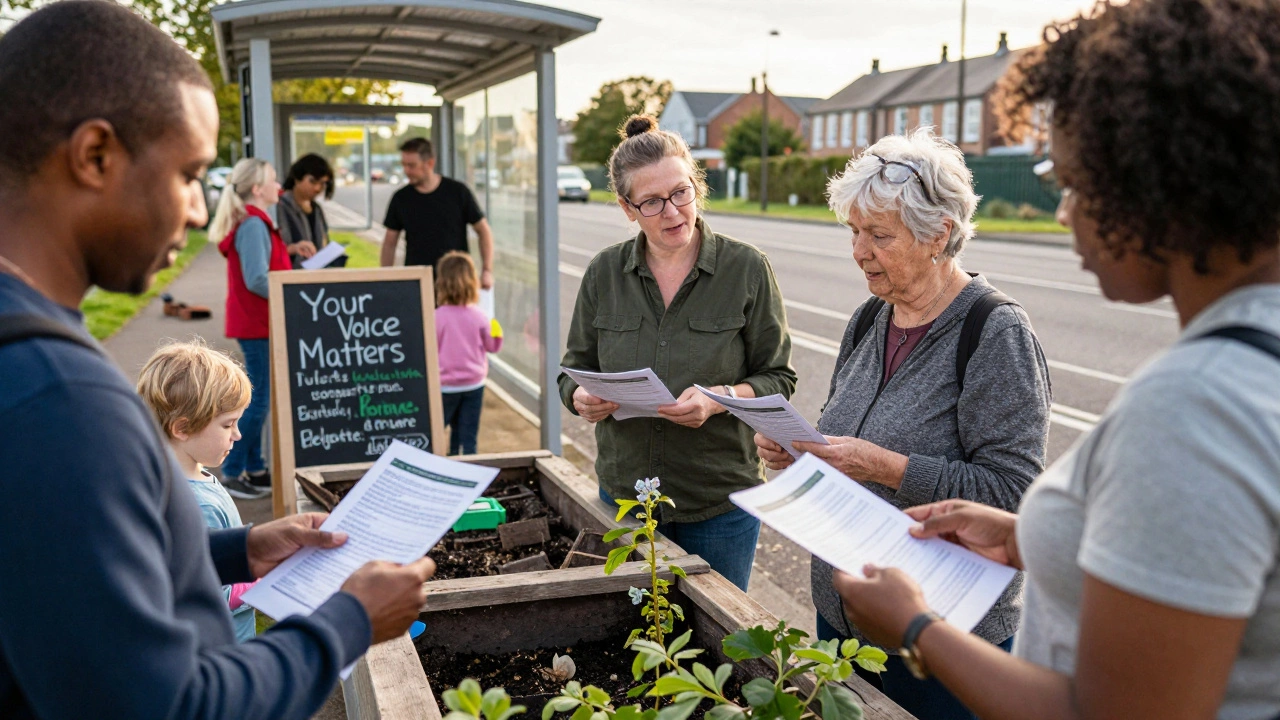
One community garden project in Dundee started with a simple fix: they held three sessions-one during lunch, one after school, and one on a Saturday morning. They printed surveys on paper and handed them out at bus stops, corner shops, and laundromats. They also partnered with local translators and offered free childcare. The result? Participation jumped from 40 people to over 200-and the garden now serves 12 different cultural groups.
Inclusion means removing barriers, not just adding names to a list. It’s about asking: Who’s missing? And then doing the extra work to bring them in.
Accountability
Accountability is the glue that holds everything together. It’s the promise that if you say you’ll do something, you’ll do it-and if you don’t, someone will hold you to it.
A housing association in Aberdeen promised to fix broken heating in 30 flats within six weeks. Three months passed. No updates. No apologies. Residents formed a group, tracked progress on a public board, and invited the media. Within a week, every unit was fixed. Accountability isn’t about blame. It’s about follow-through.
Set clear goals. Share progress publicly. Name who’s responsible. And make it easy for people to ask, ‘Where are we now?’ If a community project doesn’t have a way to measure success-and report on it-then it’s just a wish list.
Putting It All Together
These four values don’t exist in isolation. Respect without transparency feels empty. Inclusion without accountability leads to frustration. Transparency without respect turns into lecturing. They work together like a team.
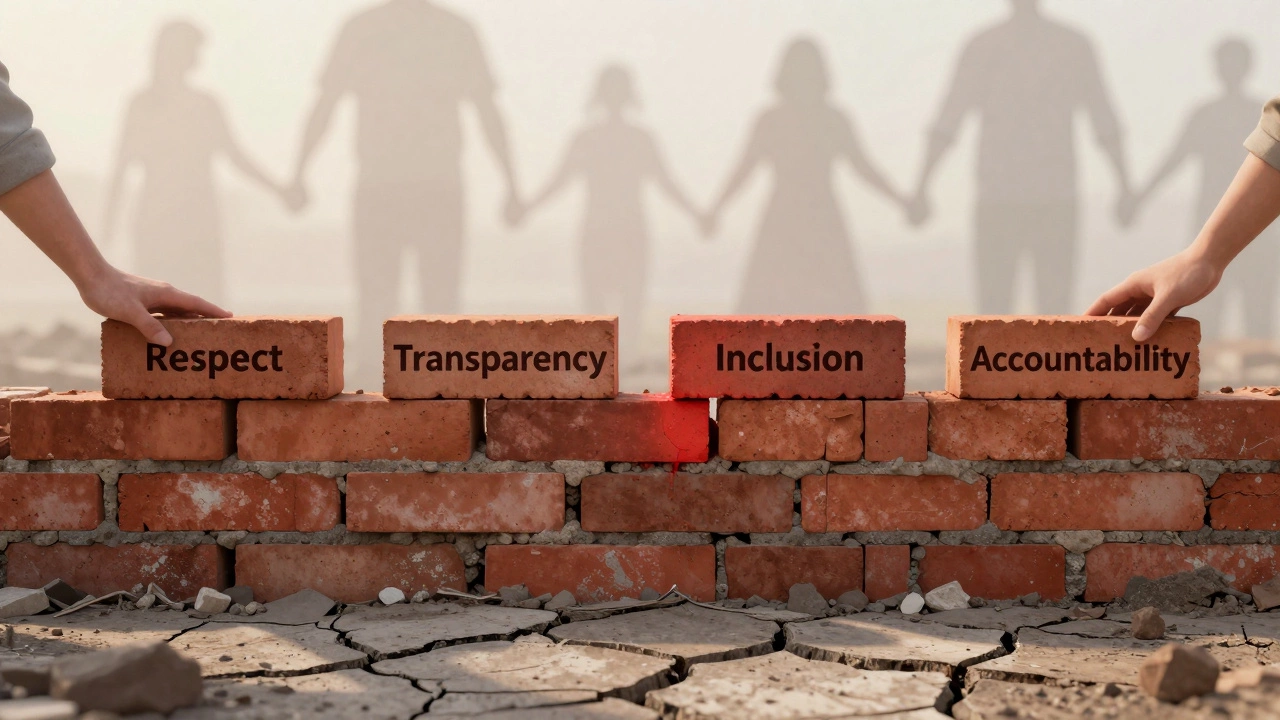
Think of it this way: You wouldn’t build a house with only nails and no wood. Community engagement isn’t about events, flyers, or social media campaigns. It’s about building trust, brick by brick, using these four values as your foundation.
When a neighborhood group in Falkirk wanted to reduce litter, they didn’t start with a clean-up day. They started with door-to-door conversations. They asked: What’s making this hard? What would help? They listened. They shared their budget openly. They made sure non-English speakers could join. And they published monthly updates on what got done-and what didn’t. Two years later, litter dropped by 68%. Not because they hired more cleaners. But because they treated people like partners, not problems.
Common Mistakes to Avoid
- Asking for input but not acting on it-This is the fastest way to kill trust. People will stop showing up.
- Only engaging the loudest voices-The same five people always speak at meetings. That doesn’t mean they represent everyone.
- Using jargon-Terms like ‘stakeholder engagement’ or ‘participatory planning’ confuse more than they help. Say ‘we want your help’ instead.
- Thinking it’s a one-time project-Community engagement isn’t a checkbox. It’s a habit. Keep showing up, even after the project ends.
Why This Matters Now
More than ever, communities are being asked to solve big problems-affordable housing, mental health access, climate resilience. But top-down solutions keep failing. Why? Because they skip the people who live there.
The four core values aren’t fluffy ideals. They’re practical tools. Every successful community project you’ve ever seen-whether it’s a food bank that doubled its reach or a youth center that cut crime by 40%-used these values as its backbone.
It’s not about how many people you reach. It’s about how deeply you connect. And that starts with respect, transparency, inclusion, and accountability.
What’s the difference between community engagement and community outreach?
Community outreach is usually one-way: you hand out flyers, run an ad, or host an event to get people to come to you. Community engagement is two-way: you listen, adapt, and act based on what people tell you. Outreach says, ‘Here’s what we’re doing.’ Engagement says, ‘What do you need, and how can we do it together?’
Can these values be used in online communities too?
Absolutely. Online engagement still needs respect-don’t ignore comments or delete dissent. Transparency means sharing why decisions were made, even in a Facebook group. Inclusion means offering text-based options for people without video access, or translating posts. Accountability means following up on promises made in a forum. The tools change, but the values don’t.
How do you measure success in community engagement?
Look beyond attendance numbers. Ask: Did people feel heard? Did their ideas shape the outcome? Did trust grow over time? Track changes in behavior-like more people joining future meetings, or local businesses stepping in to help. Real success is when the community starts running things themselves.
What if a community is divided or hostile?
Start small. Find one shared goal-even if it’s just cleaner sidewalks. Bring together people from both sides for that one task. Respect means not forcing agreement. Transparency means admitting you don’t have all the answers. Inclusion means making space for anger and grief. Accountability means following through on small promises. Change doesn’t come from debates. It comes from doing something together, even if you still disagree.
Do these values work in rural areas too?
Yes, maybe even more so. In rural areas, people know each other. That means gossip spreads fast-and so does trust. If you show up consistently, listen without pushing your agenda, and keep your word, you’ll earn respect. Inclusion might mean meeting at the local pub instead of the town hall. Accountability means sending a handwritten note after a meeting, not an email. The values stay the same; the methods adapt.
Next Steps
If you’re starting out, pick one value to focus on this month. Maybe it’s transparency-start sharing a simple update every two weeks. Or inclusion-find one group you’ve never reached out to and invite them to a coffee chat. Don’t try to fix everything at once. Build one brick at a time.
And if you’ve been doing this for years? Look back. Which of these four values did you lean on the most? Which one slipped? What would happen if you doubled down on the weakest one?
Community engagement isn’t about perfect plans. It’s about showing up, again and again, with honesty and humility. That’s how real change happens.