
Charitable Giving Impact Estimator
Health & Medical
Disease research, patient support, hospitals.
Most PopularReligion & Community
Spiritual guidance, food banks, shelters.
High VolumeEducation
Scholarships, universities, schools.
Future InvestmentHuman Services
Poverty relief, housing, immediate aid.
Immediate NeedAnimals & Environment
Wildlife rescue, conservation, sustainability.
Growing PassionArts & Culture
Museums, theaters, libraries.
Quality of LifeYour Estimated Annual Impact
Total Annual Contribution
Potential Reach (Est.)
Based on average sector efficiency rates (approx. 80% program spending).
You walk past a street collector in Edinburgh. They’re holding a bucket for animal rescue. You drop in a coin. It feels good, but have you ever stopped to wonder where the vast majority of charitable money actually goes? Is it really going to save the whales, or is it funding something else entirely?
When we look at global giving data, the picture is surprisingly different from what many assume. While niche causes get our attention on social media, the heavyweights of the donor world are often traditional institutions. Understanding what do people donate to the most isn't just trivia; it helps you decide if your money is making the impact you want. If you're planning a charity event or just trying to be a smarter giver, knowing the landscape is crucial.
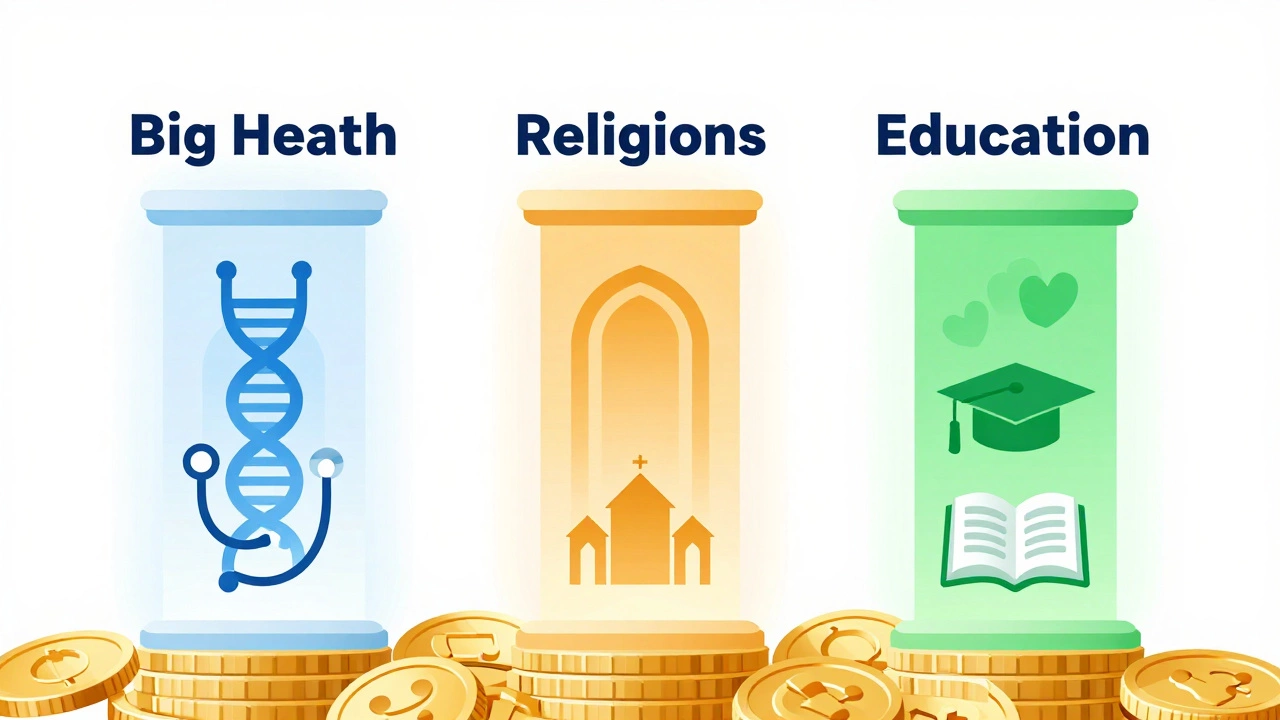
The Big Three: Health, Religion, and Education
If you were to bet on where the biggest chunks of donation money land, you’d put your chips on health, religion, and education. These three sectors consistently dominate the charts in major economies like the UK, US, and Canada. According to recent data from the National Council of Nonprofits and similar bodies in Europe, these areas absorb roughly 60% to 70% of all charitable contributions combined.
Healthcare charities are usually the single largest recipient category. Why? Because illness is universal. Everyone knows someone who has battled cancer, heart disease, or rare genetic conditions. Organizations like Cancer Research UK or the American Cancer Society raise billions annually. Donors feel a direct emotional connection because these diseases threaten their own lives or those of their loved ones. The transparency of medical research also helps-you can see the progress, the new drugs, and the survival rates improving.
Religious organizations come in a close second in many regions. In the United States, for example, religious groups within this sector often receive more than any other cause. This includes churches, mosques, synagogues, and temples. But it’s not just about tithes; it’s about community support. These institutions run food banks, homeless shelters, and youth programs. When people give to religion, they are often funding local infrastructure that keeps communities stable.
Education rounds out the top three. Universities, schools, and scholarship funds attract significant donations. Parents want better schools for their kids. Alumni want to boost their alma mater’s ranking. Scholarships offer a tangible way to change a young person’s life trajectory. It’s an investment in the future, which appeals to donors who think long-term.
| Sector | Primary Focus | Why Donors Give |
|---|---|---|
| Health | Disease research, patient support | Personal connection, visible results |
| Religion | Spiritual guidance, community aid | Faith, local stability, tradition |
| Education | Schools, scholarships, universities | Future investment, legacy building |
| Human Services | Poverty relief, housing, food | Immediate need, empathy |
| Arts & Culture | Museums, theaters, libraries | Quality of life, preservation |
The Rise of Human Services and Immediate Need
While health and religion hold the crown, human services are the heartbeat of everyday giving. This category includes organizations fighting poverty, homelessness, and hunger. In cities like Edinburgh, London, or New York, you see this constantly. Food banks are overflowing with demand, and shelters are full.
Donations to human services tend to spike during crises. Think about natural disasters, economic recessions, or wars. When a hurricane hits Florida or a conflict breaks out in Eastern Europe, public giving shifts dramatically toward immediate relief. Organizations like the Red Cross or local homeless charities see massive influxes of cash. However, this giving can be fickle. Once the news cycle moves on, donations often drop back down. This is why consistent support for human services is so hard to maintain compared to the steady stream of health or religious giving.
Another interesting trend here is the rise of "micro-charities" focused on specific issues. Instead of giving to a general poverty fund, people might donate to a group providing winter coats to children in a specific borough. This hyper-local focus creates a stronger sense of accountability for the donor. You know exactly where your £10 went.
Animals and the Environment: Passion vs. Volume
If you scroll through Instagram, you’d think everyone is donating to save the rainforests or rescue stray dogs. And yes, people do love these causes. Animal welfare and environmental protection are huge passions. But in terms of raw dollar volume, they still trail behind health and religion.
Animal charities benefit from high engagement. People share stories of rescued puppies endlessly. This viral nature helps smaller campaigns raise significant amounts quickly. However, the total pool of money is smaller because the perceived urgency is lower than, say, curing cancer. You don’t wake up worried about saving pandas every day, but you do worry about getting sick.
Environmental giving is growing fast, though. With climate change becoming more visible-through hotter summers in Scotland or more frequent floods-the urgency is rising. Younger donors, particularly Gen Z and Millennials, are prioritizing sustainability. They are more likely to give to Greenpeace or local conservation trusts than older generations. This demographic shift suggests that environmental giving could climb higher in the rankings over the next decade.
How Charity Events Shape Donation Patterns
Charity events play a massive role in driving donations. Whether it’s a fun run, a gala dinner, or an online auction, events create a social pressure to give. People donate not just out of altruism, but because they want to belong to the group hosting the event.
Corporate-sponsored events are particularly effective. Companies sponsor marathons or golf tournaments, and employees participate. The company matches donations, doubling the impact. This structure makes giving feel easier and more impactful. It also introduces donors to new causes. You might start running for a cancer charity, but halfway through the race, you meet someone passionate about mental health awareness. Suddenly, your donation list expands.
Online fundraising platforms have changed the game too. Platforms like GoFundMe or JustGiving allow individuals to raise money for personal causes. This blurs the line between traditional charity and peer-to-peer giving. A friend’s medical bill might get more donations than a large international NGO. This personalization is key to modern giving.
Who Donates the Most? Demographics Matter
Not everyone gives equally. Age, income, and location heavily influence where money flows. Older donors, particularly those aged 65+, tend to give the largest amounts. They have more disposable income and often view giving as part of their legacy. They are more likely to donate to established, reputable organizations like universities or hospitals.
Younger donors, under 35, give less in absolute terms but are more experimental. They try new causes, use digital platforms, and expect transparency. They will check if a charity spends 90% of its funds on programs or 40% on admin costs. If the overhead is too high, they won’t give. This scrutiny is forcing charities to become more efficient and open.
Geography also plays a role. In urban centers like Edinburgh or London, there is a higher density of charities competing for attention. Donors have more choices, so they must be selective. In rural areas, giving is often more concentrated on local community projects, like fixing a village hall or supporting a local school.

Tips for Smarter Giving
Knowing what people donate to the most can help you make better decisions. Here are some practical tips:
- Check the overhead ratio. Look for charities that spend at least 75-80% of their budget on programs. Sites like Charity Navigator (US) or Charity Commission (UK) provide this data.
- Diversify your giving. Don’t put all your eggs in one basket. Support a mix of local and international causes.
- Consider recurring donations. Monthly gifts, even small ones, help charities plan better than one-off large sums.
- Ask for impact reports. Good charities will show you exactly how your money was used last year.
- Use charity events wisely. Participate in events that align with your values, but also look into the organization behind the event.
The Future of Giving
As technology advances, giving is becoming more seamless. One-click donations, crypto-giving, and AI-driven matching are emerging trends. We might see a future where your phone automatically rounds up purchases and donates the spare change to a cause you choose. This frictionless giving could significantly increase the volume of small donations.
However, the core drivers remain the same: empathy, trust, and impact. People will always give to what they care about. Whether that’s curing disease, feeding the hungry, or saving the planet, the desire to help is universal. Understanding the current landscape helps ensure your help lands where it’s needed most.
What is the most donated to charity globally?
Globally, healthcare and medical research typically receive the largest share of charitable donations, followed closely by religious organizations and education. These sectors account for the majority of funds due to their broad appeal and perceived urgency.
Do people donate more to animals or humans?
People generally donate significantly more to human causes than to animal welfare. While animal charities have passionate supporters, the financial volume directed toward human health, poverty relief, and education dwarfs that of animal-focused organizations.
Which age group donates the most money?
Older adults, particularly those aged 65 and above, tend to donate the highest amounts of money. They often have greater disposable income and view philanthropy as part of their estate planning or legacy.
Why do people donate to religious organizations?
Donations to religious organizations are driven by faith, community belonging, and the social services these institutions provide. Many religious groups operate food banks, shelters, and educational programs, making them vital community resources.
How can I verify if a charity is trustworthy?
You can verify a charity's trustworthiness by checking independent evaluators like Charity Navigator, GuideStar, or your country's official charity regulator (e.g., Charity Commission in the UK). Look for transparent financial reports and low administrative overhead ratios.