Environmental Mental Health Risk Estimator
Select the environmental factors present in your living or working area to estimate their cumulative impact on your mental resilience.
Your Environmental Stress Profile
Risk Level
--
Based on cumulative exposure intensityPrimary Impact Area
--
Factor with highest individual contributionRecommendations
You might think your mood is just a chemical imbalance or a bad day at work. But what if the air you breathe or the noise outside your window is quietly rewriting your brain chemistry? We often look inward for the causes of anxiety and depression, ignoring the world around us. Yet, research increasingly points to our physical surroundings as a major driver of psychological distress. It is not just about "feeling stressed"; it is about how specific environmental triggers interact with our biology to spark or worsen mental illness.
| Environmental Factor | Primary Mechanism | Common Outcomes |
|---|---|---|
| Air Pollution (PM2.5) | Inflammation & Neurotoxicity | Depression, Cognitive Decline |
| Noise Pollution | Chronic Stress Response | Anxiety, Sleep Disorders |
| Lack of Green Space | Reduced Restorative Capacity | Rumination, Low Mood |
| Extreme Weather Events | Trauma & Displacement | PTSD, Eco-anxiety |
The Invisible Threat: Air Pollution and Brain Inflammation
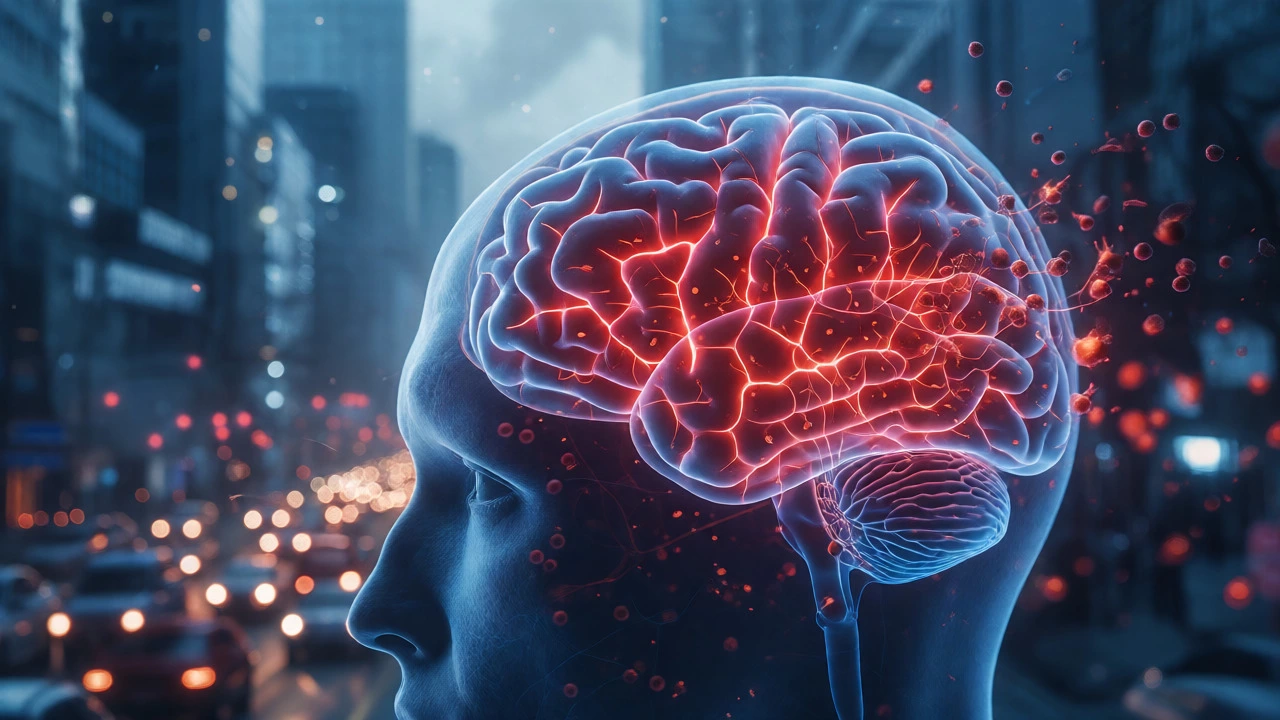
We usually associate smog with coughing or asthma. But recent studies suggest that fine particulate matter, known as PM2.5, does more than irritate lungs. These tiny particles cross the blood-brain barrier. Once inside, they trigger neuroinflammation. This inflammation disrupts neurotransmitters like serotonin and dopamine. If you live in a city with high traffic density, you are constantly inhaling these micro-pollutants. The result isn't always immediate panic attacks. Often, it manifests as a persistent low-grade depression or brain fog. You might feel tired without knowing why. Your focus slips. Over years, this chronic exposure increases the risk of developing clinical depression by up to 20% in some populations.
Noise: The Silent Stressor
Think about the last time you tried to relax while a jackhammer worked next door. Or consider living near an airport. Chronic noise exposure keeps your body in a state of hyperarousal. Your cortisol levels stay elevated because your brain perceives constant threat. This isn't just annoying; it is physiologically damaging. Long-term exposure to traffic noise correlates strongly with higher rates of anxiety disorders. Why? Because your nervous system never gets a break. It cannot switch from "fight or flight" to "rest and digest." For people already predisposed to anxiety, this constant auditory assault can be the tipping point into full-blown disorder.
Urban Design and Social Isolation
Cities are built for efficiency, not necessarily for human connection. Concrete jungles lack the restorative qualities of nature. When you have no access to green spaces, your ability to recover from mental fatigue drops. Psychologists call this Attention Restoration Theory. Without parks or trees, your directed attention resources deplete faster. This leads to irritability and poor impulse control. Furthermore, poor urban design often fosters social isolation. High-rise apartments with little communal space discourage neighborly interaction. Loneliness is a potent predictor of mental health decline. It rivals smoking fifteen cigarettes a day in its impact on mortality and morbidity. If your environment makes connection hard, your mental resilience suffers.
Climate Change and Eco-Anxiety
We are seeing a new phenomenon: eco-anxiety. This is not a formal diagnosis yet, but it describes a real psychological burden. Watching extreme weather events destroy communities creates trauma. Even if you aren't directly hit, the fear of future disasters weighs heavily. Younger generations report high levels of worry about climate change. This existential dread can manifest as obsessive thoughts or paralysis. It changes how you plan your life. Do you buy a house? Do you have children? These questions, once simple, now carry heavy emotional weight. The uncertainty itself becomes a stressor, contributing to generalized anxiety.
Light Pollution and Circadian Rhythms
Your body runs on a clock. Light regulates this internal timer. Modern cities glow at night. Streetlights, billboards, and screen light suppress melatonin production. Melatonin doesn't just help you sleep; it acts as an antioxidant in the brain. Poor sleep quality is one of the fastest routes to mental instability. Insomnia exacerbates symptoms of bipolar disorder and schizophrenia. If your bedroom faces a bright street, your circadian rhythm fights against artificial light all night. You wake up unrefreshed. Over time, this sleep debt accumulates, lowering your threshold for stress and emotional regulation.

Built Environment and Safety Perceptions
How safe do you feel walking home? If your neighborhood has poor lighting, abandoned buildings, or high crime rates, you remain vigilant. This hypervigilance drains mental energy. You cannot let your guard down. This constant alertness mimics the symptoms of PTSD. Residents in areas with poor maintenance often report higher levels of perceived stress. It’s not just about actual crime; it’s about the perception of safety. A well-maintained environment signals stability. A neglected one signals chaos. Our brains crave predictability. When the environment feels chaotic, our minds struggle to find peace.
Taking Control of Your Surroundings
You might not move to a cabin in the woods tomorrow. But you can tweak your immediate environment. Can you add plants to your workspace? Studies show even small amounts of greenery lower stress hormones. Can you use blackout curtains to improve sleep? Can you wear noise-canceling headphones during commute hours? These small actions reduce the environmental load on your brain. You are not powerless. Understanding these links helps you advocate for better urban planning. It also helps you forgive yourself when you feel overwhelmed. Sometimes, it’s not you. It’s your zip code.
Can air pollution really cause depression?
Yes. Research indicates that long-term exposure to fine particulate matter (PM2.5) can cause inflammation in the brain, which is linked to depressive symptoms. The particles enter the bloodstream and affect neurotransmitter function.
Is noise pollution worse than air pollution for mental health?
Both are harmful, but they affect different systems. Noise primarily impacts stress hormones and sleep, leading to anxiety and insomnia. Air pollution affects brain structure and chemistry, potentially leading to depression and cognitive decline. Neither is strictly "worse"; they often co-occur in urban settings.
What is eco-anxiety?
Eco-anxiety is chronic fear of environmental doom. It involves feelings of helplessness and grief related to climate change and ecological destruction. While not a DSM-5 diagnosis, it significantly impacts daily functioning and mental well-being.
Does living near green spaces improve mental health?
Generally, yes. Access to green spaces allows for attention restoration and reduces rumination. People with easy access to parks report lower levels of stress and better overall mood compared to those in concrete-heavy environments.
How does light pollution affect mental health?
Artificial light at night disrupts circadian rhythms by suppressing melatonin. This leads to poor sleep quality, which is a major risk factor for various mental health conditions, including depression and bipolar disorder.