Charitable Trust Suitability & Tax Calculator
Scenario Setup
Analysis Results
Enter your details and click Analyze to see if a charitable trust fits your situation.
Imagine you want to leave money behind to help feed the homeless or fund scientific research. You don't just hand cash to a group of friends; you need a legal vehicle that protects those funds forever. That vehicle is often a charitable trust, which is a legal arrangement where trustees hold assets for the benefit of charitable purposes rather than private individuals. It sounds complicated, filled with Latin terms and dusty law books. But it doesn’t have to be. Think of it as a safety box for your generosity. The lock ensures the money goes exactly where you intended, even if you’re not around to watch over it.
If you are new to this world, the jargon can feel like a wall. Words like "settlor," "beneficiary," and "perpetuity" might make your eyes glaze over. This guide strips away the complexity. We will look at what a charitable trust actually is, how it differs from other charities, and why someone would choose this specific structure. By the end, you will understand the mechanics without needing a law degree.
The Core Concept: Who Holds the Money?
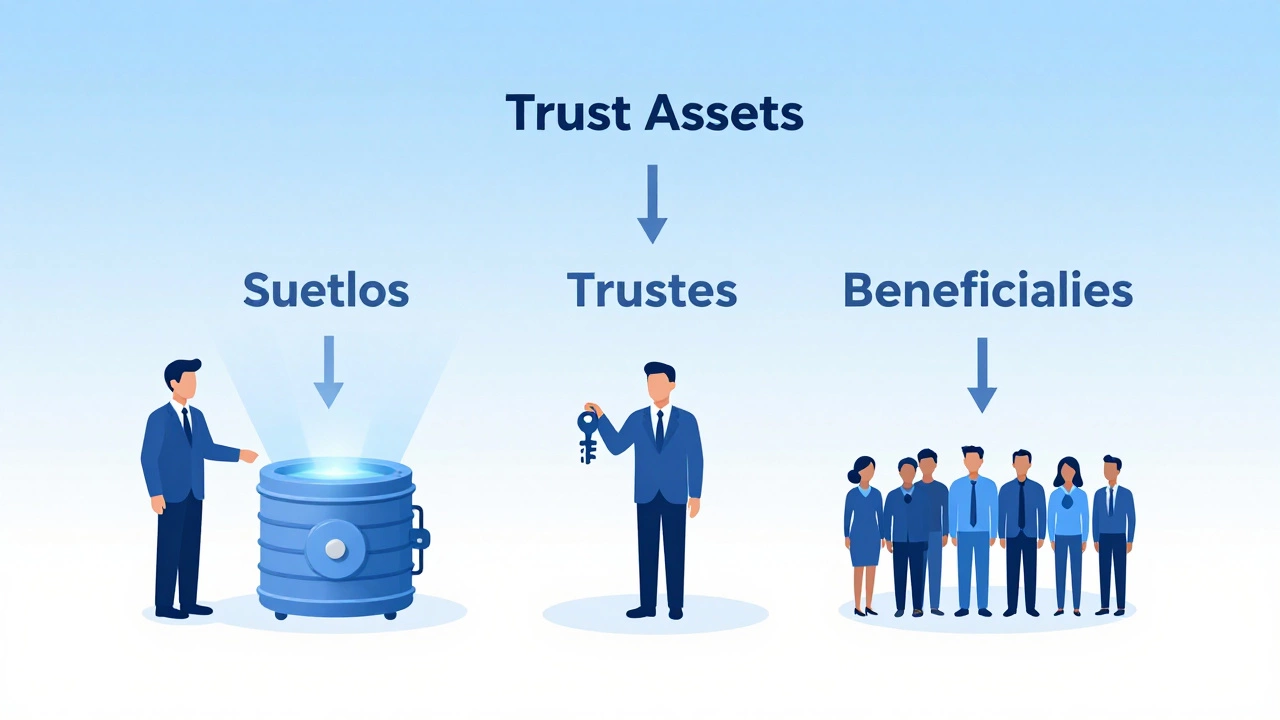
To understand a charitable trust, you first need to separate three roles. In most business structures, owners control the money. In a charitable trust, no one owns the money in the traditional sense. Instead, there is a split between legal ownership and beneficial use.
First, there is the settlor. This is the person who creates the trust and puts money or property into it. Once they do this, they usually give up control. They cannot take the money back for personal gain. Second, there are the trustees. These are the people legally responsible for managing the assets. They hold the title to the property or bank accounts. However, they cannot spend the money on themselves. Their job is stewardship. Third, there are the beneficiaries. In a charitable trust, the "beneficiaries" are not specific people like your nephew or your neighbor. The beneficiary is the public or a specific charitable cause, such as education, poverty relief, or animal welfare.
This separation is crucial. It prevents any single individual from treating charity funds as their personal piggy bank. The trustees act as guardians, ensuring the settlor’s original intent remains intact for years, sometimes centuries, to come.
Trust vs. Incorporated Charity: What’s the Difference?
Not all charities are trusts. In fact, many modern charities operate as incorporated entities, like companies limited by guarantee or Community Benefit Societies. So why choose a trust? The answer often comes down to simplicity and history.
| Feature | Unincorporated Charitable Trust | Incorporated Charity (e.g., CLG) |
|---|---|---|
| Legal Status | Not a separate legal entity | Separate legal personality |
| Liability | Trustees are personally liable | Limited liability for members/trustees |
| Setup Cost | Low (just a deed) | Higher (registration fees, filings) |
| Ongoing Admin | Minimal if income is low | Regular annual returns required |
| Suitability | Small funds, simple investments | Larger operations, employees, contracts |
An unincorporated trust is essentially a set of rules written in a document called a trust deed. It does not exist as a separate "person" in the eyes of the law. This means if the trust needs to sign a lease or hire an employee, the trustees must do so in their own names. This exposes them to personal risk. If the trust gets sued, the trustees’ personal assets could theoretically be at stake. This is why larger organizations rarely use pure trusts anymore. However, for small family foundations or modest investment funds dedicated to charity, the low setup cost and administrative ease make it an attractive option.
How Does It Actually Work?
Let’s walk through a real-world scenario. Suppose Alice wants to support local arts programs. She has £50,000 to spare. She decides to create a charitable trust. She drafts a trust deed stating that the capital (£50,000) must remain invested, and only the interest earned each year can be spent on art grants. She appoints Bob and Carol as trustees.
Bob and Carol now hold the £50,000 in a bank account in the name of the "Alice Arts Trust." They cannot withdraw the principal. They invest the money conservatively. At the end of the year, the investments yield £2,000 in profit. Bob and Carol review grant applications from local schools. They decide to give £1,500 to a drama club and save £500 for next year. They keep detailed records of every decision. This cycle repeats annually. The trust continues until the deed specifies otherwise, or until the assets run out (which shouldn’t happen if managed well).
The key here is the charitable purpose. In the UK, for example, the law defines specific areas that qualify as charitable. These include the prevention of poverty, advancement of education, advancement of health, and advancement of religion. If Alice wanted to use the trust to fund her favorite political party, it would not qualify as a charitable trust because politics is generally not considered a charitable purpose under current laws. The purpose must benefit the public, not just a closed group of people.

Tax Benefits: Why Do People Choose This Route?
One of the biggest drivers for setting up a charitable trust is tax efficiency. When a trust achieves registered charity status, it gains significant advantages. First, the trust itself pays no income tax or capital gains tax on its profits, provided those profits are used for charitable purposes. This means the £2,000 Alice’s trust earned earlier is tax-free. In a regular investment account, taxes would eat into that return.
Second, donors can get tax relief. If you donate to a registered charity in the UK, the government effectively adds 25% to your gift at no extra cost to you, thanks to Gift Aid. For higher-rate taxpayers, the savings are even greater. This makes charitable trusts powerful tools for wealth management. High-net-worth individuals often use them to reduce their estate tax burden while supporting causes they care about. The money leaves their taxable estate but stays within a structure they helped design.
However, these benefits come with strict rules. The trust must prove it is acting charitably. If trustees start spending money on non-charitable activities, they lose their tax-exempt status and may face penalties. The regulator, such as the Charity Commission for England and Wales, monitors compliance closely.
The Role and Responsibility of Trustees
Being a trustee is not just an honorary title. It carries serious legal responsibilities. Trustees owe duties to the charity, not to the settlor or the public directly. Their primary duty is to act in the best interests of the charity. This includes:
- Duty of Care: Making informed decisions. You can’t just guess where to invest. You should seek professional advice if needed.
- Duty to Act Lawfully: Following the trust deed and general law. You can’t break rules just because you think it helps the cause.
- Duty to Act in Good Faith: Avoiding conflicts of interest. If a trustee’s company wants to sell services to the trust, that’s a conflict. It must be declared and managed properly.
- Duty to Preserve Assets: Protecting the charity’s money and reputation. Reckless spending is a breach of duty.
Trustees are generally protected from personal liability if they act honestly and reasonably. But if they ignore warnings or act negligently, they can be held personally accountable. This is why many trusts require trustees to have insurance. It’s also why finding reliable, committed people to serve as trustees is often harder than raising the money itself.

When Should You Create One?
You don’t need a charitable trust for every good deed. If you want to donate $100 to a food bank, just write a check. A trust is overkill for small, one-off gifts. It makes sense when you have a substantial amount of assets-usually starting around £10,000 to £50,000-and you want long-term impact. It is ideal if you want to preserve a legacy, manage complex investments for charity, or ensure funds are used specifically according to your wishes after you pass away.
It is less suitable if you plan to run a large operational charity with staff, offices, and complex contracts. In those cases, the lack of limited liability in an unincorporated trust becomes a major headache. An incorporated structure would be safer and more professional.
Common Pitfalls to Avoid
Even well-meaning founders stumble. One common mistake is creating a "private benefit" trust. If the trust primarily helps the founder’s family, friends, or employees, it is not a true charitable trust. The benefit must be public. Another error is vague objectives. Saying "we want to help people" is too broad. Regulators need clear, measurable goals, like "providing housing for veterans in Edinburgh." Finally, poor record-keeping can doom a trust. Without clear minutes of meetings and financial statements, trustees cannot prove they acted correctly. Keep meticulous records from day one.
Do I need a lawyer to set up a charitable trust?
While you can draft a simple trust deed yourself using templates, it is highly recommended to consult a solicitor specializing in charity law. Mistakes in the wording can lead to rejection by regulators or unintended tax consequences. A lawyer ensures your objectives align with legal definitions of charity.
Can I change my mind later?
Once assets are transferred into a charitable trust, you generally cannot take them back. However, trustees may have the power to amend the trust deed if circumstances change, subject to regulatory approval. Always include flexibility clauses in the initial deed if possible.
Is a charitable trust the same as a foundation?
In common language, yes, they are often used interchangeably. Legally, a foundation is usually a type of charitable trust or incorporated charity that uses its own income to fund projects, rather than relying on public donations. The structure depends on how it is set up.
How much does it cost to register?
Registration fees vary by jurisdiction. In England and Wales, registering with the Charity Commission is free. However, you may pay for legal drafting of the trust deed and accounting services. Expect several hundred pounds in initial setup costs if using professionals.
Who regulates charitable trusts?
In the UK, the Charity Commission for England and Wales regulates most charities. Scotland has the Office of the Scottish Charity Regulator (OSCR). Northern Ireland has the Charity Commission for Northern Ireland. Each body sets specific reporting requirements and oversight rules.