Charity Event Impact Explorer
Select a metric below to see which charity event dominates that specific category. Note that "biggest" depends entirely on how you define success.
You might think the biggest charity event is just about who raised the most money. But it’s actually a messy mix of viewership, duration, geographic reach, and historical impact. If you ask someone in Edinburgh, they’ll likely point to the BBC Children in Need or Sport Relief. Ask someone in London, and they’ll mention Comic Relief. But zoom out globally, and the picture changes completely. There isn’t one single "winner" because different events dominate different metrics.
So, what is the biggest charity event? It depends on how you measure "big." Are we talking about total cash raised? Number of people watching? Duration of the broadcast? Or sheer number of participants? This article breaks down the heavy hitters in the philanthropy world, separating the myths from the measurable facts. We’ll look at Live Aid, the iconic 1985 dual-venue concert that set the standard for modern mass-scale fundraising, alongside modern digital giants like Telethon and a marathon television broadcast dedicated to raising funds for medical research.
Defining "Biggest": Money vs. Reach
Before naming names, we need to agree on the scoreboard. In the charity world, "size" usually falls into three buckets: financial yield, audience engagement, and logistical scale.
Financial yield is the most obvious metric. How many pounds, dollars, or euros hit the bank account? But this is tricky. A gala dinner for 500 millionaires might raise more per hour than a stadium concert with 70,000 attendees. Audience engagement looks at eyeballs. Did 1 billion people watch it, or did 10 million people donate? Logistical scale considers the physical footprint. Moving 100,000 runners through a city center is harder than hosting a TV show.
Most people, when they ask "what is the biggest charity event," are thinking about cultural impact combined with money. They want the event that changed the conversation. With that in mind, let’s look at the contenders.
The Historical Heavyweight: Live Aid (1985)
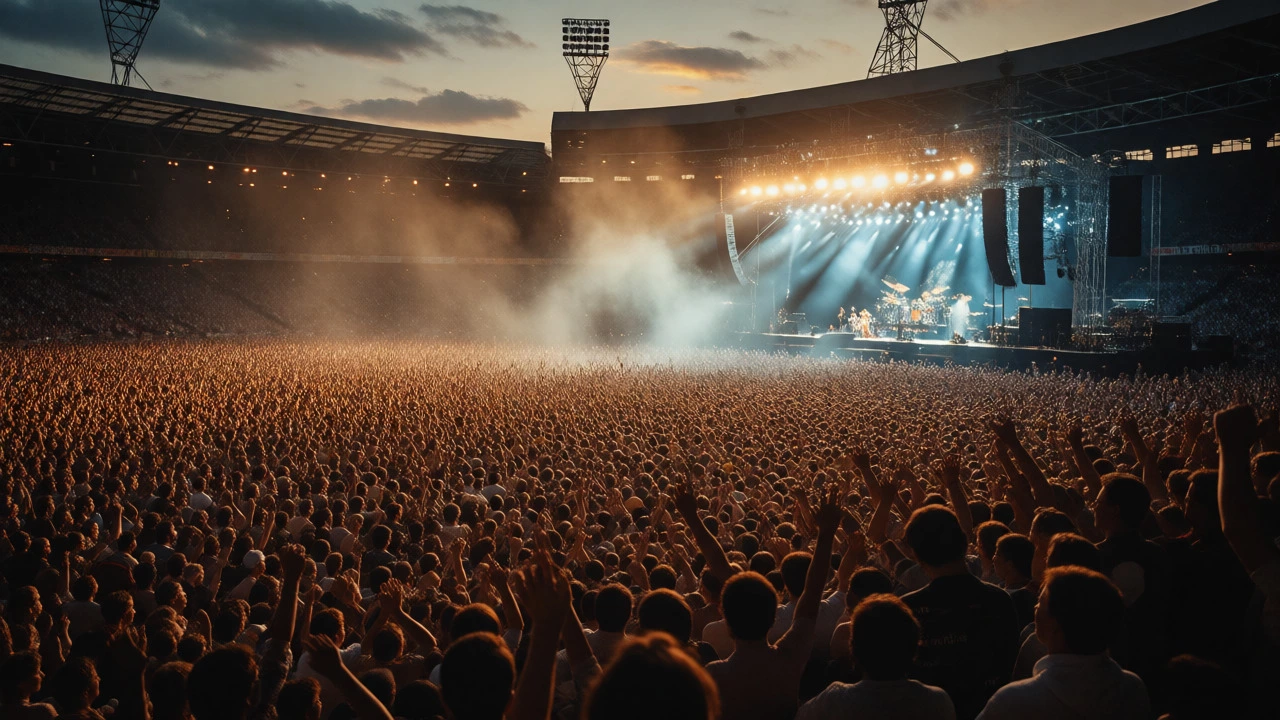
If you’re over 40, you probably remember where you were during Live Aid. Organized by Bob Geldof and Midge Ure, this wasn't just a concert; it was a global phenomenon. Held simultaneously at Wembley Stadium in London and JFK Stadium in Philadelphia, it featured legends like Queen, U2, and David Bowie.
Why does it still hold the crown for many? The numbers are staggering. An estimated 1.9 billion people watched across 60 countries. That’s nearly 40% of the world’s population at the time. It raised approximately £150 million (adjusted for inflation, significantly more today) for famine relief in Ethiopia. But its true legacy isn’t just the cash. It proved that pop culture could drive serious humanitarian action. Before Live Aid, charity was often seen as a quiet, local affair. After Live Aid, it became a spectator sport.
However, Live Aid had limitations. It was a one-off event. The logistics were nightmarish-satellite links failed, weather threatened the outdoor stages, and political tensions between the UK and US added friction. Yet, its cultural resonance remains unmatched. No other single-day event has captured the global imagination quite like it.
The Longest Running: Telethon and Telethons
If Live Aid is the sprinter, Telethon is the marathon runner. Originating in France in 1987, the concept spread globally. The French Téléthon alone has raised over €3.5 billion since its inception. In the UK, Comic Relief, a biennial charity campaign organized by comedian Lenny Henry and actress Jane Garvey, runs massive televised events every two years.
These events rely on endurance. They keep cameras rolling for 24 hours or more. The goal is to keep donors engaged through emotional storytelling, celebrity appearances, and live updates on the donation ticker. The sheer volume of small donations makes them huge. You don’t need one person giving £1 million; you need a million people giving £10.
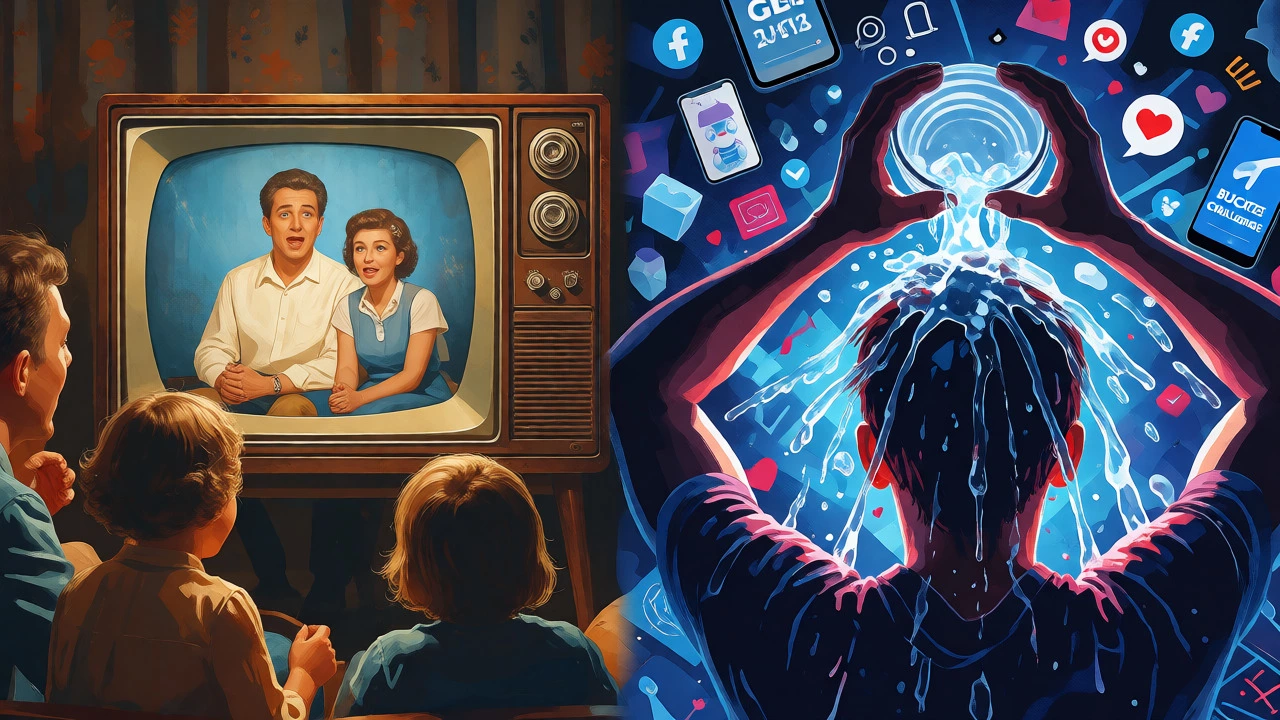
Consider the US version, the Jerry Lewis Muscular Dystrophy Association (MDA) Telethon, which ran for decades. While its popularity waned in the late 2000s, it demonstrated the power of consistent, annual engagement. These events build community habits. Families gather around the TV, making charity a shared ritual rather than a transactional act.
The Modern Digital Giant: Movember and Ice Bucket Challenge
We can’t talk about size without mentioning viral moments. The Ice Bucket Challenge, a viral social media campaign encouraging people to dump ice water on their heads to raise awareness for ALS, took the internet by storm in 2014. Was it the biggest? By participation, absolutely. Over 17 million videos were posted. It raised $115 million for the ALS Association in just eight weeks.
But here’s the catch: sustainability. Viral campaigns burn bright and fast. Once the novelty fades, donations drop. Compare this to Movember, an annual men's health charity event involving growing mustaches throughout November. Started in Melbourne in 2003, it now operates in 21 countries. It doesn’t have the instant viral spike of the Ice Bucket Challenge, but it builds steady, recurring revenue year after year. For long-term impact, consistency beats virality.
| Event | Type | Peak Year | Funds Raised (Approx.) | Audience/Participants | Key Strength |
|---|---|---|---|---|---|
| Live Aid | Concert | 1985 | £150M+ | 1.9B Viewers | Cultural Impact |
| Telethon (France) | Broadcast | Ongoing | €3.5B+ (Cumulative) | Millions Annually | Longevity & Consistency |
| Ice Bucket Challenge | Viral Campaign | 2014 | $115M (ALS Assoc.) | 17M+ Videos | Participation Volume |
| Compassion Day | Digital Giving | 2024 | $500M+ (Global) | 100M+ Transactions | Digital Accessibility |
The Physical Powerhouses: Marathons and Walks
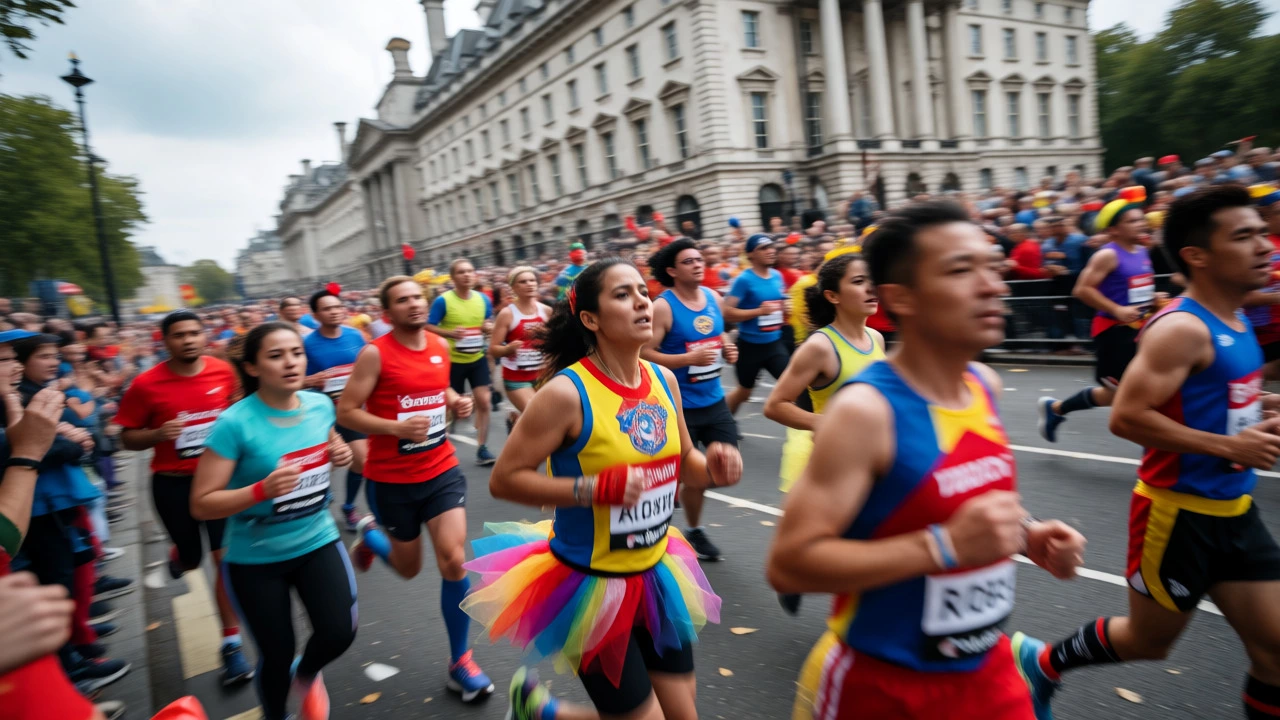
Sometimes, the biggest events aren’t on TV-they’re on the streets. The London Marathon, an annual road race held in London that raises millions for various charities, is consistently the largest annual fundraising event in the world. In recent years, it has raised over £60 million in a single day. Think about that. One Sunday morning, tens of thousands of runners, dressed in everything from tutus to superhero costumes, generate more cash than most corporate CSR budgets for the entire year.
Why do these work? Personal investment. When you train for six months and run 26.2 miles, you feel connected to the cause. You’re not just writing a check; you’re suffering for it. This emotional connection drives higher average donations per participant compared to passive online giving. Similar events, like the Great North Run in the UK or the New York City Marathon, follow this model. They turn physical effort into financial support.
For organizers, these events offer a unique advantage: visibility. Seeing thousands of people wearing charity t-shirts creates organic marketing. Passersby see the branding, hear the stories, and often donate on the spot. It’s charity as public spectacle.
Regional Champions: What About the UK?
Since I’m writing from Edinburgh, let’s localize this. In the UK, the battle for "biggest" is fierce between Children in Need and Sport Relief. Both are BBC-backed juggernauts. Children in Need, known for its Pudsey Bear mascot, has been running since 1980. It focuses heavily on children’s welfare within the UK. Sport Relief uses humor and athletic challenges to engage a broader demographic.
In 2024, both events combined raised hundreds of millions. But if you look at pure participation, the Macmillan Coffee Morning might actually be bigger in terms of human involvement. On a single morning, thousands of workplaces and homes across Britain host coffee and cake sales. It’s decentralized, low-cost, and deeply embedded in British culture. While the total cash might not match a televised gala, the social fabric it strengthens is immense.
How to Choose Your Own "Big" Event
If you’re planning a fundraiser, don’t try to beat Live Aid. Try to beat your last year’s numbers. Here’s how to determine what “big” means for your organization:
- Define Your Goal: Do you need quick cash (go digital/viral) or long-term donor retention (go physical/community-based)?
- Leverage Local Heroes: People donate to people. Use local celebrities or respected community figures, not just distant stars.
- Make It Easy: The easier it is to donate, the bigger the pool. QR codes, text-to-donate, and one-click payments remove friction.
- Tell Stories: Data informs, but stories compel. Show exactly where the money goes. A photo of a child receiving a book beats a spreadsheet any day.
Remember, the "biggest" event isn’t always the best event. A small, highly targeted fundraiser that fully solves a specific problem can be more impactful than a massive, generic gala. Focus on clarity of mission, not just scale of noise.
Which charity event has raised the most money ever?
In terms of cumulative lifetime fundraising, the French Téléthon is a top contender, having raised over €3.5 billion since 1987. However, for a single event, Live Aid (1985) remains culturally significant, though modern multi-day festivals like Glastonbury (which donates profits) also contribute massive sums annually. Recent digital initiatives like Global Citizen Festival have pledged billions in commitments, though actual disbursed cash varies.
Is the Ice Bucket Challenge still active?
The original viral wave peaked in 2014. While people still participate occasionally, it is no longer a major annual driver of new funds. The ALS Association continues to benefit from the initial surge, but current fundraising relies more on traditional methods and newer digital campaigns. The challenge demonstrated the power of social proof but struggled with long-term donor retention.
What is the biggest charity event in the UK?
It depends on the metric. Comic Relief and Children in Need typically raise the most money through televised broadcasts. However, the London Marathon raises the most funds from a single physical event annually (over £60m). For sheer number of participants, the Macmillan Coffee Morning involves the most individuals across the country.
Do virtual charity events count as the "biggest"?
Yes, increasingly so. Platforms like Streamers United or gaming marathons (e.g., Zeldathon) can raise hundreds of thousands in a weekend. While they may not match the gross totals of Live Aid, their cost-to-fundraise ratio is often much lower. Virtual events eliminate travel and venue costs, meaning more of the donation goes directly to the cause.
How do organizers ensure transparency in big events?
Reputable organizations publish audited financial reports. Look for registration with bodies like the Charity Commission in England/Wales or OSCR in Scotland. They detail administrative costs versus program spending. For large events, independent oversight committees often verify that pledges made during broadcasts are actually collected and distributed.