Climate Change Mortality Calculator
The deadliest threat to humans isn’t a virus, a war, or a asteroid. It’s something quieter, slower, and far more relentless: climate change. Every year, it kills over 5 million people-not from sudden disasters, but from the slow poisoning of air, water, food, and shelter. This isn’t a future warning. It’s happening now.
How Climate Change Kills
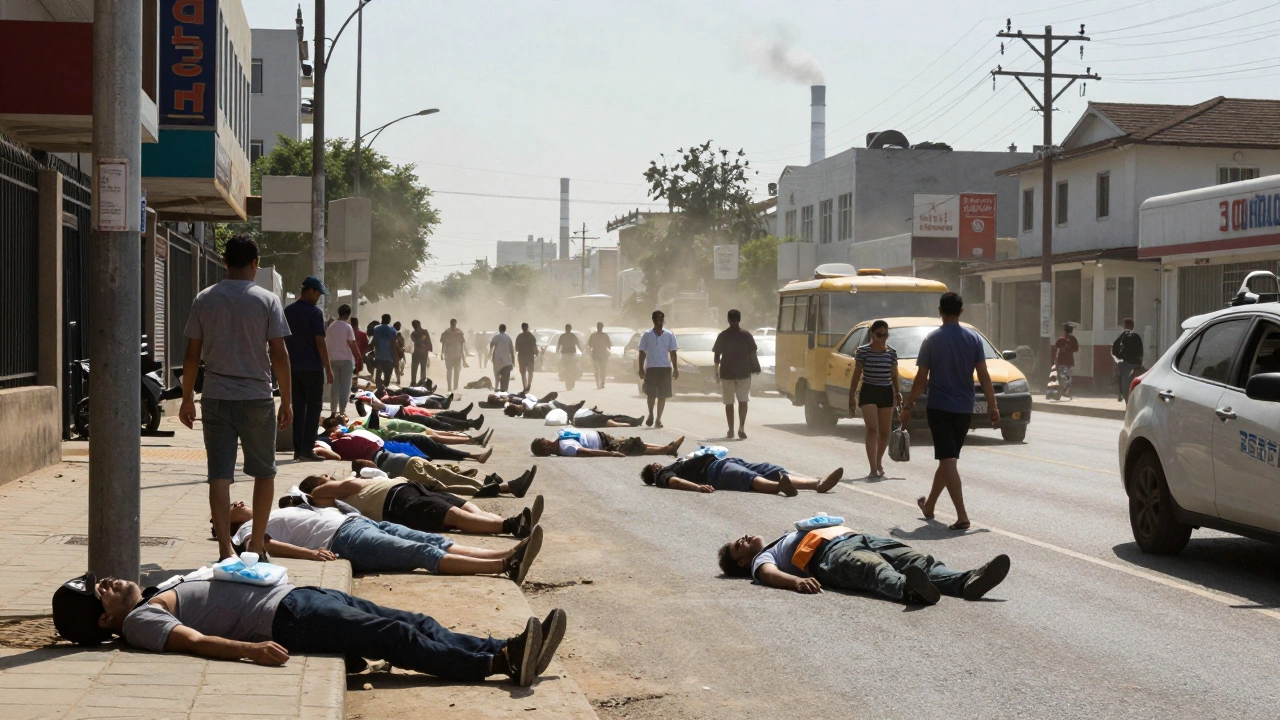
Most people think of climate change as rising seas or hotter summers. But the real danger is in the details. Extreme heat alone caused more than 160,000 deaths in 2022, according to the Lancet Countdown. That’s more than all gun deaths in the U.S. in a year. Elderly people, outdoor workers, and those without air conditioning are hit hardest. In India, heatwaves in 2024 pushed temperatures past 50°C in some cities. Hospitals ran out of ice packs. People collapsed on sidewalks. No one called it a climate disaster-just a really hot day.
Then there’s air pollution. Burning fossil fuels releases fine particles that get into lungs and bloodstreams. The World Health Organization says 99% of the global population breathes air that’s unsafe. That pollution causes heart disease, strokes, lung cancer, and premature births. It’s responsible for 6.7 million deaths every year-more than malaria, tuberculosis, and HIV combined.
And it’s not just what’s in the air. Warmer temperatures let disease-carrying mosquitoes spread farther. Dengue fever, once limited to tropical zones, now appears in southern Europe and the southern U.S. Malaria is creeping into highland areas in Africa where people have no immunity. In 2023, over 600,000 people died from malaria alone-most of them children under five.
The Food Crisis You Haven’t Heard About
Climate change doesn’t just kill directly. It starves people too. Crop yields are dropping because of droughts, floods, and unpredictable weather. In 2022, Pakistan’s floods drowned a third of the country’s cropland. Wheat production fell by 35%. Rice harvests in Southeast Asia dropped by 12% in the same year. These aren’t isolated events. They’re part of a global trend.
When crops fail, prices rise. In 2023, global food prices hit their highest level in a decade. Families in Nigeria, Yemen, and Honduras spent over 60% of their income just on food. Malnutrition is rising fast. The UN estimates that by 2050, climate change could push an extra 78 million people into chronic hunger. That’s the population of Germany, without enough to eat.
Water, Conflict, and Displacement
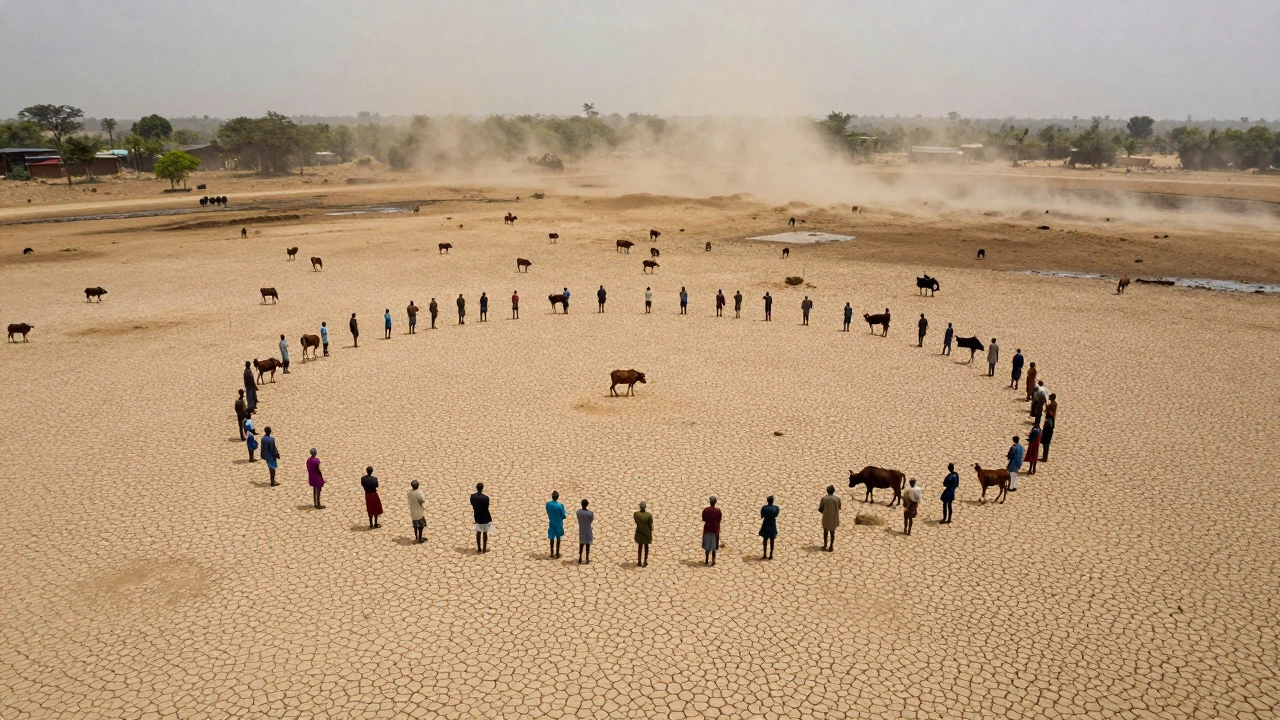
By 2030, the World Bank predicts that climate change will force more than 216 million people to move within their own countries. That’s not because of hurricanes or fires-it’s because their wells ran dry, their farms turned to dust, or their rivers disappeared.
In the Sahel region of Africa, Lake Chad has shrunk by 90% since the 1960s. Farmers and herders who once shared the land now fight over what’s left. This isn’t just a humanitarian crisis-it’s a security one. Groups like Boko Haram have grown stronger by exploiting the desperation left behind by climate-driven collapse.
In the U.S., the Colorado River, which supplies water to 40 million people, is at its lowest level in 1,200 years. Cities like Las Vegas and Phoenix are already rationing water. When resources disappear, conflict follows. The IPCC says climate change is now a “threat multiplier” for war and instability.
Why It’s Worse Than You Think
Most people think of climate change as a problem for polar bears or island nations. But it’s already killing more people than any other environmental factor. The Global Burden of Disease Study found that climate-related risks are the third leading cause of death worldwide-after heart disease and stroke.
And it’s getting worse faster than models predicted. In 2024, the planet’s average temperature hit 1.5°C above pre-industrial levels for the first time-and stayed there for the whole year. Scientists warned this wasn’t a one-off. It was a signal. We’re not just warming. We’re accelerating.
What’s worse? The systems meant to protect us are breaking. Emergency services can’t keep up with heatwaves. Hospitals are overloaded. Food supply chains are brittle. Governments are slow to act. The people who suffer most have the least power to change things.

It’s Not Too Late-But Time Is Running Out
There’s still a way out. But it requires action on three fronts: energy, food, and justice.
First, stop burning fossil fuels. Renewable energy is cheaper than coal in 90% of the world now. Solar and wind power can replace most of our electricity within a decade-if we build it fast enough. Electric vehicles, efficient buildings, and industrial upgrades can cut emissions by 70% by 2040.
Second, fix how we grow food. Regenerative farming, reduced meat consumption, and protecting wetlands can cut food system emissions by half. Right now, agriculture emits more than all planes and ships combined. We can change that.
Third, protect the most vulnerable. The poorest countries contribute less than 10% of global emissions but suffer the worst impacts. Wealthy nations must pay for adaptation-clean water systems, heat-resistant crops, early warning systems. This isn’t charity. It’s justice.
What You Can Do
You don’t need to live off the grid to make a difference. Here’s what works:
- Switch to a green energy provider-even if it’s just for your home.
- Reduce meat and dairy. One plant-based meal a day cuts your food footprint by 30%.
- Support politicians who treat climate change as an emergency-not a debate.
- Join local groups pushing for tree planting, bike lanes, or clean air laws.
- Stop believing the myth that individual action won’t matter. Collective action starts with one person.
The deadliest threat to humans isn’t some distant monster. It’s the way we live today. And the good news? We already have the tools to fix it. What we’re missing is the will. The next decade will decide if we choose to act-or wait until it’s too late.
Is climate change really the deadliest threat to humans?
Yes. According to the World Health Organization and the Lancet Countdown, climate change causes over 5 million deaths annually through heat, air pollution, disease spread, malnutrition, and conflict. That’s more than malaria, war, or smoking. It’s the third leading cause of death globally.
How does air pollution from climate change kill people?
Burning coal, oil, and gas releases tiny particles called PM2.5 that enter the lungs and bloodstream. These particles trigger heart attacks, strokes, lung cancer, and asthma. They also harm fetal development. The WHO says air pollution kills 6.7 million people every year-more than any other environmental risk.
Can we still stop the worst effects of climate change?
Yes-but only if we cut global emissions in half by 2030 and reach net-zero by 2050. Renewable energy, electric transport, and better farming can do this. We have the technology. What’s missing is political will and urgency. The window is closing, but it’s not shut yet.
Why do poor countries suffer more from climate change?
They contribute less than 10% of global emissions but have fewer resources to adapt. They lack air conditioning, clean water systems, flood defenses, and healthcare. When droughts or floods hit, their crops fail, their children get sick, and their governments can’t respond. This isn’t bad luck-it’s systemic injustice.
What’s the biggest myth about climate change?
That individual actions don’t matter. While corporations and governments must lead, change starts with people. When millions choose plant-based meals, use public transport, or demand climate policies, markets and politics shift. You’re not just one person-you’re part of a movement.
Climate change isn’t a future problem. It’s the present emergency. The deadliest threat to humans isn’t hiding in a lab or a war zone. It’s in the air we breathe, the food we eat, and the water we drink. And it’s up to us to stop it-before it’s too late.