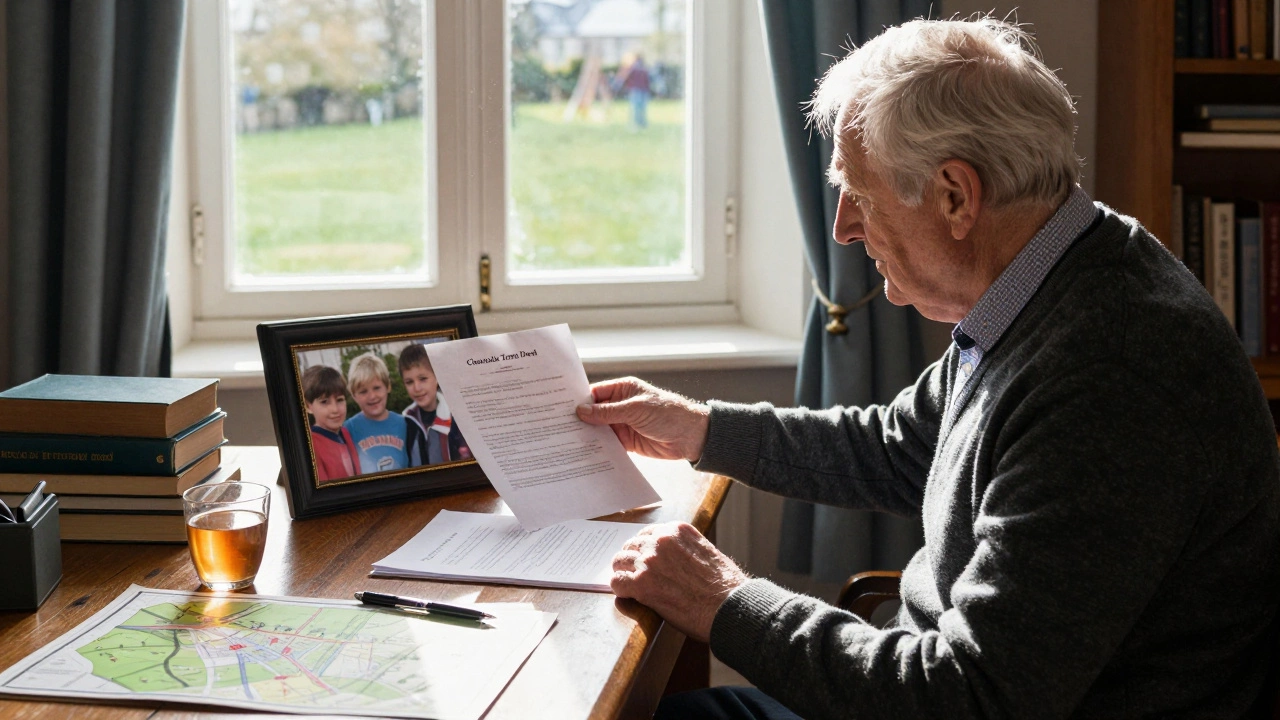
Charitable Trust Income Calculator
Calculate how much annual income your charitable trust could generate over time. Based on your asset value, trust type, and distribution terms.
When someone sets up a charitable trust, they’re not just giving money away-they’re building something that lasts. Unlike a one-time donation, a charitable trust is a legal structure designed to give money or assets to causes over time, often forever. It’s not about charity in the moment. It’s about legacy.
Why Do People Create Charitable Trusts?
Most people who set up charitable trusts aren’t trying to get a tax break-though that’s a side benefit. They’re trying to make sure their values outlive them. Maybe they spent years volunteering at a local food bank. Maybe they lost a family member to a disease and want to fund research. A charitable trust lets them lock that purpose into law.
Take the example of a retired teacher in Aberdeen who donates £500,000 to a trust for literacy programs in rural schools. She doesn’t want the money spent all at once. She wants it to keep helping kids for decades. A charitable trust makes that possible. The money stays invested. The interest pays for books, tutors, and after-school programs-year after year.
How a Charitable Trust Actually Works
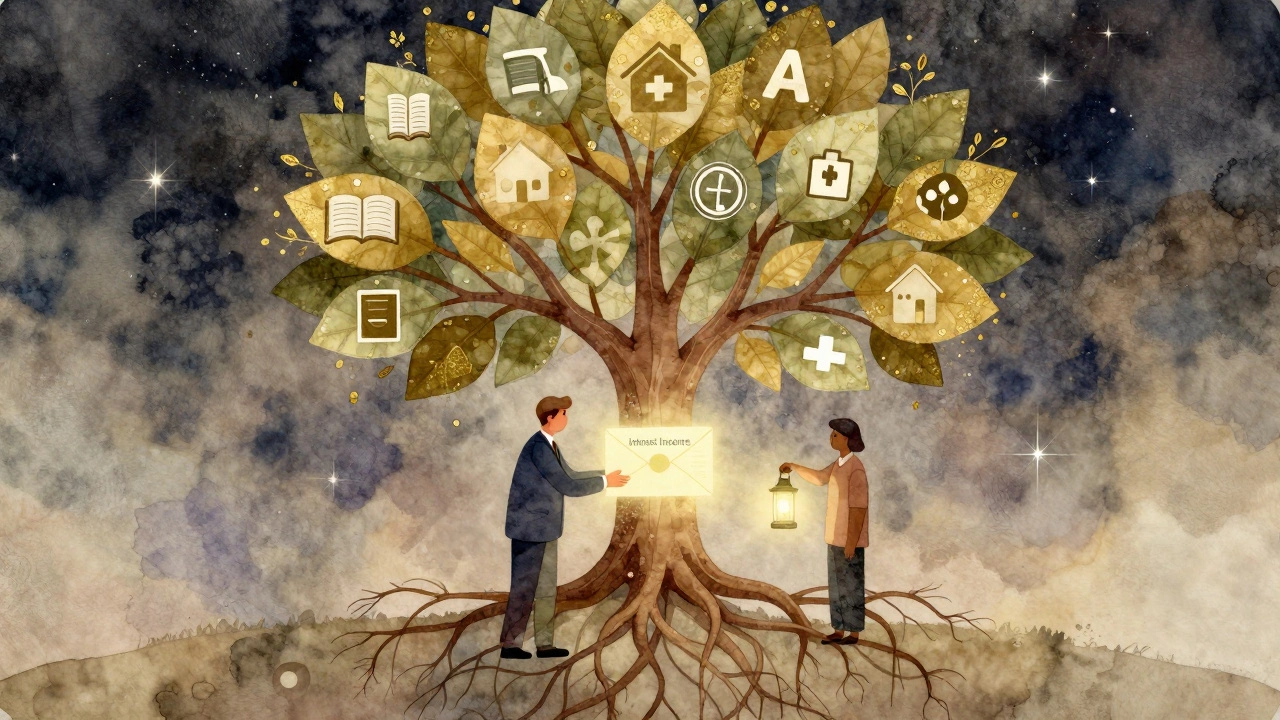
A charitable trust has three key players: the donor, the trustee, and the charity.
- The donor gives money, property, or other assets-like stocks or real estate.
- The trustee (often a bank, lawyer, or trusted individual) manages the assets. They follow the rules written in the trust document.
- The charity receives the income or principal, depending on how the trust is set up.
There are two main types: charitable remainder trusts and charitable lead trusts.
In a charitable remainder trust, the donor (or someone they name) gets income from the trust first. After a set number of years-or when they die-the remaining money goes to the charity. This is popular with people who want to keep some income in retirement while still supporting a cause.
In a charitable lead trust, the charity gets paid first. After a period, whatever’s left goes to the donor’s family or heirs. This is often used by wealthy families who want to pass assets to children while reducing estate taxes and supporting charity at the same time.
What Can Be Put Into a Charitable Trust?
It’s not just cash. People regularly donate:
- Stocks and bonds
- Real estate (homes, land, commercial buildings)
- Business interests
- Art and collectibles
- Retirement accounts (IRAs, pensions)
One woman in Glasgow donated her family’s 19th-century cottage to a trust that preserves historic buildings. The trust now rents it out. The rent pays for restoration projects across Scotland. The house didn’t just sit empty-it became a funding engine.
How Is a Charitable Trust Different From a Regular Charity?
Many people confuse charitable trusts with charities like the Red Cross or local food banks. But they’re not the same.
A charity runs programs. It hires staff, runs events, and spends money directly on services. A charitable trust is a financial tool. It doesn’t run soup kitchens or tutoring centers. It gives money to those who do.
Think of it like this: a charity is the chef cooking the meal. A charitable trust is the person who funds the kitchen so the chef can keep cooking-for years, even after the donor is gone.
What Are the Real Benefits?
There are three big reasons people choose this path:
- Permanence-The trust keeps giving. Even if the donor dies, the cause lives on.
- Control-The donor writes exactly how the money should be used. No guesswork. No shifting priorities.
- Tax advantages-In the UK, charitable trusts are usually exempt from income tax, capital gains tax, and inheritance tax. Donors often get income tax relief on their gifts.
But here’s the catch: you can’t just set it up and forget it. The trustee must file annual reports. The charity must use the money as promised. The law keeps things honest.
Who Should Consider a Charitable Trust?
You don’t need to be rich. But you do need to have something to give-assets worth more than £10,000, usually. If you’re thinking about leaving money to charity in your will, a trust might be better.
It’s ideal if:
- You want your gift to last beyond your lifetime
- You’re concerned about estate taxes
- You want to give something more valuable than cash (like property or shares)
- You’re not sure which charity to pick right now-but you know the kind of cause you care about
It’s not for everyone. If you just want to help a local shelter this year, a direct donation is simpler and cheaper.
What Happens If the Charity Fails?
One fear people have: what if the charity shuts down? The trust could die with it.
That’s why trust documents include a cy-près clause-a legal fallback. If the original charity can’t carry out the purpose, the court can redirect the money to another charity with a similar mission. So if the literacy trust in Aberdeen’s original partner closes, the funds could go to a new organization teaching reading to kids in the Highlands.
This clause makes charitable trusts resilient. They’re built to adapt, not collapse.
Setting One Up Isn’t Hard-But It Needs Care
You can’t just write a note and call it a trust. You need:
- A written trust deed
- A named trustee
- A clear purpose
- Registration with the Office of the Scottish Charity Regulator (OSCR) if it’s based in Scotland
Most people hire a solicitor. It costs between £1,000 and £3,000. But that’s a small price to pay for a gift that lasts 50 years.
And if you’re not sure where to start? Many banks and legal charities offer free advice. In Edinburgh, the Law Society of Scotland runs a pro bono service for people exploring charitable giving.
It’s Not Just Money-It’s Purpose
A charitable trust doesn’t change the world in one big splash. It changes it slowly, steadily, year after year. It’s the quiet force behind libraries that stay open, shelters that never close, and research that keeps going even when headlines move on.
It’s how ordinary people make extraordinary legacies. Not because they had millions. But because they cared enough to plan for the future.
Can a charitable trust make a profit?
Yes-but it can’t keep the profit. A charitable trust can invest its assets and earn interest, dividends, or rental income. That’s how it grows over time. But all profits must go back into supporting its charitable purpose. Any money used for administrative costs must be reasonable and necessary. The goal is to sustain the cause, not enrich anyone.
Can I change the charity later?
Generally, no. Once you set up the trust, the charity is locked in unless your trust document includes a flexible clause allowing changes. That’s why many people choose broad language-like "supporting education in Scotland"-instead of naming a single organization. If you want to switch charities later, you’d need court approval and a strong reason, like the original charity no longer existing.
Do I need to be rich to set one up?
Not necessarily. While larger trusts often involve six-figure donations, even smaller gifts can work. A trust with £20,000 in assets can still generate £800-£1,000 a year in income to support a local cause. The key isn’t the size-it’s the commitment. Many community foundations in Scotland help people create small charitable trusts with as little as £5,000.
How long does a charitable trust last?
In Scotland, charitable trusts can last indefinitely. There’s no legal time limit. Many are designed to last forever, with the principal kept intact and only the income used. This is called a "perpetual trust." Some are set for a fixed term-like 20 or 50 years-but the default is permanence. That’s what makes them powerful.
Is a charitable trust the same as a foundation?
They’re similar but not the same. A foundation is usually a separate legal entity with its own staff and board. A charitable trust is simpler-it’s a legal agreement managed by a trustee. Foundations often give grants to other charities. Charitable trusts often give income directly to one or more charities. Foundations are more complex and expensive to run. Trusts are leaner and more flexible.
What Comes Next?
If you’re thinking about setting up a charitable trust, start by asking yourself: what do I want to see still happening in 30 years? Then talk to someone who’s done it before. Visit a local community foundation. Talk to a solicitor who handles estate planning. Don’t rush. This isn’t a transaction. It’s a promise.
And if you’re not ready to give yet? That’s okay. Just knowing how these trusts work means you’re already part of the change. You’re thinking beyond yourself. And that’s where real impact begins.