Donation Impact Checker
Before you drop off your bags, use this tool to check if your items will help or hinder the charity. Answer the questions below to get a recommendation.
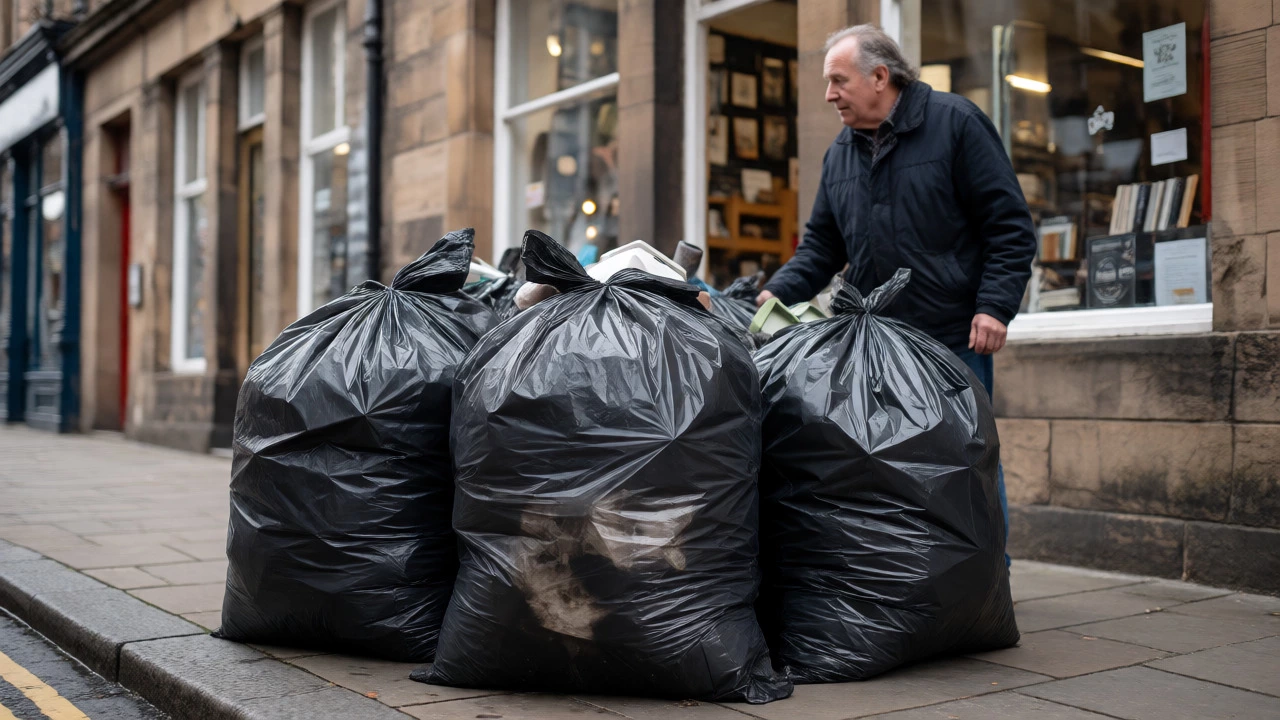
You’ve cleaned out your attic. You’ve sorted through the garage. You have three bags of stuff ready for the charity drop-off point on the corner. It feels good, right? You’re clearing space and helping others. But here’s the hard truth: not every item you donate is actually helpful. In fact, some things cost charities more money than they’re worth.
I’ve spent years coordinating collections in Edinburgh, from local food banks to large national trusts. I’ve seen well-meaning donors dump broken appliances, stained sofas, and outdated textbooks that end up in landfill. The result? The charity pays disposal fees instead of raising funds. If you want your donation to make a real impact, you need to know what to leave at home.
The Broken and Stained Rule
This is the golden rule of giving: if it’s broken, torn, or stained, it’s trash. It sounds harsh, but think about the logistics. When you hand over a ripped jacket or a lamp with a missing cord, the volunteer has to sort it. They can’t sell it. So, they put it in the "reject" pile. Then, the charity has to pay to send that reject pile to the tip.
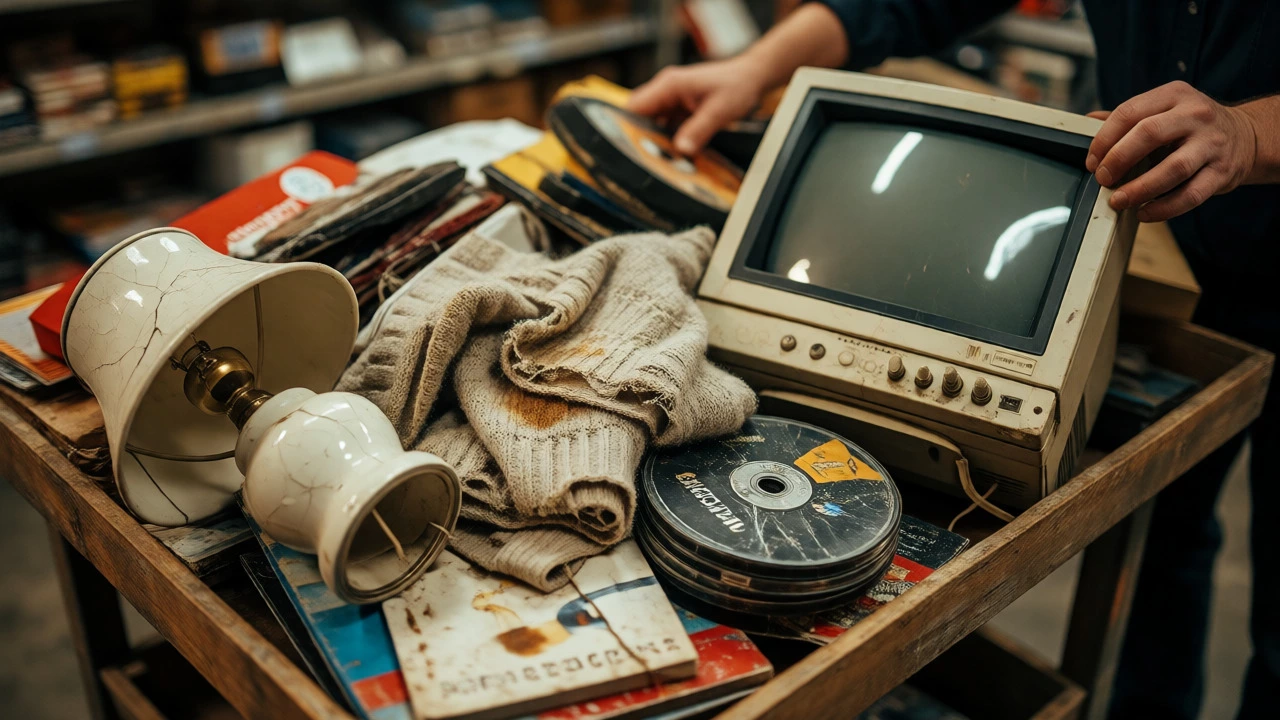
Textiles are the most common offenders. We get tons of socks with holes, underwear that’s lost its elasticity, and shirts with coffee stains that won’t wash out. Charities like Oxfam and local hospice shops rely on selling clean, wearable items. If it wouldn’t pass the smell test or the visual check in a shop window, don’t donate it. Toss it in the recycling bin instead.
Outdated Electronics and Media
Remember when we all had shelves full of DVDs and CDs? Now, those plastic discs are nearly worthless. Most charity shops struggle to sell them because streaming services have taken over. You might find a rare box set, but generally, a stack of random movies sells for pennies-or nothing at all.
The same goes for old tech. That bulky CRT monitor from 2005? It’s electronic waste. Modern buyers want flat screens, smartphones, and tablets. If your gadget doesn’t power on, or if it’s an obsolete format (like VHS tapes or cassette players), skip the donation. Recycling centers handle e-waste better than charity shops do. Donating heavy, low-value electronics forces staff to lift and store items that likely won’t move.
| Item Type | Why Avoid It | Better Alternative |
|---|---|---|
| Stained Clothing | Cannot be sold; incurs disposal costs | Recycle as textile waste |
| Old DVD/CD Box Sets | Low demand; takes up shelf space | Sell online or recycle plastic |
| Bulky Furniture | High transport/storage costs; often damaged | Community giveaway groups |
| Opened Hygiene Products | Hygiene regulations prevent resale | Keep for personal use or gift unopened |
| Expired Food | Safety risks; cannot be distributed | Compost or discard |
Furniture: The Heavy Burden
People love to clear out their homes by donating sofas, wardrobes, and dining tables. But furniture is tricky. First, many charity shops don’t have the storage space for large items. Second, transport is expensive. If a charity has to hire a van and two people to collect your three-piece suite, that cost eats into the profit margin.
Also, safety standards matter. Old mattresses rarely meet current fire safety regulations. Many charities refuse them outright. Sofas with sagging springs or water damage are also rejected. Before you call for collection, check the charity’s website. Some only accept small decorative items or high-quality vintage pieces. For everything else, try local community Facebook groups or apps like Freecycle where someone nearby might actually want it.
Personal Care Items and Opened Goods
You bought a bottle of shampoo, tried it once, and hated the smell. Can you donate it? Usually, no. Most charity shops have strict hygiene policies. They cannot accept opened personal care products like toothpaste, deodorant, makeup, or skincare. Even if it’s half-full, they can’t resell it due to health and safety concerns.
Unopened items are different. If you have sealed toiletries, you can often donate them to homeless shelters or women’s refuges. These organizations distribute hygiene kits directly to people in need. Always call ahead, though. Policies vary wildly between a general charity shop and a specific support service.
Books: Quality Over Quantity
We all have bookshelves overflowing with novels we read once and never liked. While books are popular donations, there’s a limit. Charity shops are flooded with mass-market paperbacks. They might take ten, but they’ll reject fifty if they look worn, yellowed, or smell musty.
Avoid donating encyclopedias, school textbooks, or magazines unless they are recent and relevant. An encyclopedia set from 1995 has zero value today. Information is free online now. If you want to help, donate well-kept fiction, non-fiction, or children’s books in good condition. Check for mold or water damage-those are instant rejects.
Toys and Children’s Items
Kids grow fast. Toys pile up quickly. But before you bag up those plastic dinosaurs, check them. Are any parts missing? Is the paint chipped? Does it still work? Safety is critical here. Small parts can be choking hazards. Cracked plastic can cut fingers.
Charities often decline toys that aren’t complete or clean. If a toy has been chewed on by a dog or dragged through mud, it needs deep cleaning. If you can’t clean it properly, don’t donate it. Also, avoid donating stuffed animals that have lost their eyes or stuffing. They’re hard to sanitize and rarely sell.
How to Decide: The Three-Question Test
Still unsure? Run your item through this quick filter:
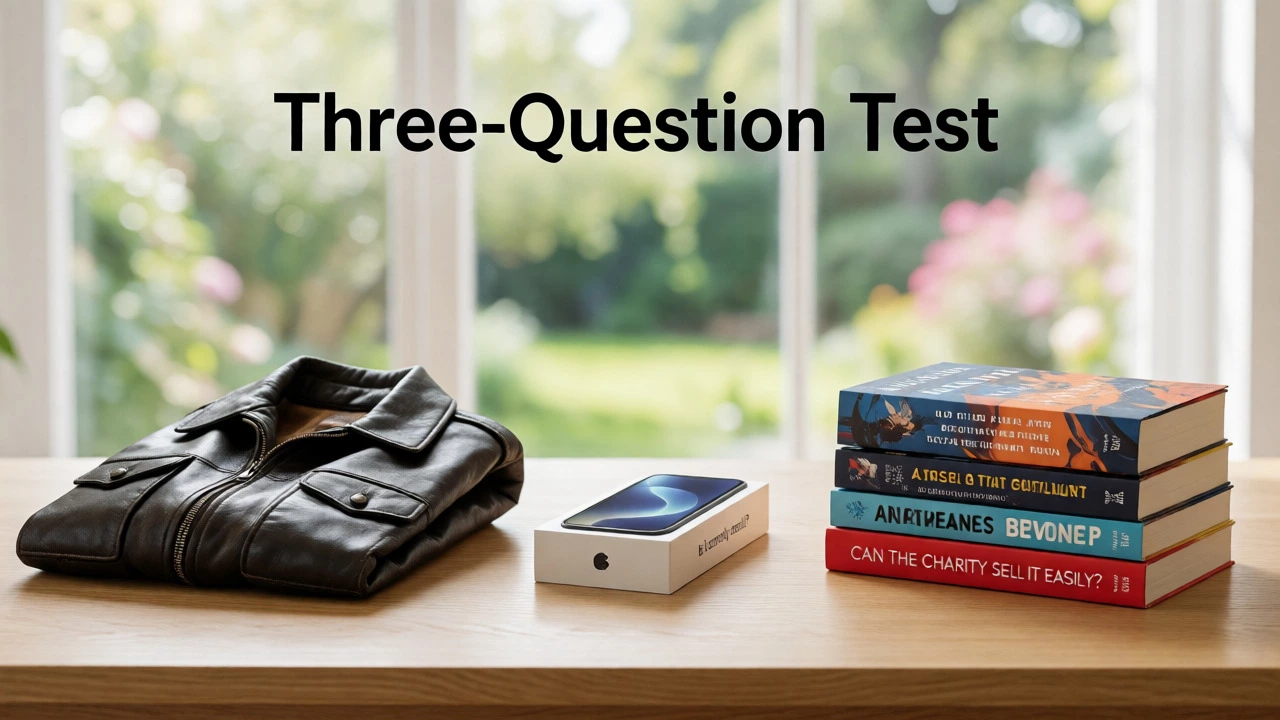
- Would I give this to a friend? If you’d feel embarrassed handing it to a friend, a stranger won’t buy it.
- Is it currently useful? Does it serve a purpose today, or is it just clutter?
- Can the charity sell it easily? Is it something people actively look for in second-hand shops?
If you answer "no" to any of these, reconsider your plan. Maybe it belongs in the recycling bin, or maybe you should list it on a local marketplace for free pickup.
When in Doubt, Ask
Every charity is different. Large chains like British Heart Foundation have specific acceptance lists, while small local trusts might be flexible. A quick phone call saves everyone time. Ask them: "Do you accept [item]?" and "Are there any current shortages?"
Sometimes, they’re desperate for specific things. During winter, coats are gold. In summer, garden tools fly off the shelves. Knowing what they need helps you donate strategically. It turns your decluttering session into a targeted act of kindness rather than a burden.
Can I donate broken electronics to charity?
Generally, no. Most charity shops cannot repair or sell broken electronics. They will likely treat them as waste, which may incur disposal fees for the charity. It is better to take broken electronics to a dedicated e-waste recycling center.
Should I wash clothes before donating them?
Yes, absolutely. Clothes should be freshly laundered and dry. Dirty or smelly clothes are difficult to store and may contaminate other donations. If an item smells like smoke, pets, or damp, it is usually rejected.
Why do charities reject old books?
Charities receive an oversupply of books, particularly mass-market paperbacks. They have limited shelf space and prefer items in good condition. Books with water damage, mold, excessive wear, or outdated information (like old textbooks) are typically rejected.
Can I donate opened toiletries?
Most retail charity shops cannot accept opened toiletries due to hygiene regulations. However, specific organizations like homeless shelters or women's refuges may accept unopened or lightly used items depending on their own distribution policies. Always check with the specific organization first.
What happens to donated items that don't sell?
Items that do not sell within a certain period are usually sent to textile recyclers or waste management facilities. This process often involves transportation and processing costs, which can reduce the net financial benefit to the charity.