Teen Golf Club Size Finder
Enter your child's measurements below to get personalized recommendations for club category, shaft flex, and putter length. Remember, these are guidelines—always check posture and comfort.
You’re standing in the pro shop or scrolling through online retailers, staring at rows of shiny metal and graphite shafts. Your thirteen-year-old is eager to play, but you’re stuck on one critical question: what size golf clubs does a 13 year old actually need? It’s not just about height. If you buy the wrong set, you risk teaching your child bad habits that could stick with them for years. Or worse, they might quit because the game feels clumsy and uncomfortable.
Here’s the truth most salespeople won’t tell you upfront: there is no single "standard" size for every 13-year-old. At this age, growth spurts are unpredictable. One month they fit an intermediate set; the next, they’re outgrowing it. This guide breaks down exactly how to measure, which specs matter, and when to spend versus when to save. We’ll look at real-world scenarios from local courses here in Scotland and beyond, so you can make a decision that keeps your teen swinging confidently.
Why Height Isn't the Only Factor That Matters
Most sizing charts start with height. That’s fine as a rough filter, but it fails miserably as a final decision tool. Why? Because arm length and posture change the equation entirely. Imagine two 13-year-olds who are both exactly 5'4" (163 cm). One has long arms relative to their torso; the other has shorter arms. The first kid needs a shorter club to maintain proper posture. The second needs a longer one. If you ignore wrist-to-floor measurements, you’re guessing.
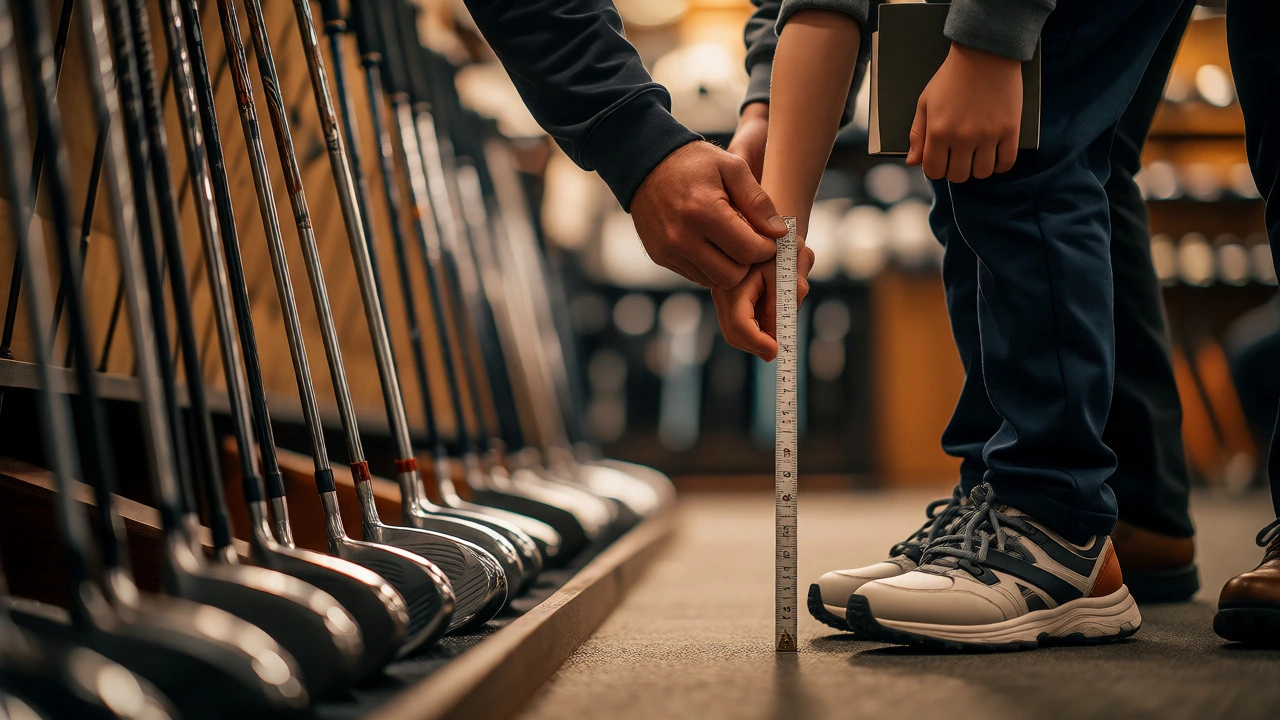
The critical metric here is the wrist-to-floor measurement. This is the distance from the crease of the wrist to the ground while the player stands upright in athletic shoes. For a typical 13-year-old, this number often falls between 30 and 34 inches. But don’t rely on averages. Measure them yourself at home with a tape measure and a book placed under the wrist to simulate the grip position. This simple step prevents the most common fitting error: buying clubs that force the player to hunch over or stand too far away from the ball.
Junior vs. Intermediate: Where Does a 13-Year-Old Fit?
Golf manufacturers divide youth equipment into specific categories based on age and skill level. Understanding these tiers helps you narrow down your search quickly.
- Junior (Ages 9-12): These sets feature lightweight graphite shafts and smaller club heads. They are designed for slower swing speeds and developing coordination. Most 13-year-olds have outgrown these unless they are significantly below average height.
- Intermediate (Ages 13-17): This is the sweet spot for many 13-year-olds. The shafts are slightly stiffer and longer than junior models. The club heads resemble adult clubs more closely, helping teens transition smoothly if they plan to continue playing competitively.
- Adult Men’s/Women’s: Some tall or physically mature 13-year-olds can jump straight to adult sets. However, standard adult men’s clubs usually require a swing speed of 85 mph or higher to perform well. If your teen swings at 70 mph, a heavy steel-shafted driver will feel like swinging a broomstick.
For most 13-year-olds, an intermediate set offers the best balance. It provides enough forgiveness for inconsistent strikes while being light enough to generate clubhead speed. Look for brands like Callaway, TaylorMade, or Cleveland, which offer dedicated "Teen" or "Intermediate" lines. These kits typically include a driver, 3-wood, hybrid, irons (6-PW), wedge, and putter.
The Shaft Flex Dilemma: Stiff, Regular, or Senior?
Shaft flex determines how much the club bends during the swing. It directly impacts accuracy and distance. Choosing the wrong flex is like wearing shoes three sizes too big-you lose control.
| Swing Speed (Driver) | Recommended Flex | Typical Age Group | Material |
|---|---|---|---|
| Under 70 mph | Senior / Ladies | Young Juniors | Graphite |
| 70-85 mph | Regular | Most 13-Year-Olds | Graphite |
| 85-95 mph | Stiff | Athletic Teens | Graphite or Steel |
| Over 95 mph | X-Stiff | Advanced Junior Players | Steel |
How do you know your child’s swing speed? You don’t need expensive launch monitors yet. Visit a local driving range that uses TrackMan or similar tech, or simply observe their tempo. If they struggle to get the ball airborne with a high-lofted club, they likely need a softer flex (Regular). If they hook the ball wildly because they can’t control the face, they might need a stiffer shaft. When in doubt, err on the side of softer. A flexible shaft generates more power for slower swingers, while a stiff shaft requires precise timing that most beginners haven’t developed.
New vs. Used: Is It Worth Buying Full Sets?
Thirteen-year-olds grow fast. Statistically, a teen might gain 2-4 inches in height within a school year. This makes buying brand-new, full-price sets risky. You might spend $400-$600 on a set that becomes ill-fitting in six months.
Consider these strategies instead:
- Buy Used Intermediate Sets: Platforms like eBay, Facebook Marketplace, or local golf resale shops often have lightly used junior sets. Since kids rarely destroy clubs compared to adults, used gear is often in great condition. Aim for 50% off retail prices.
- Mix and Match: Keep the driver and woods if they still fit, but replace only the irons if the lie angle changes. This saves money and allows for gradual upgrades.
- Rent Before You Buy: Many municipal courses and golf centers offer rental clubs. Use this option for the first few months of the season to confirm interest before investing.
If your teen shows serious commitment-playing multiple times a week, joining a junior league, or taking lessons-then investing in new equipment makes sense. Otherwise, treat clubs as consumable gear. Save the receipts and resell them later. The resale value of quality junior brands like Callaway XJ or TaylorMade Qi Junior remains surprisingly strong if the clubs are kept clean.
Putter Length: The Overlooked Game Changer
Parents obsess over drivers and irons but forget the putter. Yet, putting accounts for nearly 40% of all strokes in a round. A putter that’s too long causes the player to stand too close, blocking their view of the line. Too short, and they slouch, causing inconsistent stroke paths.
Standard adult putters are 34-35 inches. Junior putters range from 26 to 33 inches. For a 13-year-old, the ideal length usually sits around 32-33 inches, depending on height. Check this: have your teen address the ball in their normal stance. Their eyes should be directly over the ball. If they have to bend excessively at the waist, the putter is too short. If their chin is buried in their chest, it’s too long. Adjustable putters are a brilliant hack here. Brands like Ping offer adjustable hosels that let you tweak length without cutting the shaft. This extends the life of the club by another year or two.
Local Context: Playing in Scotland and Beyond
Living in Edinburgh means dealing with wind and links-style courses. Heavy winds punish poor contact. Lighter clubs help teens keep the club head moving through impact, resisting the urge to "hit" the ball hard. Graphite shafts absorb vibration better than steel, reducing fatigue during 18-hole rounds. If your local course has firm fairways, ensure the irons have adequate bounce to prevent digging. This is especially true for younger players who tend to hit behind the ball.
Also, check local council guidelines. In the UK, many community centers offer subsidized junior memberships. Sometimes, the cost of renting clubs is included in the membership fee. Always ask before buying. You might find that your local club has a loaner program specifically for growing teens.
Common Mistakes to Avoid
Don’t fall into these traps:
- Buying Adult Women’s Clubs: While lighter, women’s clubs often have different lofts and head shapes that confuse male teens transitioning from junior gear. Stick to junior/intermediate specific designs.
- Ignoring Lie Angles: As kids grow taller, their arms hang differently. Standard junior clubs come in fixed lie angles. If your teen is very tall, they may need upright lie angles. Dynamic fitting sessions can reveal this, but visual checks work too: watch where the club marks the turf. If the heel lifts, the lie is too flat; if the toe digs, it’s too upright.
- Skipping Fittings: Even a basic static fitting at a pro shop costs little and prevents major errors. Ask for a "youth fitting" specifically.
Ultimately, the right size golf clubs empower confidence. When a 13-year-old hits solid shots consistently, they enjoy the game more. Enjoyment leads to practice. Practice leads to improvement. Start with accurate measurements, prioritize comfort over prestige, and remember that flexibility-both in shafts and budget-is key during these rapid growth years.
Can a 13-year-old use adult men's golf clubs?
Yes, but only if they meet specific physical criteria. Generally, a 13-year-old needs to be over 5'6" (168 cm) tall and have a wrist-to-floor measurement exceeding 34 inches. Additionally, their swing speed should ideally be above 80 mph to effectively compress the ball with standard adult shafts. If they are shorter or have slower swing speeds, adult clubs will feel heavy and difficult to square at impact, leading to inconsistent shots.
How often should I resize my child's golf clubs?
Check annually, preferably before the start of the golf season. During puberty, growth spurts can add several inches in a single year. A quick way to test fit is to watch them take their stance. If they are bending significantly at the hips or reaching for the ball, the clubs are likely too short. Conversely, if they stand unusually upright or crowd the ball, the clubs may be too long. Minor adjustments can sometimes be made via grip thickness or lie angle bends, but significant height changes usually require new shafts or clubs.
Are graphite shafts better for teenagers than steel?
For most 13-year-olds, yes. Graphite shafts are significantly lighter, which helps younger players generate higher clubhead speeds with less effort. They also dampen vibration, reducing strain on developing joints and muscles. Steel shafts are heavier and provide more feedback, which is beneficial for advanced players seeking precision. Unless your teen is already competing at a high level with a fast, controlled swing, graphite offers a distinct advantage in distance and ease of use.
What is the difference between junior and intermediate golf clubs?
Junior clubs are designed for ages 9-12, featuring shorter lengths, lighter weights, and softer flexes to accommodate slower swings and smaller hands. Intermediate clubs target ages 13-17. They are longer, slightly heavier, and have stiffer shafts than junior models but remain lighter and more forgiving than standard adult clubs. Intermediate clubs serve as a bridge, preparing teens for the transition to adult equipment while maintaining forgiveness for learning inconsistencies.
Do I need to buy a full set of clubs for a beginner 13-year-old?
Not necessarily. A starter kit with a driver, 7-iron, pitching wedge, sand wedge, and putter covers most beginner needs. Many junior sets include a 3-wood and hybrids, which are useful but not essential initially. Starting with fewer clubs reduces confusion and cost. As skills improve, you can add specific wedges or fairway woods. Half-sets are widely available and often more practical for beginners who aren't yet committed to playing full 18-hole rounds regularly.