
Charity Giving Calculator
See how your charitable giving compares to the surprising data in the article. Low-income donors often give a higher percentage of their income than wealthy donors.
Your giving percentage:
Benchmark for low-income donors: 4.2%
This means you're giving than low-income donors who give 4.2% of their income.
When you think of charity, you might picture billionaires writing big checks or celebrities hosting galas. But here’s something most people don’t expect: the people with the least money often give the most-proportionally speaking. It’s not about how much you have. It’s about what you’re willing to part with.
Rich people give more in total, but poor people give more from their hearts
In absolute dollar terms, the wealthy give more. In 2024, the top 1% of U.S. households donated over $200 billion to charity. That’s more than the entire annual budget of many small countries. But when you look at income percentage, the story flips. Households earning under $25,000 gave an average of 4.2% of their income to charity. Households earning over $200,000 gave just 2.7%.
This isn’t just a U.S. trend. A 2023 study by the Charities Aid Foundation looked at 145 countries and found that low-income earners in countries like Kenya, India, and Mexico consistently gave a higher share of their income than their wealthier neighbors. In Scotland, data from the Office for National Statistics shows that families on low incomes donate 3.5% of their take-home pay on average-nearly double the rate of high earners.
Why? Because giving isn’t just about money. It’s about connection. People who’ve struggled know what it’s like to need help. They’ve stood in food lines, missed rent payments, or relied on community support. When they give, they’re not just donating-they’re paying forward the kindness they once received.
What drives the difference in giving behavior?
It’s not that the rich are selfish. Many give generously-through foundations, endowments, and donor-advised funds. But their giving often follows a different logic. For the wealthy, charity can be strategic: tax deductions, legacy building, or public recognition. For low-income givers, it’s personal. They give to neighbors, churches, local food banks, or friends in crisis. Their donations are immediate, direct, and often anonymous.
One study from the University of California found that when people feel a sense of shared hardship, their generosity spikes. In neighborhoods with high unemployment, residents pooled money for rent help-even when they themselves were behind on bills. In contrast, high-income donors are more likely to support large institutions like universities or hospitals, where the impact feels distant.
There’s also a cultural element. In many low-income communities, giving is woven into daily life. It’s not a special event. It’s what you do when someone’s child needs school supplies, when a neighbor loses a job, or when a church collection plate gets passed around. These acts aren’t tracked in annual reports. But they keep communities alive.
The myth of the generous billionaire
Media loves stories about Elon Musk donating $1 billion or Jeff Bezos funding space education. These are real, headline-grabbing acts. But they’re outliers. Most billionaires give less than 1% of their net worth annually. Even Warren Buffett, who pledged to give away 99% of his wealth, only started giving significantly after age 70.
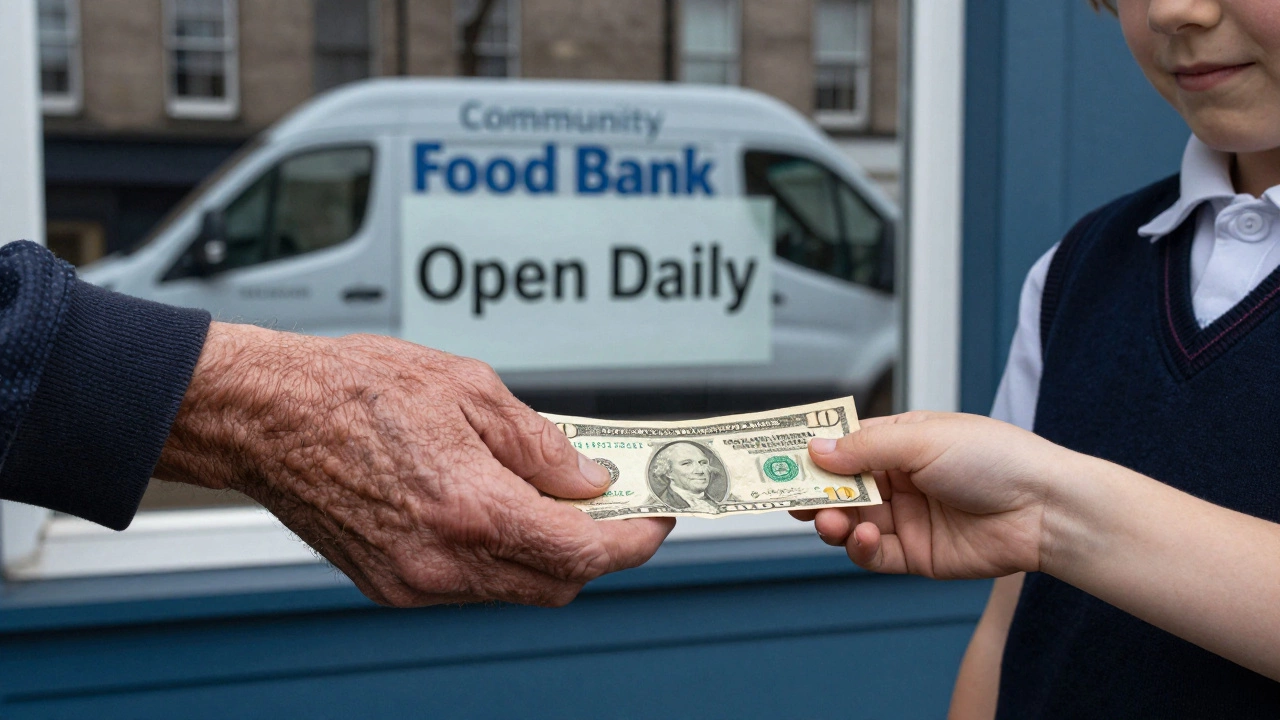
Meanwhile, a single mother working two jobs in Glasgow might slip $10 into a collection jar at her church every Sunday. That’s 10% of her weekly discretionary income. She doesn’t get a tax break. No press release. No plaque on a building. But her $10 might buy groceries for a family that week. Or pay for a bus ticket so someone can get to a job interview.
Real generosity isn’t about scale. It’s about sacrifice. Giving 10% of $200 is easy. Giving 10% of $20? That’s courage.
Where the rich give-and where they don’t
High-income donors tend to favor causes that align with their interests: arts, education, medical research. These are worthy, but they often serve broad populations. Low-income donors focus on immediate, tangible needs: food, housing, childcare, transportation.
For example, in Edinburgh, a local food bank serving 3,000 families a month gets 60% of its cash donations from households earning under £25,000. The same food bank receives larger donations from corporate sponsors-but those are often restricted to specific items (like canned beans) or tied to marketing campaigns. The small, frequent donations from people with little money? They’re unrestricted. They go exactly where the need is greatest.
Another example: school supply drives. Wealthy donors might fund a $50,000 grant for new laptops. But it’s the single parent who buys a $5 notebook and pen set for a neighbor’s kid-and slips it into their backpack without saying a word-that keeps children from falling behind.
Why this matters for charities
If you run a charity, focusing only on major donors means missing half the story. The most consistent, reliable funding often comes from small, regular givers. These are the people who give every month, even when times are tight. They don’t need fancy events or celebrity endorsements. They need trust.
Charities that build relationships with low-income communities see higher retention rates. A study by the Institute for Nonprofit News found that donors earning under $30,000 who felt heard and respected by a charity were 40% more likely to increase their giving over time-even if their income didn’t rise.
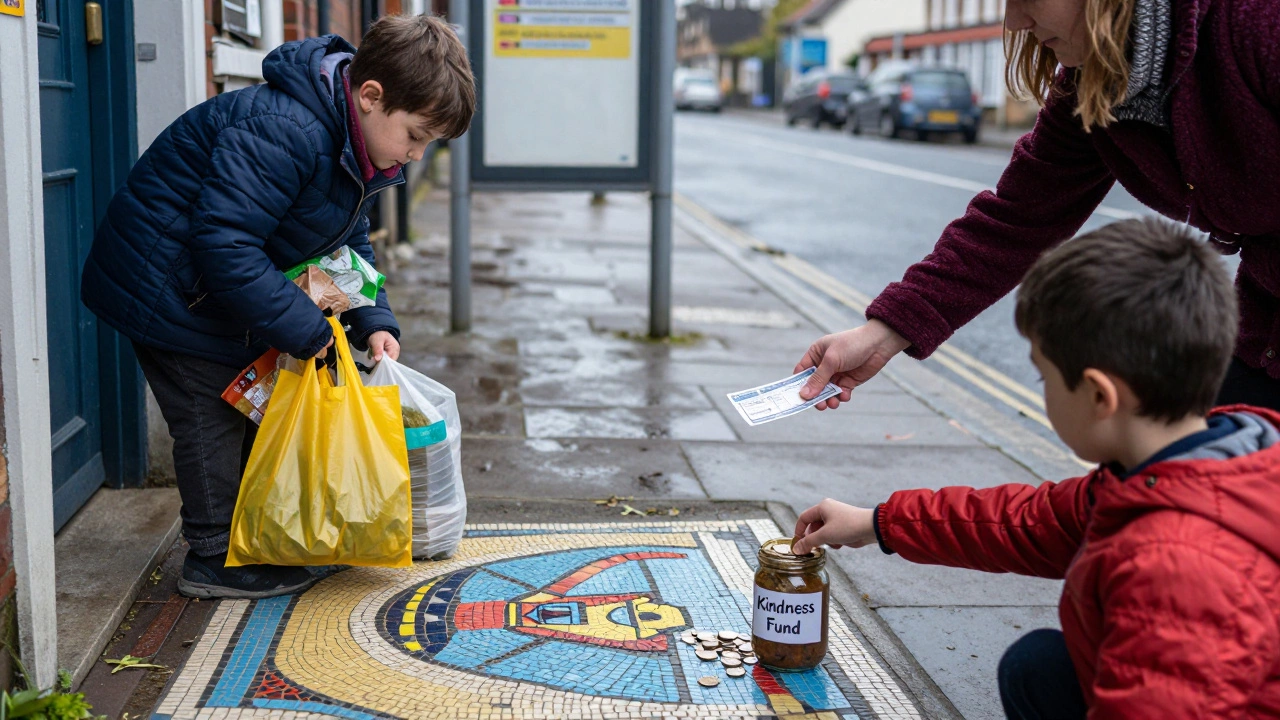
That’s why some of the most effective charities don’t ask for big gifts. They ask for participation. A church in Leith runs a weekly “kindness jar” where people drop in loose change. Last year, it raised £8,000-all from donations of £1 or less. The average donor gave £2.30. That’s not a fortune. But it’s 2,000 acts of care.
What you can learn from this
Whether you’re rich or poor, your giving matters. But if you think only big donations count, you’re missing the real power of generosity.
Small, regular gifts add up. A $5 weekly donation is $260 a year. That’s enough to feed a family for a month in a food bank. A $10 monthly gift? That’s $120 a year-enough to cover a child’s school trip or a senior’s medication co-pay.
And if you’re on a tight budget? Don’t feel guilty for giving less. The fact that you give at all-when you have little-is what makes you extraordinary. You’re not just helping others. You’re keeping the spirit of community alive.
Charity isn’t about wealth. It’s about humanity. And the people who give the most aren’t always the ones with the most money. Sometimes, they’re the ones who’ve lost the most-and still choose to share.
Do poor people really give more to charity than rich people?
Yes, when measured as a percentage of income. People earning under $25,000 give an average of 4.2% of their income to charity, while those earning over $200,000 give about 2.7%. This pattern holds across multiple countries, including the U.S., UK, and parts of Africa and Asia.
Why do low-income individuals give a higher percentage of their income?
People with lower incomes often have firsthand experience with hardship. They’ve relied on community support themselves, so they’re more likely to give directly to neighbors, churches, or local food banks. Their giving is personal, immediate, and rooted in empathy-not tax strategy or public recognition.
Do wealthy people give nothing?
No. High-income individuals give more in total dollars-often through foundations, endowments, or donor-advised funds. But their giving tends to be less frequent, more strategic, and often directed toward institutions like universities or hospitals, rather than direct community aid.
Is it better to give a lot once or a little often?
For charities, consistent small donations are often more valuable. A $10 monthly gift adds up to $120 a year and helps organizations plan their budgets. One-time large gifts are helpful, but they don’t provide ongoing support. Many food banks and shelters rely on regular, small contributions to keep their doors open.
Can I still make a difference if I don’t have much money?
Absolutely. Time, skills, and small donations all count. Volunteering an hour a week, donating gently used clothes, or even just sharing information about a local food bank helps. The most powerful gift isn’t always money-it’s showing up when someone needs you.