Charitable Trust Asset Distribution Calculator
Understand Cy-Près Distribution
When a charitable trust closes, assets must go to another charity with a similar purpose under the cy-près doctrine. This calculator helps determine if a proposed new purpose aligns with the original intent.
Result
When you give money or property to a charitable trust, you might assume it becomes the charity’s property. But that’s not how it works. The assets don’t belong to the charity in the way your bank account belongs to you. So who really owns them? The answer isn’t obvious, and misunderstanding it can lead to legal trouble, mismanaged funds, or even the loss of charitable status.
Charitable trusts don’t have owners - they have trustees
A charitable trust is a legal structure, not a person or company. It can’t own anything on its own. Instead, the assets - whether it’s cash, land, stocks, or equipment - are held by the trustees. These are the people or organization legally responsible for managing the trust’s property. They don’t own it for themselves. They hold it in trust for the charity’s purpose.
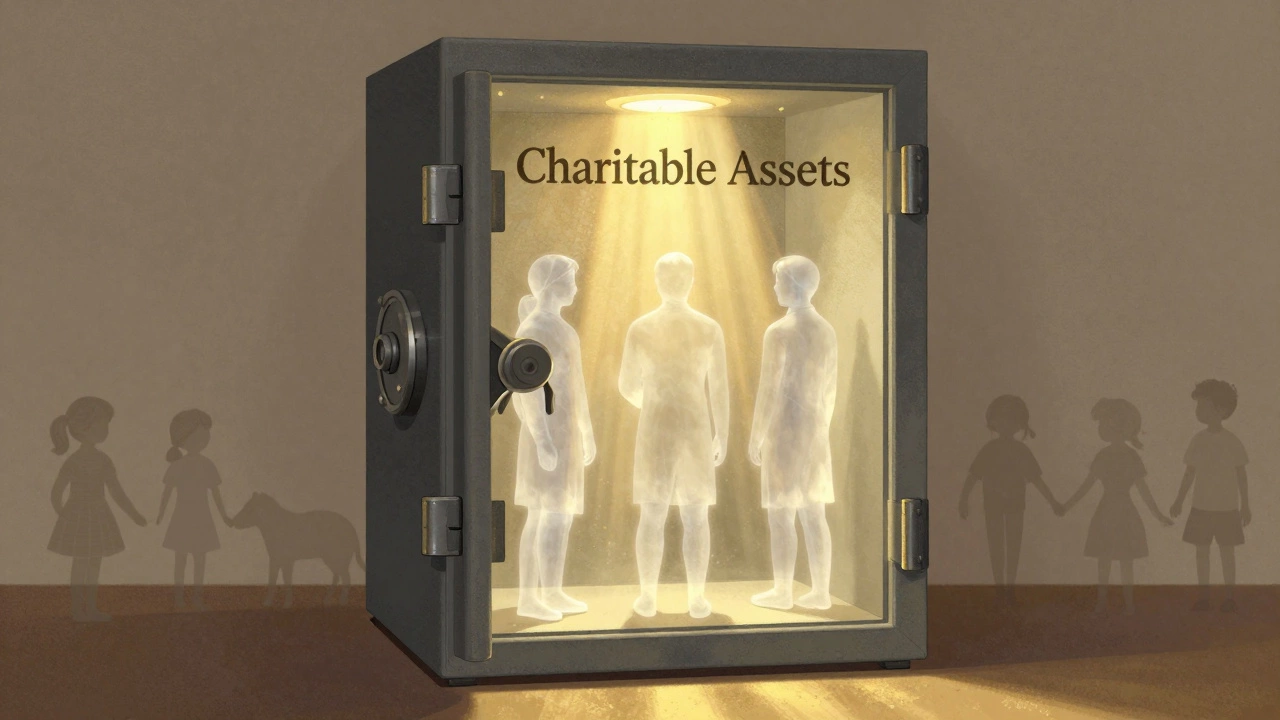
Think of it like a safe. You put your heirloom watch inside and give the key to a friend, asking them to keep it safe until your child turns 18. The friend doesn’t own the watch. They’re just looking after it. Trustees are the same. They’re stewards, not owners.
In Scotland, this is governed by the Trusts (Scotland) Act 1921 and reinforced by the Office of the Scottish Charity Regulator (OSCR). Trustees must act in the best interests of the charity’s purpose, not their own. If they misuse assets, they can be removed, fined, or even held personally liable.
What happens if the charity closes?
This is where most people get confused. If a charitable trust shuts down - maybe because its mission was completed or funding dried up - the assets don’t vanish or get split among the trustees. They don’t go to the founders’ families either.
By law, the assets must go to another charity with a similar purpose. This is called the cy-près doctrine. It’s a legal principle that means ‘as near as possible’ to the original intent. For example, if a trust was set up to fund music lessons for underprivileged children in Edinburgh and that program ends, the money might go to another youth arts charity in the city. It can’t go to a wildlife conservation group unless that’s close enough to the original purpose.
OSCR has the power to approve where the assets go if the original terms are no longer practical. They review each case to make sure the new recipient truly matches the spirit of the donor’s intent.
Trustees aren’t the beneficiaries - the public is
Unlike a family trust, where beneficiaries are named individuals (like your kids or spouse), a charitable trust has no private beneficiaries. The beneficiaries are the public. That’s what makes it charitable.
For example, if a trust funds free dental care for low-income families in Glasgow, every person who receives treatment is a beneficiary - not just one person. The trust’s success is measured by how many people benefit, not by how much money flows to a single account.
This public benefit requirement is non-negotiable. If a trust starts helping only a small group of friends or family members, it can lose its charitable status. The courts have ruled on this many times. In one 2019 case, a trust in Aberdeen was stripped of its status because it only helped members of a single church congregation, even though the church was doing good work. The court said: ‘Charity must be open to the public, not just a private circle.’
Can trustees sell or use trust assets?
Yes - but only under strict rules.
Trustees can sell property, invest money, or buy new equipment, but they must always act in line with the trust’s stated purpose. If the trust’s deed says the money must go to animal rescue, they can’t use it to fund a community garden unless that’s clearly aligned with animal welfare.
They also need approval before selling major assets like land or buildings. In Scotland, trustees must get OSCR’s consent before selling real estate held by a charitable trust. This protects the assets from being sold off for personal gain or poor decisions.
Trustees can be reimbursed for reasonable expenses - like travel to meet with beneficiaries or legal fees - but they can’t pay themselves a salary unless the trust deed specifically allows it. Even then, the payment must be fair and documented.
What if a donor wants their money back?
Once you give money to a charitable trust, you can’t take it back. That’s the whole point of a charitable gift. You’re giving it away for the public good.
Some people think they can set up a trust and still control it - like a personal bank account with a charity name. That doesn’t work. If the donor tries to demand the money back, the courts will side with the trust. The gift is final.
There’s one exception: if the trust was set up with a condition that wasn’t met, and the donor made it clear that the gift was conditional, then the law might allow recovery. But these cases are rare and hard to prove. Most donors don’t write those conditions properly, and courts don’t assume them unless they’re written in black and white.
Why does this matter to donors?
If you’re considering setting up a charitable trust or donating to one, knowing who controls the assets helps you make smarter choices.
- Choose trustees you trust - not just friends, but people with experience managing money or legal responsibilities.
- Read the trust deed carefully. Does it say what happens if the charity closes? Does it name a backup charity?
- Ask if the trust is registered with OSCR. Registered charities must file annual reports. You can check their financials online.
- Don’t assume the charity’s name means they own the assets. The legal structure matters more than the brand.
Many donors in Scotland have been shocked to find out their donations ended up in the hands of a new charity they never heard of. That’s not a scam - it’s the law working as designed. But it only works if the original trust was set up correctly.

What if trustees act wrongly?
Trustees who misuse assets - whether by spending on personal trips, giving money to relatives, or investing in risky startups - can be held accountable.
OSCR can investigate, remove trustees, freeze accounts, or even take legal action. In 2023, two trustees in Dundee were ordered to repay £42,000 after using trust funds to buy a second home. The court said: ‘The assets were never theirs to use. They were held in trust for vulnerable children.’
Anyone can report suspected misuse to OSCR. You don’t need to be a trustee or donor. If you see a charity spending money in ways that don’t match its mission, speak up.
Final thought: Ownership is about responsibility, not control
No one owns the assets of a charitable trust. That’s the point. They’re held by trustees for the public good, and they must stay there until used for the cause they were meant to serve. The real power isn’t in owning the money - it’s in using it wisely, honestly, and for those who need it most.
If you’re setting up a trust, get legal advice. Don’t rely on templates or online forms. A poorly written deed can undo years of good work. If you’re donating, ask questions. Make sure your gift will last - and that it won’t be lost to poor management or unclear rules.
Can a charitable trust own property in its own name?
No. A charitable trust is not a legal person. It can’t hold property directly. Instead, property is held in the names of the trustees, who act on behalf of the trust. The trust’s name may appear on documents, but legally, the trustees are the registered owners - always acting in the trust’s interest.
Do trustees get paid for managing a charitable trust?
Generally, no. Trustees serve voluntarily. But if the trust deed specifically allows payment, and it’s approved by OSCR, then reasonable compensation may be paid. This is rare and only allowed when the work is complex - like managing a large property portfolio or running a hospital. Payment must be transparent and documented.
What’s the difference between a charitable trust and a charity registered with OSCR?
A charitable trust is a legal structure that holds assets for charitable purposes. Not all trusts are registered. But if a trust wants to be officially recognized as a charity in Scotland, it must register with OSCR. Registration gives it tax benefits, public trust, and legal protection. Unregistered trusts still exist, but they can’t claim charitable status or receive certain grants.
Can a charitable trust be turned into a company?
Yes, but it’s a legal process. Many charities in Scotland have converted to charitable incorporated organizations (CIOs) or companies limited by guarantee. This gives them more legal protection for trustees and clearer governance. But the assets still don’t become owned by the company - they’re held for the same charitable purpose. The change is about structure, not ownership.
What happens if a trustee dies?
The trust doesn’t end. The trust deed usually names replacement trustees. If not, the remaining trustees can appoint new ones. If there’s no one left, OSCR can step in to appoint new trustees. The assets remain protected - they don’t go to the deceased trustee’s estate.
Next steps if you’re involved with a charitable trust
- If you’re a donor: Review the trust’s registration status on the OSCR website. Look at their latest annual report.
- If you’re a trustee: Get trained. OSCR offers free online courses on trustee duties.
- If you’re setting up a trust: Hire a solicitor who specializes in charitable law. Don’t use a generic template.
- If you suspect misuse: Report it to OSCR. You can do it anonymously.
The system works when people understand it. Charitable assets aren’t owned - they’re entrusted. And that’s what makes them powerful.