
Environmental Policy Influencer Simulator
Test your knowledge! Read each scenario and select the group most likely driving the specific outcome described.
The Situation:
Scientific Experts
Data & ReportsNGOs & Advocacy
Public PressureIndustry Leaders
Lobbying & EconomicsIndigenous Groups
Cultural Rights & LandGovt Agencies
Voting & RegulationsResult
Explanation goes here.
Simulation Complete!
You identified the primary influencers correctly 0% of the time.
Remember: Effective policy requires collaboration among all these groups. No single voice should dominate entirely.
You might think environmental policy is just politicians signing papers in a distant capital. But that’s only half the story. The laws protecting our air, water, and wildlife are actually built by a messy, powerful mix of people who aren’t always in charge but have huge influence. If you’ve ever wondered why some green laws pass while others stall, it’s because five specific types of individuals and groups are constantly pulling strings behind the scenes.
Understanding who these players are helps you see how change happens. It’s not magic; it’s negotiation, data, money, and public pressure. Let’s break down the five key forces that shape environmental policies.
Scientific Experts and Research Institutions
Before any law gets written, someone has to prove there’s a problem. That’s where scientists come in. They provide the raw data that makes ignoring an issue impossible. Think about climate change. For decades, skeptics argued the science was shaky. But as institutions like NASA and the Intergovernmental Panel on Climate Change (IPCC) released consistent, peer-reviewed reports showing rising global temperatures, the political conversation shifted.
Scientists don’t usually lobby for specific bills. Instead, they define the boundaries of what’s possible. When researchers at universities or national labs publish findings on microplastics in drinking water or biodiversity loss, they create a factual baseline. Policymakers can’t easily dismiss hard numbers without looking ignorant. This group includes:
- University professors specializing in ecology and atmospheric science.
- Government research bodies like the US Geological Survey.
- International scientific committees that assess global risks.
Their power lies in credibility. If a respected physicist says carbon emissions need to drop by 45% by 2030, politicians listen because their own re-election depends on appearing informed.
Non-Governmental Organizations (NGOs) and Advocacy Groups
If scientists provide the facts, NGOs provide the fight. These are the organizations you’ve likely heard of: Greenpeace, World Wildlife Fund, and The Nature Conservancy. They act as watchdogs, lobbyists, and mobilizers. Their job is to take complex scientific data and turn it into a public campaign that demands action.
NGOs operate differently depending on their strategy. Some, like Greenpeace, use direct action-climbing onto oil rigs or blocking logging trucks-to grab media attention. Others, like the Sierra Club, focus on lobbying legislators directly, drafting legal language, and endorsing candidates who support their agenda. They bridge the gap between abstract science and daily politics.
Consider the ban on single-use plastics in many cities. It wasn’t just a sudden idea from city councils. Years of campaigning by groups like the Ocean Conservancy highlighted the visible harm to marine life. They organized beach cleanups, published shocking photos of turtle-strangled plastic rings, and pressured local businesses. This grassroots pressure made it politically risky for officials to do nothing.
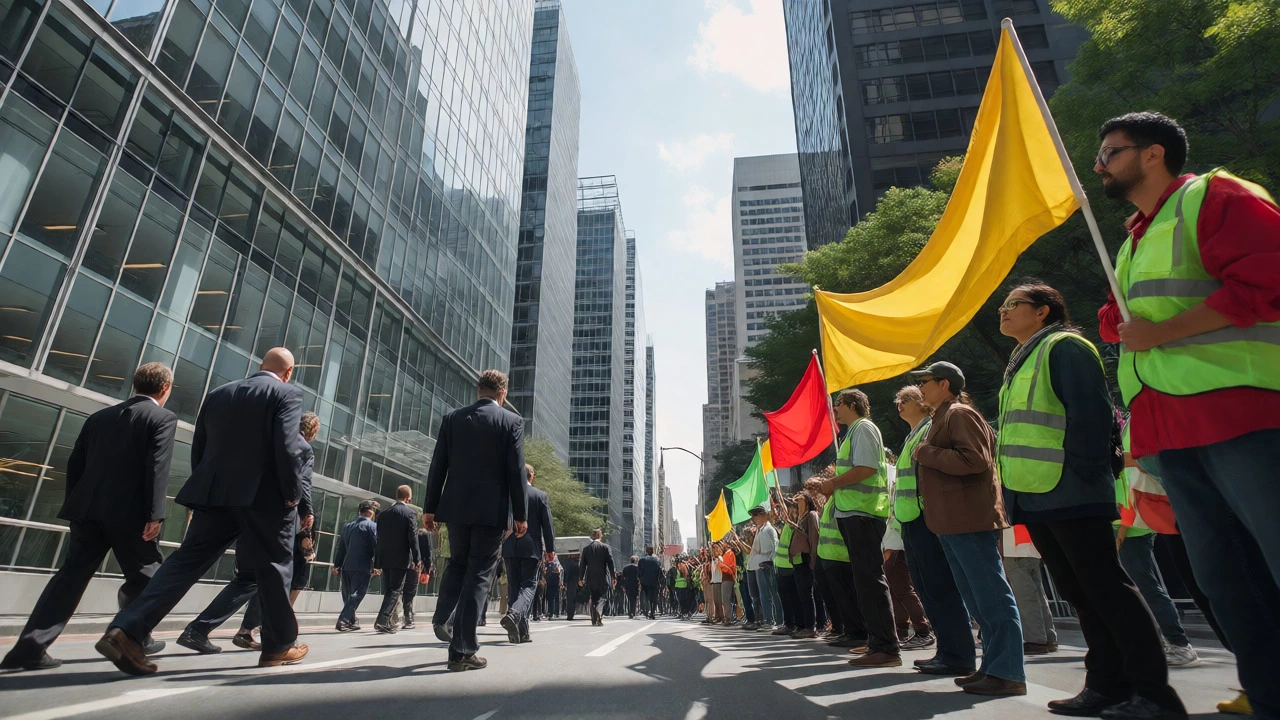
Industry Leaders and Corporate Lobbyists
Here’s the uncomfortable truth: corporations often have more immediate influence on environmental regulations than activists do. Industries like energy, agriculture, manufacturing, and transport generate trillions in revenue and employ millions. They can’t be ignored. In fact, they often write the rules themselves through lobbying.
Lobbyists represent companies’ interests to lawmakers. They argue that strict environmental rules will kill jobs or raise costs. Sometimes they’re right. A sudden ban on coal mining, for example, devastates communities if no transition plan exists. Industry groups push for compromises, such as longer timelines for compliance or tax breaks for adopting cleaner tech.
But it’s not all obstruction. Many major corporations now drive policy forward. Companies like Tesla or Ørsted have shown that renewable energy is profitable. As their market share grows, they lobby for subsidies and infrastructure investments that benefit them-and inadvertently accelerate the green transition. The relationship is symbiotic. Governments need economic stability, and industries need predictable regulations. This tension shapes final policy details significantly.
| Group Type | Primary Tool | Time Horizon | Typical Goal |
|---|---|---|---|
| Scientists | Data & Reports | Long-term (Decades) | Accurate Risk Assessment |
| NGOs | Public Pressure & Litigation | Medium-term (Elections) | Regulatory Action |
| Corporations | Lobbying & Economic Threats | Short-term (Quarters) | Profitability & Stability |
| Indigenous Groups | Cultural Rights & Land Claims | Intergenerational | Protection of Sacred Lands |
| Policy Makers | Voting & Executive Orders | Election Cycles | Re-election & Public Order |
Indigenous Communities and Local Activists
For centuries, indigenous peoples have managed land sustainably, often outperforming modern conservation methods. Yet, they were historically excluded from policy tables. Today, that’s changing. Indigenous groups are increasingly recognized as vital partners in environmental stewardship. Their knowledge of local ecosystems is irreplaceable.
Take the Amazon rainforest. Studies show that territories managed by indigenous communities have lower deforestation rates than protected areas run solely by governments. Why? Because these communities live there year-round. They monitor illegal logging and enforce rules culturally. When policymakers consult with leaders from groups like the Kayapó or Maasai, they gain insights that satellite imagery misses.
Local activists also play a crucial role. While NGOs work globally, neighbors fighting a specific pipeline or factory deal with hyper-local impacts. Their stories humanize the issue. A grandmother worried about contaminated well water resonates more with voters than a statistic about parts per million. This localized pressure often determines whether a controversial project gets approved or blocked.

Government Agencies and Elected Officials
Finally, we have the people who actually sign the laws. This includes elected representatives and career civil servants in agencies like the Environmental Protection Agency (EPA) or equivalent bodies worldwide. These individuals translate the inputs from scientists, NGOs, and industry into actionable rules.
Elected officials balance competing pressures. They want to appear pro-environment to satisfy voters (influenced by NGOs) but also need to keep the economy running (influenced by industry). Career bureaucrats, however, often have more long-term impact. They write the technical regulations. For instance, the EPA sets specific limits on vehicle emissions. Those numbers determine what cars manufacturers must build years in advance. Even if a president changes, these agency rules often persist due to their complexity and legal standing.
This group also includes international negotiators. Global issues like ocean pollution require treaties. Diplomats from various nations meet to draft agreements like the Paris Accord. Their success depends on domestic political will back home. If a country’s internal policy makers are weak, its international commitments may lack teeth.
How These Groups Interact
No single group works in isolation. Effective environmental policy emerges from friction and collaboration among these five actors. Scientists warn of danger. NGOs amplify the warning to the public. Corporations negotiate the cost of solutions. Indigenous groups offer alternative management models. Finally, government officials synthesize these inputs into law.
When one voice dominates, policy suffers. If industry drowns out science, regulations become toothless. If NGOs ignore economic realities, laws may face backlash and repeal. The sweet spot is a balanced dialogue where each group checks the others. As a citizen, understanding this ecosystem empowers you. You can choose which group to support based on your values. Do you trust data? Support scientific literacy. Want immediate change? Join a local NGO. Care about justice? Back indigenous land rights.
Do scientists directly write environmental laws?
No, scientists rarely write laws themselves. Instead, they provide the evidence and risk assessments that inform legislation. Lawmakers and policy advisors use this data to draft legal text, ensuring regulations are grounded in reality rather than speculation.
Why do corporations oppose some environmental policies?
Corporations often oppose policies that increase operational costs or reduce profit margins in the short term. They argue that strict regulations can lead to job losses or higher consumer prices. However, many now support policies that create new markets for green technology, viewing sustainability as a business opportunity.
What role do NGOs play beyond protesting?
Beyond protests, NGOs conduct extensive research, draft model legislation, litigate against polluters, and educate the public. They serve as intermediaries, translating complex scientific findings into accessible messages that mobilize voters and pressure politicians to act.
How do indigenous communities influence modern policy?
Indigenous communities influence policy by providing traditional ecological knowledge and demonstrating effective land management practices. Legal frameworks increasingly recognize their land rights, allowing them to veto projects or co-manage protected areas, leading to better conservation outcomes.
Can individual citizens affect environmental policy?
Yes. Citizens affect policy by voting for supportive candidates, contacting representatives, participating in public comment periods for new regulations, and supporting NGOs. Collective individual actions signal political priorities to decision-makers.