Loneliness & Social Connection Assessment
How connected do you feel?
This 3-question assessment helps you understand your social needs and suggests relevant club types based on the article.
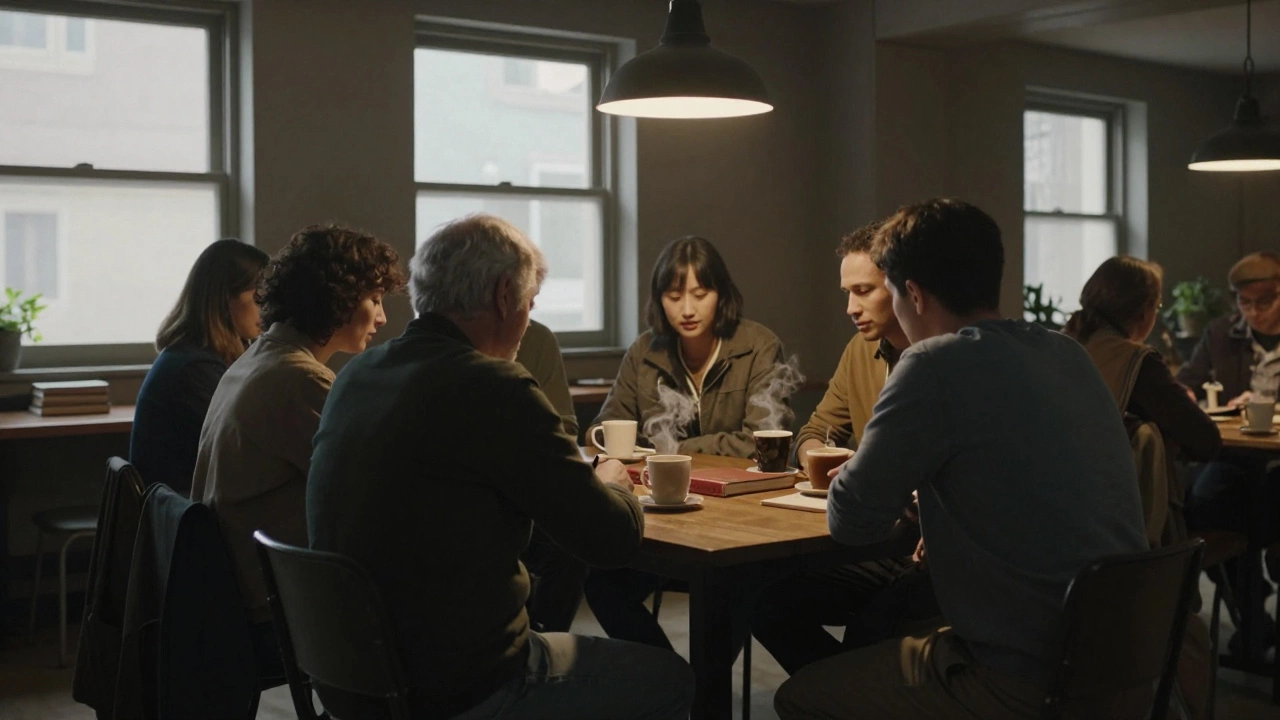
People don’t join social clubs because they’re bored. They join because they’re lonely-and they know it. In a world where digital connections multiply but real ones fade, social clubs have become quiet lifelines. You’ll find them in basements of old libraries, in converted pubs, in community centers with mismatched chairs and coffee that’s always a little too strong. These aren’t fancy networking events or influencer meetups. They’re places where people show up, week after week, not for status, but for silence that doesn’t feel empty.
They’re fighting loneliness, not just making friends
Loneliness isn’t just feeling alone. It’s feeling unseen. A 2023 study by the UK’s Office for National Statistics found that over 9 million adults in Britain regularly feel lonely, with the highest rates among people aged 45 to 54. That’s not just retirement age-it’s middle age, when kids leave home, jobs shift, and old routines fall apart. Social clubs don’t promise to fix everything. But they offer something simpler: presence. A weekly bridge night. A book group that meets every Thursday. A walking group that starts at the park bench near the bus stop. You don’t have to talk. You just have to show up. And that’s enough.
Shared interests create deeper bonds than small talk
Most people don’t join a club to meet ‘nice people.’ They join because they love knitting, or chess, or vintage vinyl, or gardening. The common interest is the glue. It takes the pressure off. You don’t need to perform. You don’t need to impress. You just need to bring your knitting needles or your record collection. That’s how real connections form-not through forced conversation, but through shared focus. Someone notices you’re good at fixing broken chairs. You notice someone remembers your dog’s name. These aren’t big moments. But over months, they add up to something real.
They offer structure when life feels chaotic
After a divorce. After losing a job. After moving to a new city. Life can turn upside down without warning. Social clubs don’t ask for your backstory. They just show up on the calendar. Monday night pottery. Wednesday morning coffee. Saturday volunteer gardening. That structure matters more than people realize. It gives people something to look forward to. Something to get dressed for. Something that says: you still belong here. One woman in Edinburgh told me she started going to a local sewing circle after her husband passed. ‘I didn’t want to talk about it,’ she said. ‘But I needed to sit in a room where someone else was threading a needle, and I knew I wasn’t the only one who knew how to do it.’

They’re safe spaces for people who feel out of place
Not everyone fits into mainstream social scenes. Young adults with anxiety. Older people who don’t use smartphones. Immigrants who haven’t found their language yet. People who’ve been through trauma. Social clubs often welcome those who’ve been turned away elsewhere. A queer knitting group in Glasgow. A men’s group for veterans in Dundee. A language exchange for refugees in Aberdeen. These aren’t therapy groups. They’re just gatherings where people can be themselves without explaining why. No one asks, ‘What happened?’ They just ask, ‘Want to try this stitch?’
They bring back the rhythm of community
Before social media, communities didn’t need apps to stay connected. They had bake sales, church choirs, pub quizzes, and block parties. Social clubs are the modern version of that. They’re not trying to replace family. They’re trying to rebuild the sense that you’re part of something bigger than your screen. In Edinburgh, there’s a group called ‘The Old Book Club’ that meets in a library annex. Members are 60 to 85. They don’t talk about politics. They don’t post photos. They just read aloud to each other. One member, a retired teacher, says, ‘We’re not here to be heard. We’re here to hear each other.’ That’s the quiet magic of it.

They help people find purpose without a title
Many people stop feeling useful after they retire, or after their kids grow up. Social clubs give them roles without job titles. The person who brings the tea. The one who remembers everyone’s birthday. The one who fixes the broken heater. These roles aren’t on a resume. But they matter. One man in Fife started going to a local chess club after his wife died. He didn’t play well. But he showed up every Tuesday. Soon, he was teaching beginners. ‘I didn’t know I could still teach,’ he said. ‘Turns out, I just needed someone to need me.’
They’re not about popularity-they’re about persistence
People don’t join social clubs because they’re outgoing. They join because they’re tired of being alone. And they’re willing to try, again and again. The first time you walk in, it might feel awkward. The second time, you recognize someone’s face. The third time, someone says, ‘You’re back!’ That’s when it starts to stick. It’s not about being the life of the party. It’s about being the person who shows up-even on days you don’t feel like it.
They’re not a cure. But they’re a comfort.
Social clubs won’t fix depression. They won’t pay your bills. They won’t bring back someone you lost. But they offer something rarer in today’s world: quiet, consistent belonging. You don’t need to be perfect. You don’t need to talk. You just need to be there. And sometimes, that’s enough to keep someone going.
Are social clubs only for older people?
No. While many clubs are made up of older adults, there’s a growing number for younger people too. You’ll find book clubs for millennials, gaming groups for Gen Z, and even ‘slow living’ circles for people overwhelmed by hustle culture. The age doesn’t matter-it’s the shared interest and the willingness to show up that does.
Do I need to pay to join a social club?
Some do, some don’t. Many community-run clubs operate on a donation basis-£2 for tea and biscuits. Others are completely free, funded by local councils or charities. If you’re worried about cost, ask. Most organizers will tell you, ‘Come anyway. Money’s not the point.’
How do I find a social club near me?
Start with your local library, community center, or council website. Many towns have a ‘community noticeboard’ online or in person. Facebook groups often list local gatherings too, but don’t wait for the perfect one. Sometimes the best clubs are the ones no one advertised-just a group of people meeting in a back room every week. Walk in. Say hello. You might be surprised how welcome you feel.
What if I’m shy or don’t know what to say?
You don’t have to say anything. Most people in social clubs are quiet too. Bring something to do-your book, your knitting, your sketchpad. People notice when you’re doing something. They’ll often ask about it. That’s how conversations start. And if no one does? That’s okay. Just being there is enough.
Can social clubs help with mental health?
They’re not therapy, but they’re a powerful support tool. Regular social contact reduces stress hormones and lowers the risk of depression. A 2024 study in the British Journal of Social Psychology found that people who attended weekly social clubs reported higher levels of life satisfaction-even if they didn’t talk much. The simple act of being in the same room with others, doing something quiet together, creates a sense of safety that’s hard to replicate online.